






Environmental NGOs are calling on the Western and Central Pacific Fisheries Commission (WCPFC) to adopt new rules for transshipment regulation, electronic monitoring, and fish aggregating devices (FADs) and have joined calls for a new management procedure for South Pacific albacore.
The WCPFC, which is meeting 1 to 5 December, oversees more than half of the world’s tuna catch and includes 26 different member countries.
Pacific Island nations and the Global Tuna Alliance have already called on the commission to adopt what they say is a joint, science-based proposal for managing South Pacific albacore tuna. South Pacific albacore is a key species for a number of nations in the South Pacific, including Niue, and according to The Pew Charitable Trusts, is worth USD 1 billion (EUR 861 million) to the region’s economy.
“South Pacific albacore is a key species in our Niue EEZ; we want to improve the economic conditions for the fishery and boats to return to our waters,” a representative from Niue said.
The International Seafood Sustainability Foundation (ISSF) and The Pew Charitable Trusts have both joined that call for a new management procedure for South Pacific albacore and said the economic viability of the species may rely on the WCPFC taking action.
A management procedure – also called a harvest strategy – is a science-based method of setting predetermined catch pressure on a species based on set metrics. The plan sets how much fishing is sustainable at a given population level of a species, allowing regional fishery management organizations (RFMOs) to quickly respond to changes in species biomass without having to go through a sometimes-lengthy negotiation process between member states.
ISSF said the WCPFC has made progress on management procedures in recent years, pointing out the commission adopted one for skipjack in 2022 and translated portions of that to a similar management procedure for North Pacific albacore in 2023. The commission has also adopted other sustainability measures, most recently becoming the first to adopt labor standards for crew as it also adopted new interim standards for electronic monitoring.
ISSF said the RFMO has already agreed on the process to a South Pacific albacore management procedure and now must adopt an interim procedure to continue that work.
Glen Holmes and Dave Gershman, senior officers with The Pew Charitable Trusts’ international fisheries project, said a management procedure for the species is essential due to new rules being adopted by other sustainability organizations. They said the Marine Stewardship Council (MSC) will begin applying rules in 2026 that will require South Pacific albacore to establish a management procedure to keep its existing MSC ecolabel; if WCPFC doesn’t act, it could lose it.
“If WCPFC members decide not to adopt an MP this year, certifications could be lost, and the financial ramifications for industry could be enormous, especially for the Pacific’s small island developing economies that rely on fisheries for their livelihood and government revenue,” Holmes and Gershman wrote.
Holmes and Gershman added that much of the work toward a management procedure has been completed, and scientists have evaluated 40 different management procedures for their effectiveness, giving the WCPFC a clear set of metrics to choose between when deciding on an interim management procedure for South Pacific albacore.
“The analysis has been done, the science is clear, and the consequences of inaction could be disastrous for South Pacific communities,” they said. “WCPFC managers must step up and adopt an MP for South Pacific albacore without delay.”
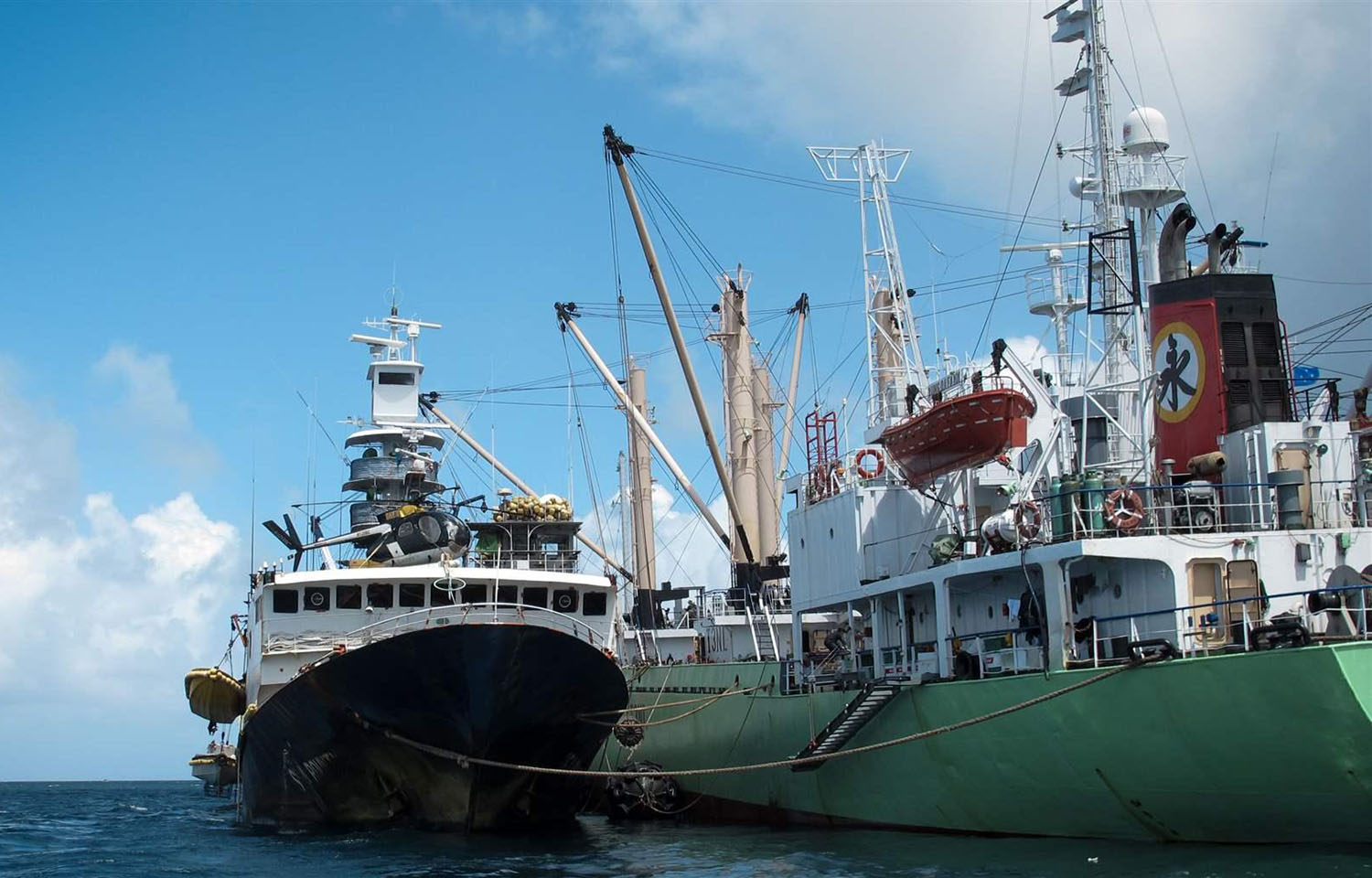
The management procedure is top-of-mind across multiple advocacy groups, but ISSF has also made a renewed push to get the WCPFC to adopt transshipment regulations. ISSF pushed for some form of regulation in 2024, but that effort ultimately fell short and, according to the organization, is now a decade behind on regulations governing transshipment.
“If not well-managed, transshipment at-sea can be a conduit for IUU fish to enter the supply chain,” ISSF said.
The United Nations' Food and Agriculture Organization (FAO) adopted voluntary guidelines for transshipment in 2023, and WCPFC has not aligned with those guidelines or with other tuna RFMOs in refining its regulations, ISSF said.
“Gaps include the absence of risk-based approaches, authorization criteria, timely pre-event verification, comprehensive declaration requirements, and prohibition of transshipments during VMS failures,” ISSF said.
ISSF is also calling on the WCPFC to adopt new rules governing FADs, including establishing a timeline on transitioning to fully biodegradable FADs and developing a new FAD-marking scheme and requiring near real-time FAD position tracking and data to help manage the devices and prevent ghost gear and ocean pollution.
“FADs – floating objects that attract tuna and make fishing more efficient – play an important role in tropical tuna purse-seine fisheries,” ISSF said. “Yet when lost, abandoned, or poorly tracked, these devices can harm marine habitats, create marine litter, and complicate accurate assessments of fishing effort.”
WCPFC already created guidelines on materials for FADs, but ISSF said it is falling behind on multiple measures compared to other tuna RFMOs.
“Much more is needed: WCPFC must adopt a more robust, science-based framework to ensure effective FAD management and maintain parity with global best practices,” ISSF said.
