
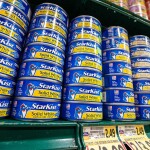


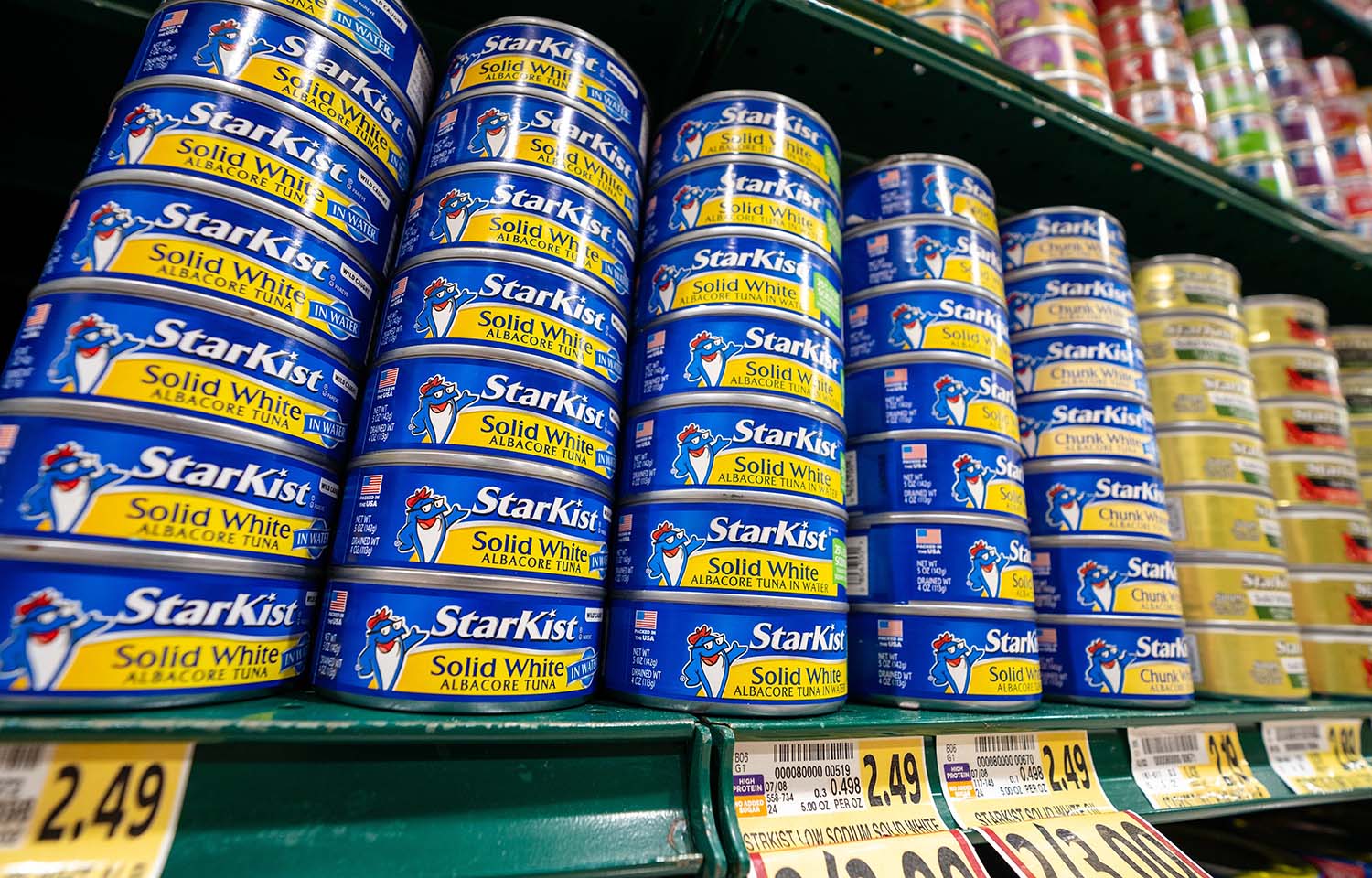
On 17 September, members of the FOSPI-PMFU labor union, nonprofit advocacy organization Global Labor Justice (GLJ), and their partners across the globe criticized StarKist for allowing years of documented forced labor violations and called on the company to enter an enforceable brand agreement (EBA).
GLJ Seafood Program Director Zacari Edwards announced the publication of a report titled "On the Hook: Forced Labor in StarKist's Supply Chain" and the filing of an international labor rights complaint against the U.S.-based wholly owned subsidiary of South Korea-based Dongwon Industries.
StarKist did not respond to a request for comment on the report or the groups’ allegations.
According to a GLJ release, the campaign represents an unprecedented demand by FOSPI-PMFU – the largest migrant fisher union in Taiwan – to a major U.S. seafood brand. The union is calling on StarKist to enter a binding bargaining agreement with fishers after years of documented labor abuses onboard vessels in the company's albacore tuna supply chain.
The report found that one or multiple forced labor indicators against migrant fishers were present for 100 percent of the 92 migrant fishers interviewed across 37 different vessels. Additionally, 67 percent of fishers on 27 different vessels faced violations sufficient to be classified as forced labor as constituted through the U.S. Customs and Border Protection (CBP). Passports were also confiscated for all 92 fishers, and instead workers operated under a work visa per the specific employer. Additionally, recruitment or other debt "compelled" each fisher interviewed to continue working for their respective companies despite the abuse, and nearly every interviewed fisher worked excessive amounts of overtime beyond the legal limit under Taiwanese law, GLJ said.
The report details these findings, and others, after a 3-year measurement period and interview process. The investigation looked into both StarKist and its parent company, Dogwan Industries, with the office of the South Korean National Contact Point for the Organization of Economic Cooperation and Development (OECD).
Masruhki, a 25-year-old Indonesian migrant fisher who worked onboard one of StarKist's albacore tuna vessels, provided his testimonial during a call announcing the new publication.
“The overwork on this vessel started as soon as we reached port, before we even departed," Masruhki said. "Everybody worked all the time. We were not allowed to sit. We wanted to complain but didn’t dare because the captain was very mean."
Masruhki said several fishers onboard his 8-person vessel faced injuries while on the job, such as being struck in the head by a large buoy or cutting a hand open on a fishing hook, but were never tended to with medical care and instead forced to continue work. Masruhki said the vessel was also Wi-Fi equipped with Starlink, but the fishers were not permitted to access internet to communicate with family back onshore.
"At the end of May we docked in Taiwan. The captain thought we reported our conditions to the union, and he fired us," Masruhki said. "I wanted to stay and work on another vessel in Taiwan, but the agency said we couldn’t. They took us to the airport, where they gave us what they said was the remainder of our salary, but there was a USD 63 (EUR 54) cut. There was no receipt or explanation."
Edwards said GLJ has found several seafood companies that areaware of labor violations on their vessels, but the current strategy of voluntary policies, audits, certifications, and inadequate situational remedies at the discretion of the company isn't working.
“The findings in 'On the Hook: Forced Labor in StarKist’s Supply Chain' show why business as usual has failed: forced labor is not limited to isolated incidents on individual vessels but is tied to structural conditions that recur across the employment cycle and supply chain," Edwards said. "Structural problems cannot be fixed with piecemeal solutions.”
FOSPI-PMFU is making five demands within the EBA: the right to communicate on Wi-Fi enabled vessels, fair salaries and contracts, the right to unionize without intimidation and retaliation, a safe and healthy workplace, and the right to a fair and transparent grievance process.
“Over 1,500 fishers have come together, signing a public photo petition, holding actions at the port in Taipei and calling out Starkist by name to demand their rights," FOSPI-PMFU General Secretary Achmed Mudzakir said. "When they are at sea, they are often cut off from the world and have little recourse to the captain’s decisions. That’s why we are calling on StarKist to negotiate directly with our union for an enforceable brand agreement that we can ensure is enforced by everyone in the supply chain: Starkist, vessel owners, captains and fishers. We want Starkist to come to the bargaining table in good faith, hear our demands, and come to a fair agreement.”
Several partners from U.S. and Asian labor movement organizations were present on the call, expressing solidarity and making statements to say that support is available should migrants who speak out face retaliatory punishment.
"Evidence-based research shows that enforceable brand agreements– similar to what FOSPI is proposing– have worked because brand buying power is linked to supply chains where workers have unions and labor rights at work," GLJ Executive Director Jennifer Rosenbaum said. "In Indonesia, for example, the Central Java Agreement for Gender Justice in the garment sector shows that through an enforceable brand agreement including unions, systematic change is possible.”
At Seafood Expo North America 15-17 March in Boston, Massachusetts, U.S.A., GLJ held a public protest outside the convention center calling for EBAs, also against fishing vessels in Taiwan. There, GLJ touched on the nearly 60 percent of Starlink Wi-Fi equipped vessels existing, but only 2 percent allowing migrant fishers to access the communication services.
