



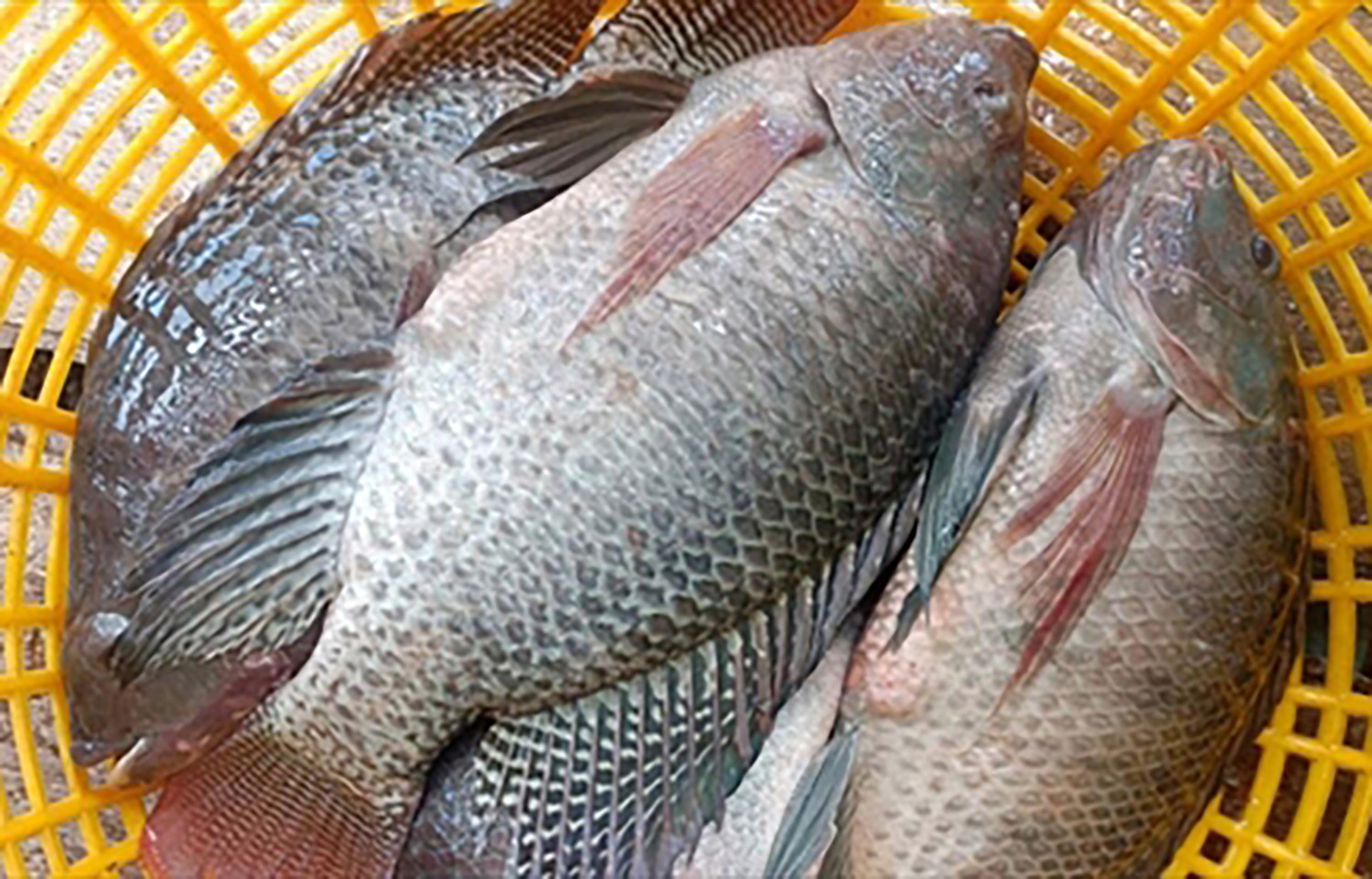
Vietnamese seafood producer Nam Viet Corp. (Navico) plans to take a more cautious approach toward expanding its tilapia business in Brazil after rapid growth has drawn backlash from local farmers and producers seeking greater protection from imports.
Brazil is Navico’s largest tilapia market, recently overtaking the U.S. and generating about USD 43 million (EUR 36.8 million) in sales last year for the firm.
Navico Deputy CEO Doan Chi Thien told SeafoodSource during the 2026 Vietfish International Fisheries Exhibition that the company is expecting around 20 percent growth in the Brazilian market this year, as well.
The rapid influx of Vietnamese tilapia into Brazil toward which Navico has contributed has unsettled producers and representative associations and generated growing resistance.
Such producers have pressed the Brazilian government for greater protection, arguing that lower-priced Vietnamese tilapia is hurting the domestic industry, and called for a complete ban on imports.
“Vietnamese products are entering the market at much lower prices with all these interventions that increase weight but lower quality,” Felipe Franco, the owner of BTJ Aqua, which operates three tilapia farms and a packing facility in and around the city of São Paulo, said earlier this year when Brazil’s imports of tilapia fillets from Vietnam exceeded the country’s own exports for the first time. “If consumers buy these products, they’ll feel cheated and won’t know whether it’s domestic or imported. Our greatest fear is that this will harm our reputation and the market we’ve spent decades building.”
With backlash mounting, technical barriers have become increasingly stringent, according to Thien, who said protectionist tendencies are not unique to Brazil and that the pressure is understandable to some extent given the competitiveness of imported products and their potential impact on domestic producers.
“Trade barriers are something every country has to consider when a competitive product enters its market,” Thien said.
At the same time, trade relationships need to work both ways, he said, noting that Vietnam runs a trade deficit with Brazil and, therefore, has some room for negotiation in bilateral trade discussions.
Navico does not plan to significantly reduce its Brazilian business but will no longer pursue the aggressive expansion that characterized its initial push into the market.
“The faster you grow in that market, the more dangerous it becomes because you are already on their radar,” Thien said, explaining that the company will, instead, become more selective in Brazil, focusing on larger, reputable customers capable of supporting longer-term relationships. “Our vision is to create value for ourselves while preserving value for buyers, farmers, and their government. Only then can the business be sustainable.”
As part of this realignment, Navico will pay closer attention to the prices and products offered by Brazilian producers and carefully balance the volume it sends to the market.
Elsewhere, other markets such as the U.S. present different challenges for Navico.
Chinese tilapia, which faces greater difficulty accessing the Brazilian market, remains a formidable competitor in the U.S. despite the high tariffs it faces, Thien said, estimating that Chinese tilapia farming costs are about 15 percent lower and sales prices are about 20 percent below Vietnamese suppliers.
Those barriers have forced Navico to adjust its value proposition and not compete primarily on price, stressing product quality and certifications instead, such as Aquaculture Stewardship Council credentials that comply with retailer requirements.
“When our price is higher, our quality is also better, including in processing and taste,” Thien said.
Navico exports both fillets and whole tilapia to the U.S., with fillets accounting for around 80 percent of sales and whole fish the remaining 20 percent.
The firm is also looking beyond Brazil and the U.S. as it seeks to avoid becoming overly dependent on any single destination.
Europe, for instance, accounts for about 9 percent of Navico’s sales, but the company aims to increase that share to around 12 percent.
For Thien, the firm’s experience in Brazil has reinforced the risk of relying too heavily on one destination even when demand is growing rapidly.
“Every market has its own challenges,” he said. “We should not become too dependent on any single market.”
The growth of tilapia production for Navico, which aligns with trends playing out across Vietnam more broadly, has become a substantial secondary business alongside its traditional pangasius operations.
The company expects combined pangasius and tilapia revenue of around USD 270 million (EUR 231 million) in 2026, with tilapia accounting for roughly 30 percent of that total and sales of the fish expected to rise 10 percent this year.
That growth comes despite raw fish prices rising by more than 30 percent so far in 2026 and Navico only being able to raise export prices by around 8 percent to 12 percent, Thien said.
A sharp increase in fingerling prices has been a major factor behind higher raw material costs, too. Navico produces some of its own tilapia fingerlings but also buys from outside suppliers.
In total, around 90 percent of its tilapia raw material comes from its own farming operations, compared with full self-sufficiency in pangasius. The company currently produces around 45,000 metric tons (MT) of tilapia and 120,000 MT of pangasius a year, according to Thien.
Labor is another challenge as Vietnamese seafood processors increasingly compete for workers.
Navico began investing in modernization and automation in 2025, including automated bagging systems. The firm is now using robotic arms at its feed plant but has yet to deploy the technology in fish processing. However, Navico has introduced other forms of automation in its processing plants, particularly in packaging. For example, across two processing lines, around 32 workers were previously needed to manually place individual fish into bags – a task that can now be handled by two machines, Thien said.
Technologies available for cold-area packaging, meanwhile remain limited, but Thien said Navico plans to invest further as solutions become more cost-effective and efficient.
