


The Outlaw Ocean Project has released a new set of reporting covering the global fishmeal industry, revealing problems from pollution to labor rights in over two-dozen different reports and offering a “Bait to Plate” tool that includes thousands of data points.
The non-profit journalism organization was the creator of a bombshell report on forced and Uyghur labor in the U.S. seafood supply chain that directly resulted in companies cutting ties with Chinese processors and several U.S. Congressional hearings into China’s ties to forced labor. It later debuted follow-up report on North Korean labor in the seafood supply chain, with worker interviews revealing coercion, sexual and physical assault, and other abuse.
Its latest report, “Food for Feed,” covers a much wider section of the seafood supply chain, looking into over 1,000 different fishmeal factories across 64 countries to identify and report on problems in the industry. Started in 2020, the investigation involved more than two dozen journalists operating globally that performed sea expeditions, field visits, and utilized an array of sources to identify issues.
“That global effort resulted in more than two dozen individual stories,” Outlaw Ocean Project said in its summary of the reporting. “Most of these focused on specific countries where fishmeal factories are concentrated, providing country-by-country industry assessments and plant-by-plant profiles that document crimes, regulatory violations, and other concerns.”
According to Outlaw Ocean Project, dozens of media sources in multiple countries are planning to run the results of the investigation, including the New York Times, the LA Times, The Economist, Taiwan Plus, El Diario, Le Monde, the CBC, and more.
The impacts the report found varied and were wide-ranging across the industry, and included economic harms, public health and worker safety issues, and more. Among those issues were instances of depleted local fish stocks, the loss of jobs due to artisanal fishers being pushed out, destruction of mangrove forest to make way for aquaculture operations, food insecurity where edible fish are diverted to animal feed, chronic exposure to hazardous chemicals in residents near feed plants, and deaths and injuries of workers on fishing vessels and in fishmeal plants.
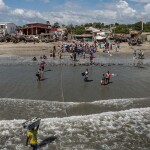
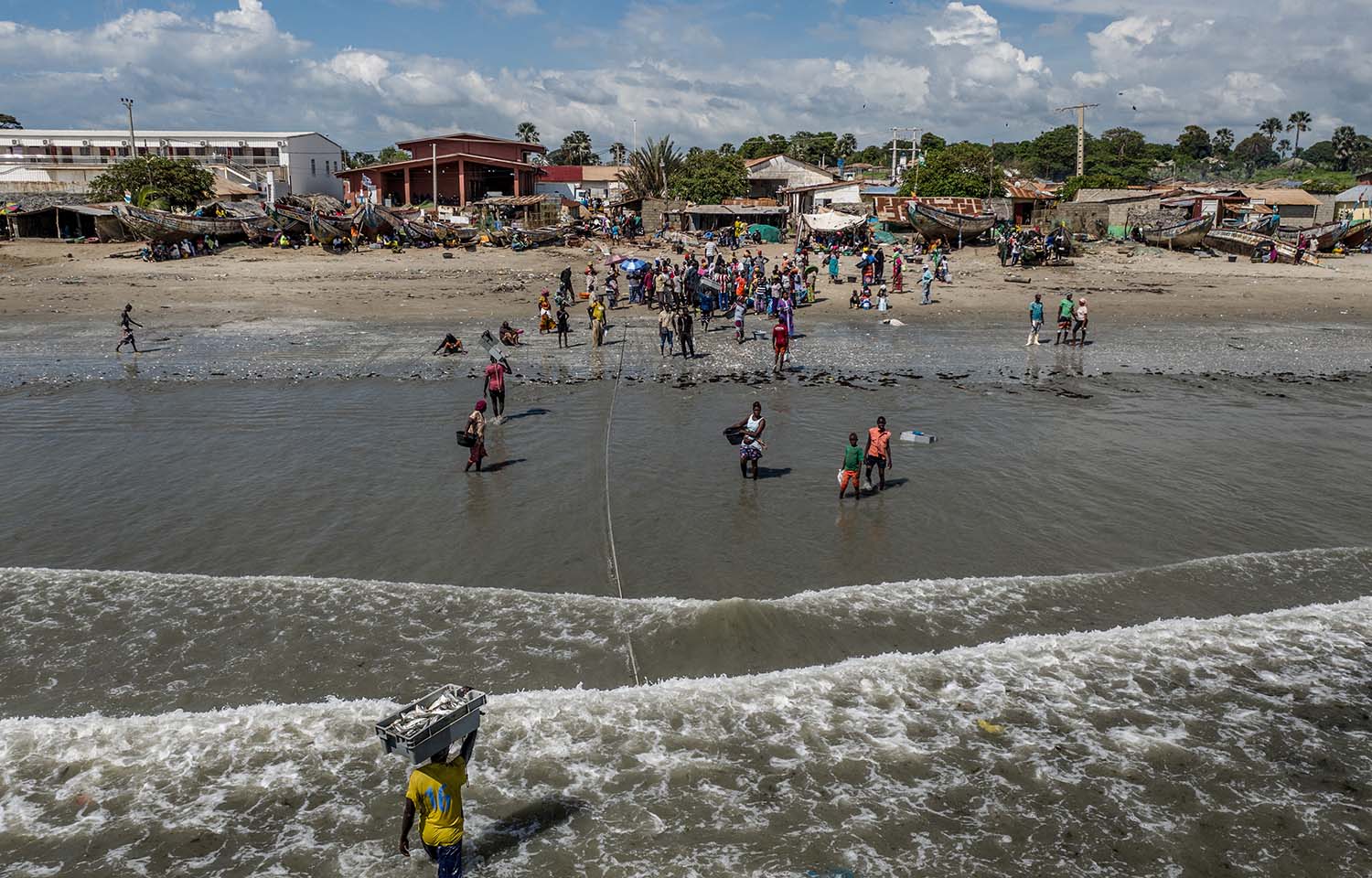
It also documents political instability tied to the fishmeal industry, including 80 incidents of civil unrest – most commonly in the form of labor strikes and community protests tied to the industry, with many of them taking place in India, Peru, and Senegal.
“Demonstrations were most often sparked by the stench from factories cooking thousands of tons of decomposing fish, or by the dumping of toxic waste into local waterways,” the report states. “Other protests centered on the depletion of fish stocks and the resulting loss of livelihoods for small-scale fishers.”
Along with labor disputes and civil unrest, Outlaw Ocean Project found ties between fishmeal and fish oil and geopolitical tensions, such as in Turkey, where fishing fleets venturing into neighboring waters have triggered confrontation. Other findings were issues like hazardous conditions caused by fishmeal production related to fire risks, and the chemicals used to abate those risks.
Alongside its findings of problems in the global fishmeal and fish oil industries, it also identified what Outlaw Ocean Project called a “rhetoric to reality gap.”
“The investigation uncovered a disconnect between seafood companies’ sustainability and social responsibility pledges and conditions on the ground in their supply chains,” Outlaw Ocean Project said.
The reporting catalogued the marketing and certification claims of thousands of seafood, feed, and fishing companies; retailers; and more, and compared them to alleged environmental and labor violations in the suppliers.
“This gap between claims and crimes is important because it contributes to an increasing threat of litigation for seafood companies,” Outlaw Ocean Project said.
In recent years companies have been targeted by lawsuits over allegedly false seafood sustainability claims, including a new class-action targeting Amazon that was filed earlier this year, and most recently a lawsuit targeting Chilean salmon-farming firm Australis Seafood that was filed just weeks before Outlaw Ocean’s report debuted. A report released by Make Stewardship Count in June flagged retailers and buyers reliance on sustainability certifications face growing risks related to those claims without broader due diligence systems.
“Over the last decade, we have seen an increasing emphasis on the need for retailers and companies to adopt human rights and environmental due diligence approaches to their sourcing,” Living Oceans Campaign Director Kelly Roebuck, the author of the report, told SeafoodSource at the time. “Certifications are just one source of information that should be triangulated with additional sources to ensure companies fully understand and address any actual and potential adverse impacts within their supply chains.”
The Outlaw Ocean Project said it identified specific certifications through its reporting. Of the fishmeal plants it investigated, “at least 80” had been certified to MarinTrust, the report said, “virtually all of which had crimes or concerns associated with their supply chains.” It also identified 29 fishing vessels certified by Friend of the Sea, “all of which had associated crimes or concerns.”
Outlaw Ocean Project Director Ian Urbina, during testimony he gave at a 16 April Congressional-Executive Commission on China (CECC) hearing, hinted at the coming project and the extent of the investigations.
“In Russia’s Far East, we documented forced labor on ships, farms, and in factories. In Western Sahara, we found the industry helping prop up Morocco’s military occupation. In Gambia and Mauritania, we found fish that once fed local communities increasingly diverted into fishmeal factories for export, worsening food insecurity,” Urbina said during the hearing. “In countries including India and Peru, the industry was tied to at least 80 incidents of civil unrest, some violent, often labor strikes and community protests over polluted water or the stench from factories cooking thousands of tons of decomposing fish. In Senegal, fishmeal has pushed local fishers out of work, so that many are selling or repurposing their boats to flee to Europe, usually by making the roughly 930-mile journey to Spain’s Canary Islands, a route that claimed more than 3,000 lives in 2025.”
The now-released report includes information on those instances, as well as four separate stories about China and its increasing use of state-sponsored forced labor in the aquaculture industry, and its push to establish fish farms in Xinjiang province.
“The initiative, often referred to as the ‘Blue Miracle,’ promotes aquaculture in a region that is largely arid, saline, and thousands of miles from the ocean,” Outlaw Ocean Project said. “The investigation found that Xinjiang is now among the fastest-growing aquaculture regions in China, with production expanding by roughly 85 percent in dollar value since 2017, when the government’s western aquaculture campaign intensified.”
According to the report that push is tied to more than just food production, it’s also a part of China’s effort to “pacify” the region and convert nomadic herders into sedentary farmers.
“China’s effort to promote fish farming in Tibet and Xinjiang is partly facilitated by severe state repression, including the widespread appropriation of land, intense police surveillance, and incarceration of tens of thousands of local residents,” Outlaw Ocean said.
The organization’s reporting comes at a time when global fishmeal supplies are reportedly constrained, and as Peru is reportedly considering the closure of the country’s second anchovy fishing season, cutting off 20 percent of the world’s raw material supplies for the industry. Experts already predict a global marine feed ingredient shortage is on the horizon, with a potential gap of 400,000 metric tons by 2028.
