


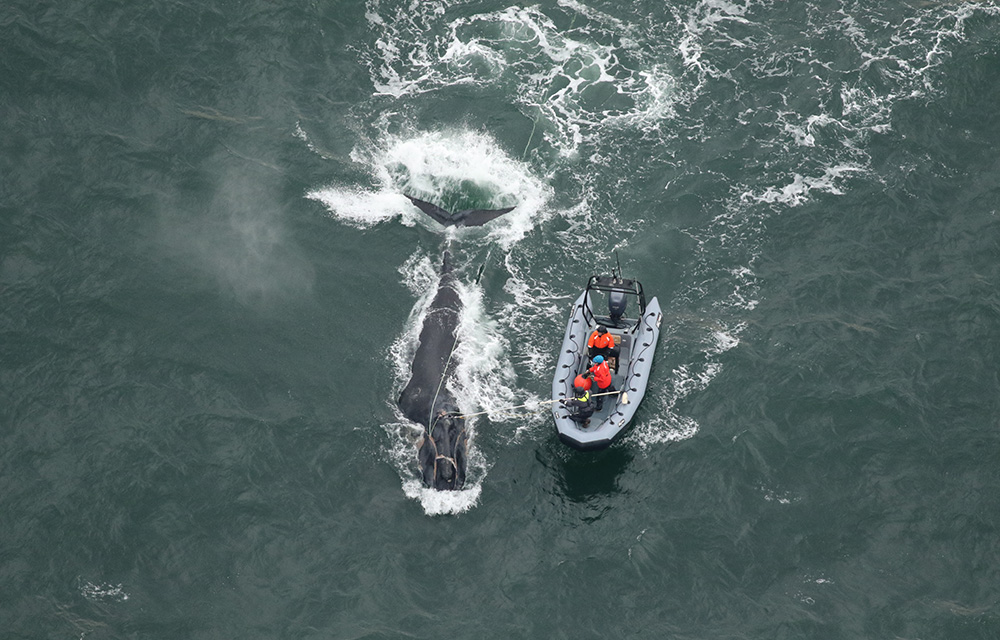
NOAA Fisheries has rolled out new requirements and voluntary measures to reduce whale entanglements in commercial fishing gear on the U.S. West Coast.
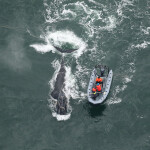
“This rulemaking is, in part, in response to increased rates of entanglement of humpback whales with Pacific Coast fishing gear since 2014,” NOAA Fisheries said in its release. “Marine animals, like whales and turtles, can get caught in fishing gear, which can prevent them from eating or cause serious injury or death. The animal most often entangled in gear associated with the Pacific Coast groundfish fishery is the humpback whale.”
According to a NOAA Fisheries report released last month, there were 63 confirmed cases of whales being entangled along the West Coast of the U.S. in 2025; that accounts for roughly 78 percent of all confirmed whale entanglements nationwide for last year. Conservation groups have pressured both the federal and state governments to take action to reduce whale entanglements, such as closing commercial fishing areas when whales are present, requiring or enabling the use of popup gear that don’t use the vertical lines that threaten whales, and requiring gear marking that allows regulators to trace back gear found in entanglements to their source.
On 13 October, NOAA Fisheries announced the adoption of requirements and voluntary measures first recommended by the Pacific Fishery Management Council at its June 2024 meeting.
The main change in the package is the removal of the requirement that commercial fishers have surface gear at both ends of groundfish pot and bottom longline gear sets. That would allow commercial fishers to use just one vertical line for their traps instead of two, reducing the number of lines that could ensnare a marine mammal. That action, however, would be entirely voluntary.
NOAA Fisheries has also specified new gear marking rules for those using bottom longline or pot gear in the Pacific Coast groundfish fishery. Those using pot traps must use orange tags with the letters “GP” engraved on both sides along with orange and blue lines. Those using bottom longline gear must use brown tags with “GL” engraved on both sides with brown and blue vertical lines. The lines must continuously use that color scheme for the first 37 meters. Only manufactured lines that meet government specifications will be allowed beginning 11 January 2030.
The new rules also limit the length of surface line to 60 feet maximum.
The government is allowing a phase-in period, allowing commercial fishers to use temporary alterations to their marking to meet the requirements for the first few years.
“For the first three years after the initial effective date of these requirements, temporary marking methods may be used to satisfy the line marking requirements, and thereafter, the top 20 fathoms (37 meters) of vertical line must be line manufactured in the designated color schemes,” NOAA Fisheries said.
The Center for Biological Diversity (CBD) warned that the government’s actions fall short of what is needed to protect whales and substantially reduce entanglements.
“Trying to stop whale entanglements without reducing fishing line in the water makes no sense,” CBD Oceans Campaigner Ben Grundy-Hawley said in a release. “These new rules will help figure out what kind of gear is causing deadly entanglements but won’t do enough to stop the problem.”
“The agency needs to enact much stronger protections for this fishery to really address the urgency of this deadly problem,” he added.
