


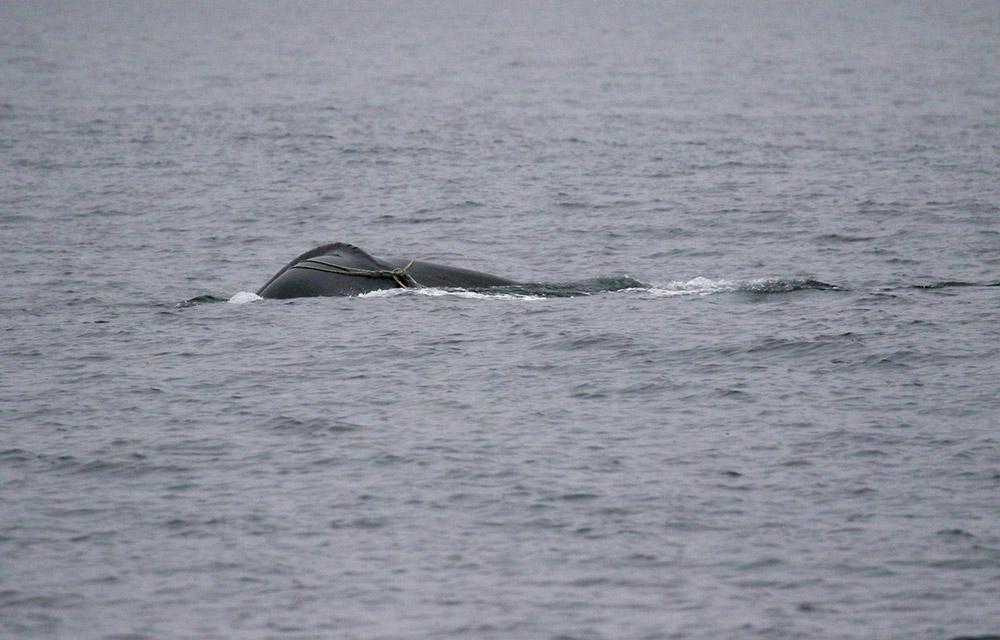
NOAA Fisheries confirmed 76 large whale entanglements in 2025, which is fewer than the 95 confirmed cases in 2024 but higher than the 18-year average of 72.7 cases.
“Entanglements in fishing gear or marine debris represent a continued threat to the welfare and recovery of many whale species,” NOAA Fisheries said in a release. “This includes species that are endangered, such as North Atlantic right whales. Entanglements involving threatened or endangered species can have significant negative impacts on the population as a whole.”
Roughly 46 percent of the entanglements could be directly tied to commercial or recreational fishing gear, while the government was unable to attribute the remaining cases.
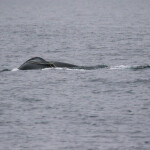
Seventy of the confirmed cases involved live animals, while another six were reports of already deceased whales. Notably, the report does not include whales that were sighted outside of U.S. waters, even if they were entangled in gear from U.S. commercial fisheries. The report documents entanglements involving 65 humpback whales, four grey whales, two fin whales, one minke whale, one sperm whale, and one North Atlantic right whale.
The vast majority – 78 percent – of the confirmed entanglements took place in the Pacific Ocean, with relatively fewer cases reported on the country’s East Coast.
“Cape Cod Bay and Massachusetts Bay have historically been areas where many confirmed large whale cases were initially reported; however, in 2025, only 5.3 percent of cases were first confirmed in these areas,” NOAA Fisheries noted in its report.
Despite the low number of New England cases in 2025, conservationists are warning of a large uptick in reports this year. According to the Center for Biological Diversity (CBD), 31 whales have already been reported tangled on the East Coast in 2026. Citing federal data, CBD reported 26 humpback whale entanglements, three minke whale entanglements, one fin whale entanglement, and one North Atlantic right whale entanglement.
“Entanglements often kill or disable whales and sea turtles, and these shocking new numbers show we’re utterly failing to solve this deadly problem,” CBD Oceans Policy Specialist Rachel Rilee said in a release. “We’ve known for years that entanglements are killing critically endangered North Atlantic right whales, and pop-up fishing gear could help end this gruesome problem. Federal officials and the fishing industry need to stop making excuses and start embracing safer gear.”
While NOAA Fisheries is currently accepting public comments on the use of pop-up, or ropeless, gear in New England, the administration of U.S. President Donald Trump has discouraged the New England Fishery Management Council from considering ropeless gear and has listed blocking a hypothetical ropeless gear mandate as a priority for NOAA Fisheries. Meanwhile, lawmakers in Congress are pushing to extend a moratorium on new regulations of the lobster industry meant to prevent North Atlantic right whale entanglements through 2035.
