






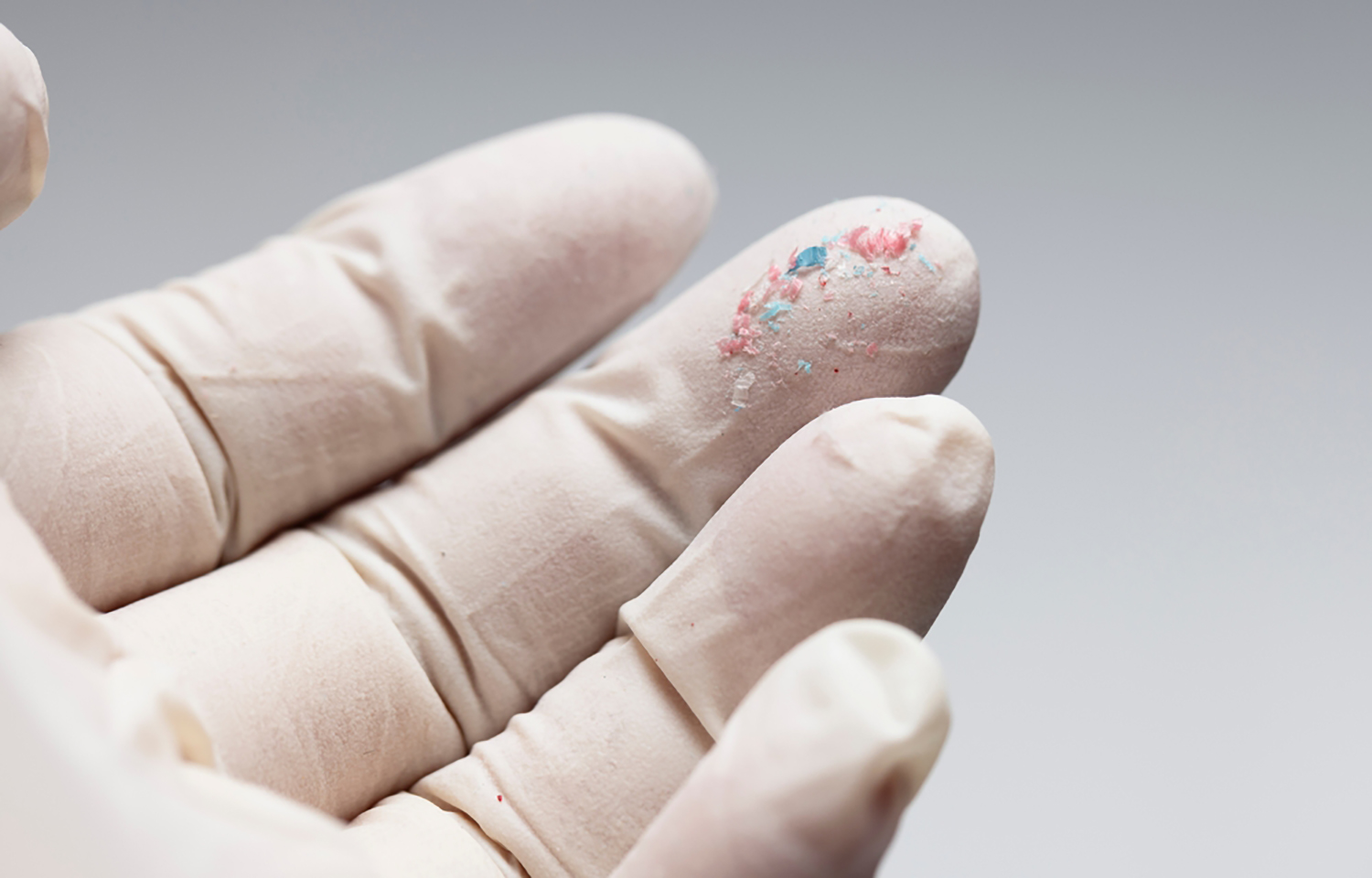
As the issue of microplastics and their potential negative health effects gains significant traction in both scientific literature and media coverage, consumers are becoming increasingly cautious about their food sources.
Research suggests that microscopic plastic particles are near ubiquitous and virtually unavoidable, but special attention has been paid to their presence in seafood.
Scientists have detected microplastics in a variety of seafood products, with a recent study finding microplastics in nearly all tested seafood samples along the U.S. West Coast, stoking fear among consumers and confusion on how to respond among those in the industry.
According to Norbert Kaminski, the director of the Institute for Integrative Toxicology and Center for Research on Ingredient Safety at Michigan State University, the study of microplastics is novel, limited, and, in relation to seafood, not yet a cause for concern.
“It doesn't even matter if you're eating seafood or other types of foods because there's probably more microplastics that get into your food as you're preparing it in your kitchen than what has actually been consumed by whatever you're eating,” he said.
Additionally, concentrations of microplastics have been shown to be relatively consistent among seafood, plant-based protein, and terrestrial meats. Even so, the main source of microplastic exposure isn’t the food or water we consume but the air we breathe, specifically when indoors, Kaminski explained.
“Virtually all the fabrics that we use today have some component of plastic within them due to the synthetic fibers used,” he said. “Your carpeting, the fabric on your furniture, your clothes, you name it, they all produce microplastics that accumulate in indoor air.”
Whether consumed or inhaled, the body is typically able to expel microplastics naturally due to their size, limiting the amount of damage they can do, according to Kaminski. Similarly, microplastics are generally passed through a fish’s digestive tract.
However, Kaminski noted, particles smaller than 1,000 nanometers in diameter, known as nanoplastics, might be small enough to cross biological barriers and cause more harm to health, though current evidence is also extremely limited.
Considering the limited understanding of microplastics in seafood, few seafood companies have acknowledged it as an issue. On the other hand, some companies have made it their mission to actively reduce microplastic levels in their products.
San Pedro, California, U.S.A.-based direct-to-consumer seafood subscription service Seatopia markets its products as “certified-clean seafood” that’s mercury-safe and free of detectable microplastics.
After working in aquaculture for over a decade, Seatopia Founder James Arthur Smith told SeafoodSource he noticed that traditional seafood distributors were unwilling to pay for innovative feed and sustainable practices to mitigate mercury and microplastic levels in seafood products. He said he created Seatopia to not only offer health-conscious consumers a lab-tested seafood product but also to create a market for farms with clean practices.
“We exist to support innovative farms and feeds and to create a market for fish-free feeds and for innovative projects that previously never got past pilot projects out of universities,” Smith said.
When sourcing for Seatopia, Smith said he prioritizes farms that reduce microplastic exposure through careful feed selection. Through Seatopia’s testing across multiple seafood sources, he found that traditional feeds made with fishmeal and fish oil from more polluted regions carry higher microplastic risks, whereas farms using alternative diets – such as microalgae oil or insect protein – demonstrate significantly lower levels of microplastic accumulation.
“We're not seeing higher levels of microplastics in the fish just because of the environment,” Smith said. “A bigger determinant is the feed, and we've seen that in the tests.”
According to Smith, the “Seatopia Standard” defines seafood as “safe enough” if it contains zero detectable microplastics and less than 0.1 parts per million of mercury – thresholds set with guidance from a nutritionist and a functional medicine doctor to ensure safety for daily consumption by pregnant women, children, and infants.
The company uses third-party laboratories to test its seafood products at least annually for mercury levels, detectable microplastics, and micronutrient levels, publishing every certificate of analysis on the website for anyone to download.
While Smith is proud of Seatopia’s work to mitigate microplastics in seafood, he acknowledges that his solution isn’t scalable or realistic at an industry-wide level.
“I don't think the industry has an answer for it,” Smith said. “I don't think that our solution is applicable to all price points. To be clear, the vision of Seatopia is not to replace all seafood; we just want to demonstrate to the market that there is demand for clean, regenerative seafood.”
According to Kaminski, microplastics will inevitably end up in seafood, and while the health effects of plastic particles – particularly those smaller than 1,000 nanometers – remain uncertain, the nutritional benefits of seafood are well-established and thoroughly documented.
"The thing that often gets lost in the discussion is the benefits of eating fish and seafood,” he said. “Exposure to omega fatty acids is a very healthy part of our diet."
