






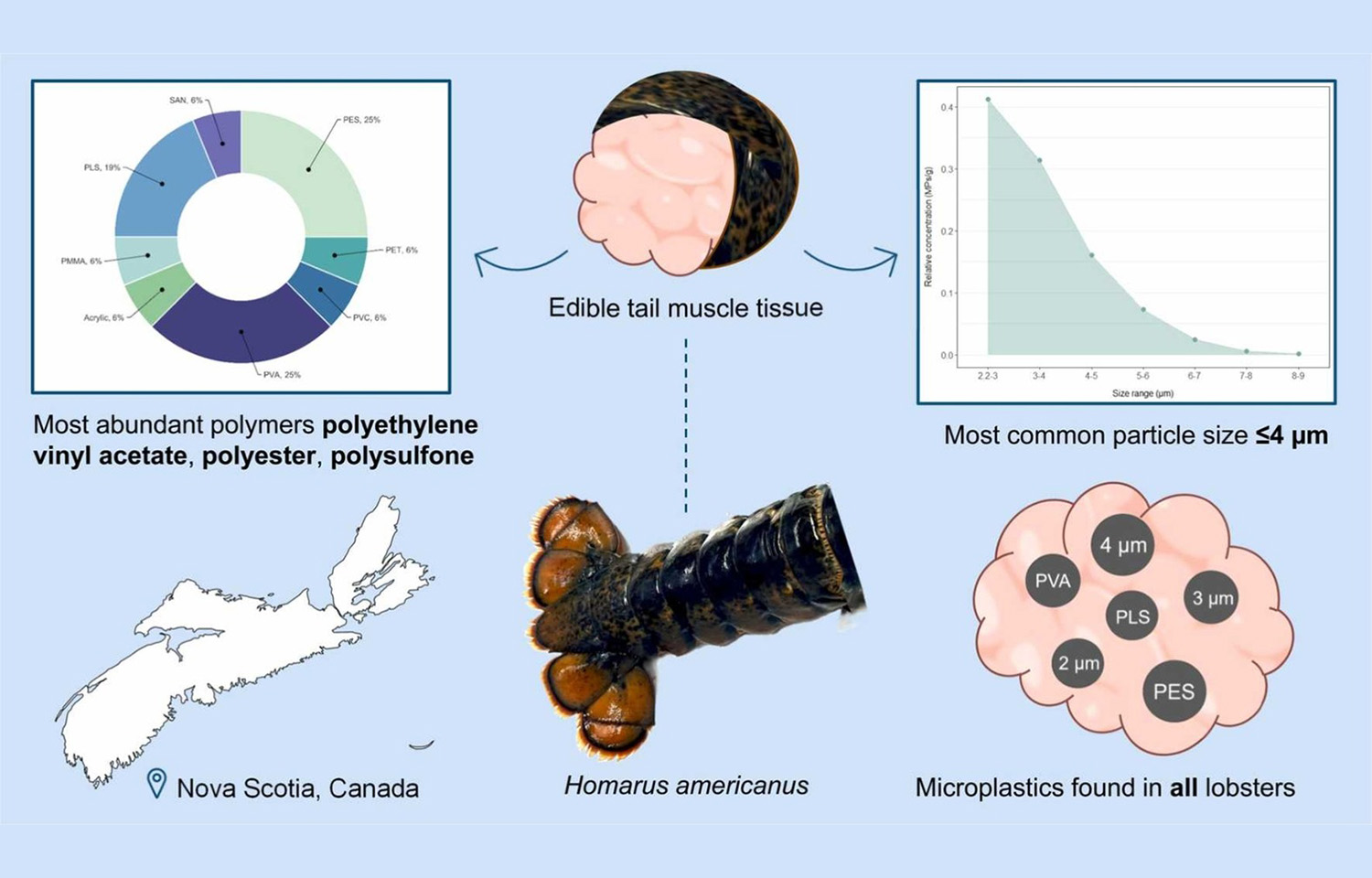
A new study published by Dalhousie University said it found microplastics in the meat of lobsters caught off the coast of the Canadian province of Nova Scotia.
The new research, published in Regional Studies in Marine Science, found varying concentrations of microplastics in lobster muscle tissue, but every single individual tested had some level of microplastics present. According to Dalhousie University, the edible tissue of 16 different lobsters was investigated from major fishing zones in the province.
“On average, they found six to seven microplastic particles in a single gram of meat, with an average size of plastic being 3.65 micrometers – about 30 times thinner than the width of a human hair,” Dalhousie University said in a press release.
The study’s lead author Amber LeBlanc told the CBC that she was not surprised to find the microplastics.
“I think the size of them, though, was very surprising,” she said. “Like, they're so, so small. And then just the fact that they seem to potentially be coming from so many different sources.”
The study found that the most abundant polymers present were polyethylene vinyl acetate, commonly found in items like laundry detergent pods, packaging, and boats; polyester, likely from clothing; and polysulfone, an industrial plastic used in boats. Altogether those three plastics made up 69 percent of the microplastics in the lobster flesh studied.
LeBlanc said the small sample size means more research is needed to determine if there are any geographic reasons behind different concentrations in lobster. Dalhousie University Professor Tony Walker said the concentration was also “relatively low” compared to other types of food.
The new study adds to a growing body of evidence that microplastics are found in most seafood. A study on the U.S. West Coast found microplastics in every tested sample. Industry groups have argued the concentration in seafood is no different than the concentration in most foods, and recent research found microplastics are at similar concentrations across most protein types.
