



As a Japanese-American, Alissa Miky said she’s been taught to view food as medicine from a young age.
After being diagnosed with cancer at 30 years old, she decided to apply that lifelong lesson to her newest business venture, OoMee.
“The cancer treatment was so tough; my hormones were always up and down, and I was always [hungry],” Miky said. “I gained 40 pounds in just three months, so what I did was I actually went back to Japan to treat myself. I talked to my 95-year-old grandma about my situation, and she said, ‘Alissa, drink seaweed.’ I didn’t know that, but the recipe was simple: Prepare one little teapot, put in two slices of the seaweed, leave [the seaweed for] one night, and drink it the next day. It works.”
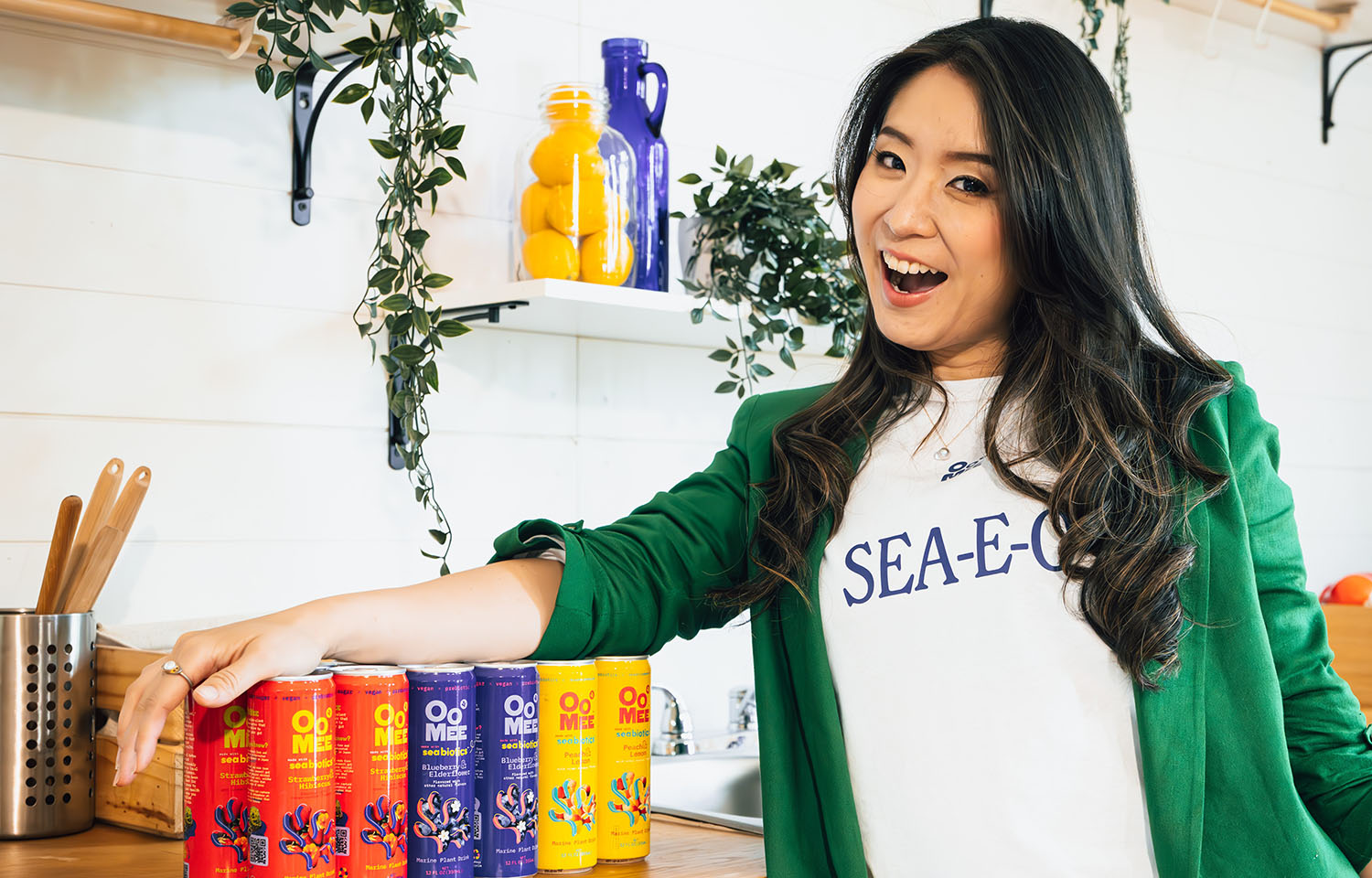
OoMee is a canned beverage the brand describes as “a refreshing, feel-good red seaweed drink powered by Seabiotics to help you balance and lighten up.” Each can is 20 calories, contains zero artificial flavors or added sugars, and claims to help curb cravings. It hit store shelves in spring 2025 and now is in over 700 retail stores worldwide.
Miky is also the founder of Los Angeles, California, U.S.A.-based seaweed technology company Aqua Theon, formerly known as Cashi Cake, which she founded in September 2019. The company recently earned a capital infusion of USD 13 million (EUR 11.3 million) in a seed funding round, USD 5 million (EUR 4.3 million) of which will go toward developing OoMee.
Her other product, Misaky Tokyo, is a seaweed-based candy using the same agar agar, or red algae, ingredients and technology as OoMee uses.
“Every thought was connected in my head,” Miky said. “Misaky Tokyo was already doing a seaweed candy brand. We built a lot of technology and supply chains, and grandma also told me to ‘dream seaweed.’ I took everything in my head, and I said, ‘I need to make this happen.’”
“Seabiotic” is a trademarked term by OoMee, which Miky said is the proprietary, marine-based, agar agar-derived wellness ingredient used in each can. It is commonly used in food products across Japan in packaged products like yogurt, sandwiches, and protein bars. However, Miky said the ingredient is not widely used in the United States, leading her to blend her Japanese-American background into a new product for Americans to try.
“The buyers’ reaction was simply that they are already feeling tired about probiotics because most of the products talking about [them] are everywhere,” Miky said. “But, when we talk about Seabiotics, a new concept, they say it’s cool and really innovative. They feel that it’s the future because of sustainability.”
That messaging has worked, Miky said, with a current 70 percent customer return rate in just under a year. The company’s biggest retailer partners are currently Raley’s, Sprouts, Bristol Farms, Central Market, Nob Hill Foods, Bel Air, Mother’s California Market, and Down to Earth.
With the seed funding round capital infusion, Miky said the plan is to continue to scale up.
“People love it; they love the flavor. People love the lightness,” Miky said. “I am so grateful that people are finally ready to consume seaweed.”
Though the product has started to see success, building the brand wasn’t an easy road, Miky said.
By far, the most challenging aspect was nailing both consistency and flavor, which is something that took nearly four years in the R&D phase, she said.
The majority of the R&D phase was focused on creating an agar agar product that did not have a fishy aftertaste, without sacrificing the health benefits.
“There are a lot of fibers and minerals. It was amazing … but it was so disgusting,” Miky said. “It was so gross and fishy. I’m Japanese-American … I think I have much more capacity of eating or drinking fishy stuff, but even me, I felt it was [gross].”
Another challenge was ensuring the seaweed properties remain consistent, as changing temperatures affect the quality of the seaweed. Miky said seaweed harvested on a warm day will have “gigantic” seaweed-derived fiber but no texture once poured. However, seaweed harvested on a cold day will have less seaweed-derived fiber but a strong texture.
To correct this inconsistency, Miky said her company has exclusive rights to import Japanese technologies into the U.S. to ensure consistency despite environmental factors. Additionally, Miky said the sea-derived fiber for OoMee production is shipped to the U.S. in powder form, so it’s shelf-stable.
Sourcing locations include Chile, Indonesia, and Japan, and manufacturing the imported powder occurs in factories in the U.S. states of Florida and California.
Through the finished product, Miky said she wants to change public perception of seaweed from an icky, gooey, fishy substance to “sexy” and show the health benefits of approaching diet culture as adding more foods, rather than eliminating or limiting certain foods.
“My message to everybody is, ‘Let’s drink more seaweed,’” Miky said. “I’m not asking too much. I’m not saying, ‘Don’t eat this or that.’”
The product’s first release, OoMee Legacy, came in three flavors: strawberry hibiscus, blueberry elderflower, and lemon peach. The company has since expanded into a matcha line, with flavors of matcha passionfruit and yuzu, matcha berry, and matcha lemon and mint.
“In the past, it was just a juice,” Miky said. “But now with matcha, we actually found an amazing spot [for consumers] in the morning and pre-workout. If you’re a coffee drinker, you probably understand that coffee spikes [hormones] and you get tired and feel more hungry, but with OoMee matcha, you have clean energy.”
