






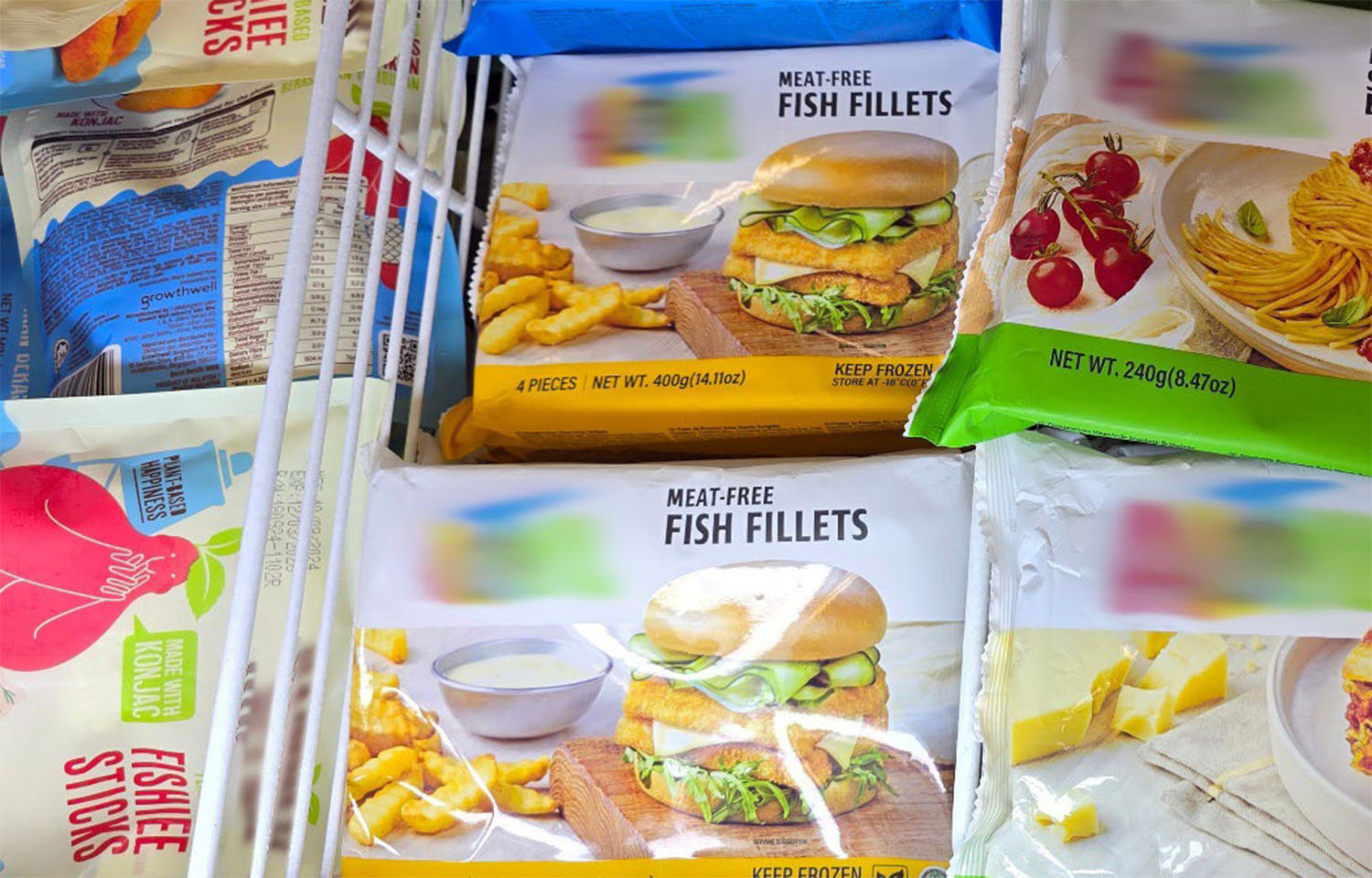
A group of organizations representing the fishing and aquaculture value chain in Spain – including the Association of Manufacturers and Distributors (AECOC), the Spanish Fisheries Confederation CEPESCA), and more – are lauding a recent study by the E.U. Parliament determining that current plant-based seafood analog labeling is unclear.
The report found that 45 percent of plant-based seafood analog products use fictitious names that suggest relationships with seafood, while only 13 percent provide sufficient information to inform consumers of what the product actually contains. The study said it found potentially non-compliant marketing strategies that “exist on a large scale” and suggested new initiatives to tackle the issue – including stricter labeling of the products.
“The industry agrees with the study's call to move beyond vague ‘plant-based’ or ‘vegan’ labels, promoting clear information about the main ingredients, country of origin, and level of processing,” a press release from the groups said.
The sector representatives said that the seafood industry has no problem with new food products but wanted to ensure that those products are accurately labeled for consumers to avoid confusion.
“It's important to call things by their name and not mislead,” the group said. “European seafood remains one of the most nutritious, sustainable, and low-carbon foods. They are produced and marketed by qualified professionals, are strictly regulated, and are a source of high biological value protein and rich in essential nutrients, including natural omega-3s."
The group also said that it’s not a case of plant-based products competing against seafood products but, rather, a case of ensuring truthful advertising in products.
“When a consumer chooses a product, they deserve to know exactly what it is, what it contains, and how it's made,” the group said. “This study provides a constructive roadmap to achieve this.”
The U.S. Food and Drug Administration (FDA) recently issued new guidelines on labeling for protein analog producers, recommending that producers accurately and prominently label products with their main ingredients and the common names of the food that the product is imitating.
The FDA said names like “Meatless Meatballs” could signal that it’s a meat alternative but does not do enough to inform consumers of what the food is actually composed of.
The seafood industry in the U.S. has long advocated for clear labeling on plant-based seafood analogs to avoid confusing consumers.
