





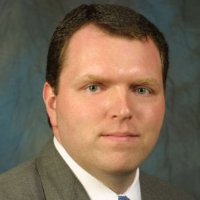
U.S. Senator Maria Cantwell (D-Washington) spoke out at a Senate committee meeting on Wednesday, 16 October, on the concerns she has about increasing the amount of aquaculture developments in American waters.
In particular, she pointed to the escape of more than a quarter-million Atlantic salmon from a Cooke Aquaculture net-pen into Washington’s Puget Sound. The Washington state legislature has since taken steps to close fish farms for non-native species by November 2022.
Cantwell was speaking at a hearing of the Senate Committee on Commerce, Science, and Transportation titled “Feeding America: Making Sustainable Offshore Aquaculture a Reality.” Among the hearing’s invited witnesses were Linda Cornish, the founder and president of the Seafood Nutrition Partnership; NOAA Deputy Assistant Administrator of Operations Paul Doremus; Ben Halpern, the director of the University of California, Santa Barbara’s National Center for Ecological Analysis and Synthesis; Lummi Nation Chairman Jeremiah Julius, Chairman; and Kathryn Unger, the managing director, CQN North America, a division of Cargill Aqua Nutrition. Unger also serves as the president of Stronger America Through Seafood, a trade group promoting the U.S. aquaculture sector.
Commerce Secretary Wilbur Ross and U.S. Senator Roger Wicker (R-Mississippi) have been leading a push to increase aquaculture production as a mean to grow more seafood domestically. Wicker serves as the chairman of the committee that held Wednesday’s meeting.
The hearing centered on the lengthy and complex permitting process for offshore aquaculture in the U.S. exclusive economic zone. It delved into the specific cases of the Catalina Sea Ranch, a mussel farm in California that is currently the only aquaculture facility operating in federal waters, as well as Pacifico Aquaculture, a U.S. company producing farmed sea bass in the northern part of the Baja Peninsula in Mexico, and the Rose Canyon Fisheries Sustainable Aquaculture Project, which was launched in 2015, but is still not in operation due to permitting difficulties.
At the hearing, Wicker announced his “Advancing the Quality and Understanding of American Aquaculture Act” (AQUAA Act), which would "direct the National Oceanic and Atmospheric Administration to streamline the federal permitting process for aquaculture, effectively organizing a currently fragmented regulatory system."
“My legislation would create a set of national standards for sustainable aquaculture, similar to the standards set by the Magnuson-Stevens Act,” Wicker said. “Because of the Magnuson-Stevens Act, the U.S. has the best managed fisheries in the world. We should lead the world in aquaculture management.”
In a position paper it provided to committee members, Seafood of the Future, a program of the non-profit Aquarium of the Pacific and an advocate of offshore aquaculture, noted that livestock production is a major producer of the greenhouse gases that lead to global warming, and that seafood provides a less carbon-intensive option.
“Responsible marine aquaculture (farming shellfish, seaweed, and finfish in the ocean) can operate with less reliance on scarce land and freshwater resources than land-based food production,” the group wrote. “It can also create lower GHG emissions per pound of protein than other meat sources and may be less susceptible to the impacts of drought, floods, and severe weather events.”
However, Cantwell, the committee’s ranking minority member, expressed concerns about how the government would address pen failures.
“We’ve heard very little in response from NOAA about how to deal with these spills, or the fact that I believe they didn’t take the spill in Washington seriously enough… Let me be clear: poorly-managed and under-regulated offshore aquaculture poses a direct threat to our marine ecosystems and domestic fisheries,” she said.
Aquaculture releases can pose a threat to existing wild-caught fisheries, said Jeremiah Julius of the Lummi Nation testified. But aquaculture can also help sustain communities, he added.
For example, Julius’ home state of Washington has a USD 270 million (EUR 242.7 million) farmed shellfish industry. With more than 3,000 fish farming jobs along the coast, the aquaculture sector is a leading employer in Washington’s coastal communities.
“Due to habitat destruction, previous management practices by state and local governments, climate change, and many other reasons, the fish populations in the Salish Sea have been decimated and are a fraction of their historic levels,” Julius said. “In order to maintain even the most meager of fisheries, my people have relied on finfish and shellfish hatcheries to maintain our way of life and provide for our families.”
Photo courtesy of Office of U.S. Senator Roger Wicker
