






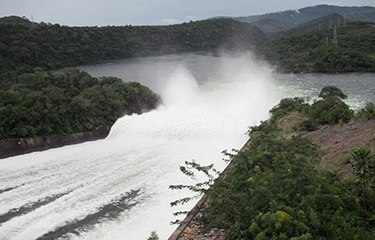
The Volta River Authority (VRA) – the main supplier of electricity in Ghana – recently approved a controlled spillage of water from the Akosombo Dam in southeastern Ghana, and because of persistent rains and a lack of notice to aquaculture farmers in the area, small- and medium-cage fish enterprises downstream from the reservoir suffered heavy losses.
Ghanaian Chamber of Aquaculture CEO Jacob Adzikah said the spillage of water may fully incapacitate smaller fish farms in the region that have already suffered over the last five years from massive tilapia losses in 2018 and challenges from the Covid-19 pandemic.
“As we speak now, most of the small-scale aquaculture farmers are struggling because the majority have no insurance cover against such risks,” Adzikah told SeafoodSource. “The road to recovery for many of these cage fish farmers will be a difficult one, and as a chamber, we fear some may not recover at all unless they get adequate support.”
Initial assessments estimate that more than 60 cage-based fish farmers have suffered losses in excess of GHS 58 million (USD 4.8 million, EUR 4.4 million), as the spilled water destroyed land-based operations such as hatcheries, equipment, and buildings that were either completely submerged or washed away, according to Adzikah.
Ghana’s Aquaculture Research and Development Center, which is a few kilometers away from the dam, also suffered heavy damage as “parts of the center were submerged and fingerlings washed away,” Adzikah said.
The decision to greenlight the supposedly controlled spillage stems to 12 September, when the VRA announced that the water level in the dam had “reached its safe operating level at this time of the year, so there is a need to release water from the reservoir to make room to be able to accommodate incoming flows.”
The VRA said that without spilling the water, water levels could compromise the integrity of the dam.
Although the VRA said on 12 September that the water level “may need to commence controlled spilling in the coming days, should the situation persist,” the authority commenced with the plan within three days of its original announcement, leaving aquaculture farmers and companies downstream with little time to prepare.
Making matters worse, persistent rains led to rising water levels at the dam, resulting in the authority making the decision to intensify the spillage even more than originally planned.
“This communication from the VRA on commencing the spillage came in late, and cage-fishing businesses had inadequate time to salvage their fish stock, equipment, and other assets,” Adzikah said. “Fish farmers had little information on the amount of water that was to be spilled and … the farmers were surprised as the amount released overwhelmed them, causing huge devastation to their fish farms.”
In response to the damage, the Chamber of Aquaculture recently held a consultative meeting with insurance companies to determine whether it was possible to scale up aquaculture insurance coverage for small- and medium-sized aquaculture enterprises.
“We realize the insurance uptake is still low because the products on offer for aquaculture businesses are not well-promoted among fish farmers,” Adzikah said. “Many of the small and medium aquaculture businesses are not aware of the available insurance products, hence the reason the chamber is engaging with the insurance industry on how we can reduce risks for fish farming.”
Adzikah said his chamber reached out to the VRA “to explain how the spillage has impacted aquaculture businesses and why the authority should consider compensating the [affected] fish farmers, but we have yet to receive a response.”
The losses suffered from the spillage represent a setback for Ghana’s aquaculture development plan that prioritizes the sustainable growth of fish farming between 2023 and 2027, with the objective of increasing aquaculture output during that time frame from the 89,376 metric tons (MT) reported in 2021 to 211,697 MT.
Photo courtesy of Wikimedia Commons
