

Alaskan Leader Seafoods is working to have its miso black cod penetrate markets across the U.S., as the company works to leverage the growing available quota into a sustainable option for Alaska’s fishing fleet.
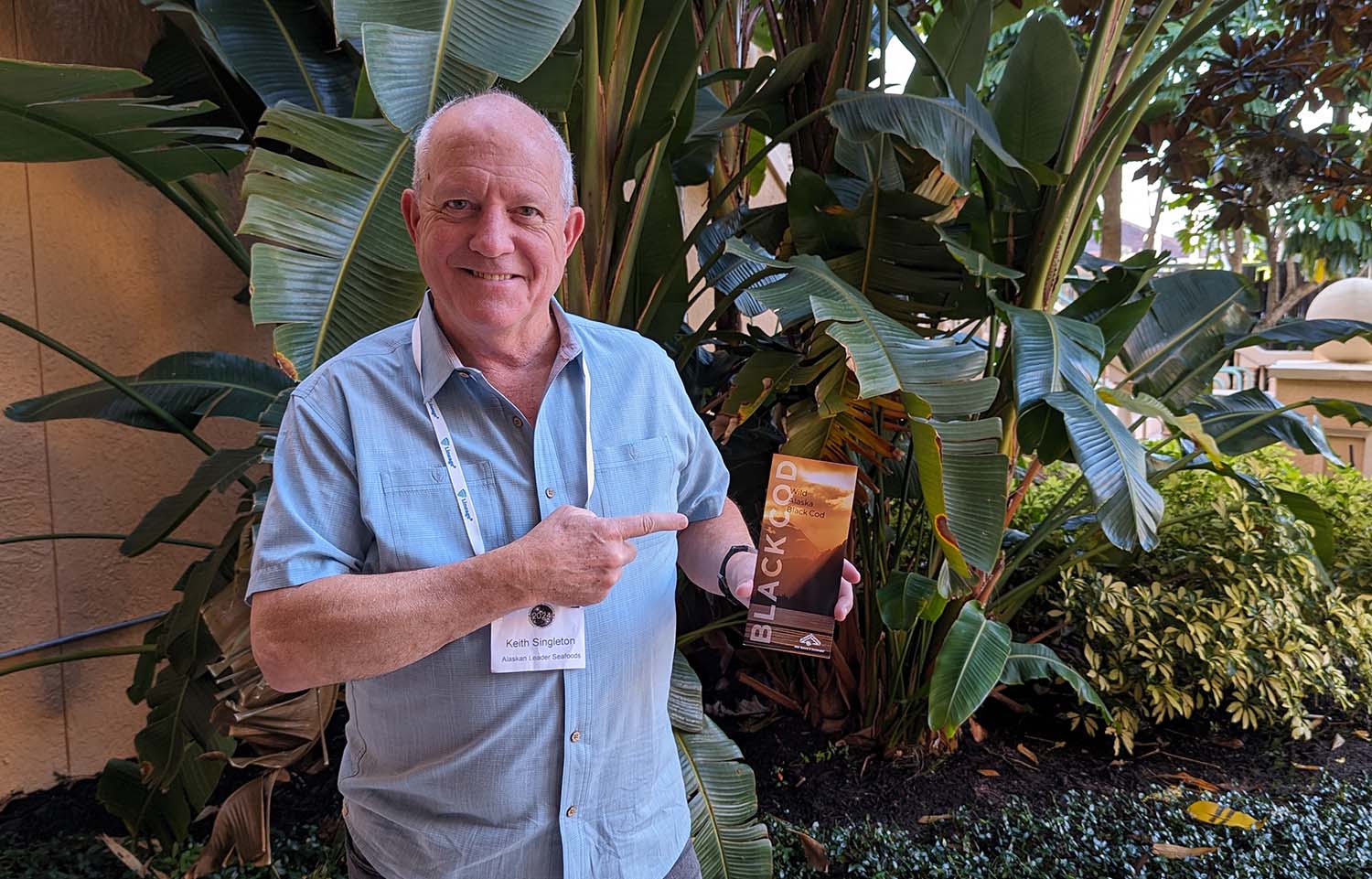
The company has been expanding the product in both retail and restaurant markets, capitalizing on the notoriety it obtained through winning two awards at the Alaska Symphony of Seafood in 2022. Alaskan Leader Seafoods Value-Added Programs President Keith Singleton told SeafoodSource at the 2024 Global Seafood Market Conference held from 23 to 25 January in Orlando, Florida, U.S.A. that an expanded market is essential to ensuring a robust fishing fleet.
Traditionally, Singleton said, much of the black cod supply was purchased by Japan, but in recent years, a strong American dollar coupled with a weak Japanese yen has reduced that market. While Japanese exporters are still earning big profits, companies selling in Japan are having trouble, according to Singleton.
“Up until just a few years ago, that was the primary market for wild Alaskan black cod,” Singleton said.
At the same time, as the market in Japan softened for the species, the quota started to increase – from 26 million pounds in 2019 to 62 million pounds in 2023. But, without a market that could pay for it, fishermen couldn’t afford to fish it.
“At the end of last year, the fleet tied up. Inflation is up, fuel prices are up, bait prices are up. It’s all a challenge,” Singleton said. “So, we needed to have a vessel to take this to the marketplace, and that’s where the miso black cod application came from – it’s a traditional, high-end, white-linen tablecloth, restaurant chain type of product.”
One of the biggest issues Alaskan Leader faced when developing the product was making sure it could be consistent in large enough volumes, Singleton said. Miso, as a product, can be inconsistent, and at the volumes needed, the company was facing quality concerns.
“I flew to Japan, and I went to the factory that makes the miso – it’s a fourth-generation factory,” Singleton said. “They’ve made accommodations inside the facility to make this miso into a marinade for us, and so now, we ship in fresh miso from Nagano, Japan.”
Consistency issues solved, Alaskan Leader could then introduce miso black cod to the wider U.S. market. Since its introduction, it has started to penetrate more menus and retailers. Costco Wholesale is carrying the retail version of the product, and US Foods is also carrying it as an item number now, Singleton said.
“We have several distributors across the U.S.,” Singleton said. “We’re growing it, in other words.”
Growing the market for the product is a way to help the fishing fleet – a goal core to the ethos of Alaskan Leader. The company was formed in 1991 by a group of seven fishing families out of Kodiak Island, and its roots are in fishing and the communities supported by it.
When developing the miso black cod, Alaskan Leader brought in the Bristol Bay Economic Development Corporation as a partner, and the company also has a "community development quota" for the fish, meaning 50 percent of the company’s profits go back to 17 villages in remote parts of Alaska that the company represents.
“So for us, it’s a win for the communities and for the fishing fleet. That’s why we do what we do,” Singleton said. “We’re not spec buyers. We’re not traders. We’re not brokers. We’re a fishing company that just happens to have some smart guys running it.”
In addition to the communities, the new product is also supporting other companies in the region, Singleton said. Alaskan Leader uses the services of multiple processing companies – including Ocean Beauty, Peter Pan, Alaska Glacier Seafoods, and others.
“We’re supporting the fishermen by doing that because all those fishermen don’t fish for Alaskan Leader,” Singleton. “It helps those companies turn that into revenue – to turn that material into cash and get it out of the freezer.”
Singleton said he hopes that, ultimately, the product continues to get more and more recognition and that a market for the product can be developed globally.
“It can really build an international miso black cod program because we have enough quota to easily do it,” he said.
Photo by Chris Chase/SeafoodSource
