





With both Chengdu and Shenzhen enduring COVID-19 lockdowns, China’s seafood industry expected subdued sales over China’s upcoming Mid-Autumn Festival on 10 September.
There are now 30 Chinese cities in various states of COVID-related movement controls, causing further harm to China’s restaurant scene, which has been struggling to cope with China’s zero-COVID policy as more consumers stay home.
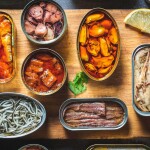
Corporate results in China thus far in 2022 have pointed to a continued weakness of the country’s restaurant trade. At the same time, sales of so-called convenience food products and ready-to-eat meals for home consumption have shot up. At a conference in early September hosted by the China Aquatic Products Processing and Marketing Association (CAPPMA), processed and “prefabricated,” or value-added seafood products, were named as the primary growth driver for China’s seafood sector.
Guolian Aquatic, a seafood processor increasingly focused on its value-added capabilities, has spent heavily in the past two years to expand its range of convenience meals, a shift from its previous strategy, launched pre-COVID, which saw it make significant investments in “central kitchens” to service fast-food restaurant chains. Guolian reported recently its 2022 revenue rose 15 percent year-on-year, with revenues from prefabricated products up 36.2 percent.
Sanquan Food, a maker of quick-frozen food items, including shrimp dumplings for both foodservice and retail, reported a 5 percent increase in the first six months of 2022 and net profits up 55.1 percent year-on-year. The company’s revenue from its sales of goods for household consumption rose 6.2 percent, while its sales to restaurants fell 1.9 percent in the period due to COVID impacts.
However, Guolian and Sanquan are struggling to pass on rising costs to customers, according to Sitonia, a Shanghai-based research consultancy. The seafood sector is facing logistical and freight disruptions caused by the COVID lockdowns, and subsequent higher costs for raw materials.
Several Chinese cities have sought to capitalize on the rise in popularity of “prefabricated” seafood products. At the beginning of September, Foshan city in Guangdong province introduced a futures insurance pilot, allowing food processing companies to purchase price guarantees for raw materials including perch, tilapia, and shrimp. In the same province, the city of Shantou has signaled its plan to be a regional capital of processed seafood meals for domestic and larger Asia-wide markets.
Based in the key seafood production region of Fujian, Anjing Foods (also known as Anjoy Foods) blamed disruption from COVID-related factory shutdowns and logistics disruption, as well as closure of retail outlets, for a 6.9 percent drop in its revenue for the first six months of 2022, while its net profit fell 63.3 percent in the period.
Photo courtesy of Robert Way/Shutterstock
