






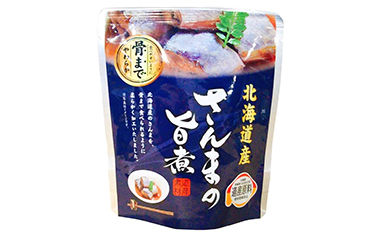
Seafood-processing company Kaneyoshi is capitalizing on the quirks of Japan’s recycling and tax systems to increase sales of its plastic-packaged consumer products.
At the FOODEX in Kansai trade show, held over the summer in Osaka, Japan, Kaneyoshi displayed its line of seafood packed in plastic pouches. It's seeking to capitalize on growing consumer calls for shelf-stable, yet still high-quality food products. Kaneyoshi Quality Control Manager Masaaki Osugi exhibited the pouch-packed seafood, which comes in a variety of flavors, including mackerel stewed in miso soup, Arabesque greenling with basil, conger eel, and saury, under the company’s Kaneyu brand.
“Retort packs are becoming popular for their convenience,” Osugi said. “They’re easy to throw away.”
That ease is extremely important to Japanese consumers, according to Osugi, because Japan’s recycling system picks up plastic more often than it does other materials. In most areas, trash services collect canned products just twice a month, while the service collects plastic weekly. As fish products can begin to smell the longer they’re left out – and often take up more space in canned form – consumers have prioritized products packaged in plastic, such as the company’s retort packs, that they know are condensable and will only be in their homes for a short time.
Even though the pouch packs hit all the boxes of what Japanese consumers are looking for, when the company first introduced the pouches, they were not an immediate hit. However, they started to gain traction as a hometown tax return item.
The products began to garner more attention when Kaneyoshi received the Ministry of Agriculture, Forestry, and Fisheries Award at the Central Contest for Excellent Hometown Food in 2011, with the product receiving widespread acclaim.
The company currently operates three factories for primary processing and two for processed products. Though its lineup still includes grilled salmon flakes in bottles and shrink-packed salmon and saury, retort pouches are now the company’s main packing form.
The current offerings from Kaneyoshi also reflect the growing popularity in Japan of ready-to-eat seafood products, with several demographic trends driving demand for such items.
In recent surveys, young Japanese citizens have said they don’t know how to clean, cut up, or prepare a whole fish. Additionally, Japanese children have said that they find it difficult to pick bones from grilled fish. The company’s ready-to-eat Kaneyu products designed to address those difficulties. Its simmered series now includes 25 offerings that customers can store at room temperature for up to two years, and they can open the pouches and eat the contents as-is or heat them in boiling water.
This minimizes the hassle of cooking, which is a major contributing factor behind Japan’s declining seafood consumption. The country’s 2001 per-capita seafood consumption was 40.2 kilograms, but by 2020, it had fallen to 23.4 kilograms. A Japan Fisheries Agency whitepaper released in 2022 said that consumers were hesitant in buying seafood mainly due to high prices and the labor involved in cooking.
Photo courtesy of Kaneyoshi
