






A bill being considered in U.S. Congress would prohibit presidents from prohibiting commercial fishing in marine national monuments, codifying that fishing activities in those areas must be regulated under the Magnuson-Stevens Act (MSA).
Successive presidents’ administrations have used the Antiquities Act to unilaterally establish national marine monuments or to change the protections granted within them, and commercial fishing groups have long bemoaned the use of that power to ban fishing within their boundaries. Former U.S. President Barack Obama prohibited commercial fishing within the nearly 5,000-square-mile Northeast Canyons and Seamounts Marine National Monument when he established it in 2016, and later presidents have alternated between reallowing commercial fishing or banning it again; most recently, U.S. President Donald Trump issued an executive order reauthorizing commercial fishing in the marine national monument.
“In my First Term, I reversed the prohibitions placed on Commercial Fishing, but Joe Biden, or whoever was using the AUTOPEN, foolishly reinstated them,” Trump wrote on his social media site Truth Social in February after revoking the commercial fishing ban. “Since Day One, I have taken historic action to END these disastrous policies and today, I signed a Presidential Proclamation to UNLEASH Commercial Fishing in the Atlantic Ocean, advancing the America First Fishing Policy!”
Trump has also pushed to undo a ban on commercial fishing within the Pacific Islands Heritage Marine National Monument, and under his encouragement, the Western Pacific Fishery Management Council has taken action to restore commercial fishing access within parts of multiple marine national monuments.
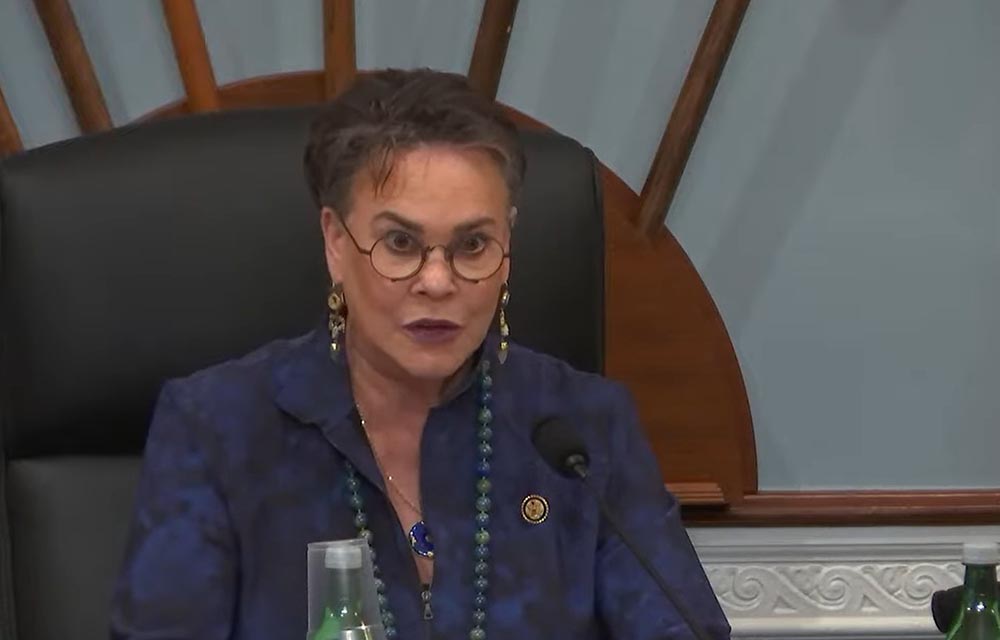
Now, U.S. Representative Aumua Amata Coleman Radewagen (R-American Samoa) has introduced legislation that would prevent presidents from using the Antiquities Act to ban fishing within a marine national monument, clarifying that fishing will be regulated under the MSA within those areas. During a 3 June hearing held by the U.S. House Subcommittee on Water, Wildlife, and Fisheries, U.S. Representative Harriet Hageman (R-Wyoming) spoke out in favor of the bill.
“Some of the gravest abuses of the Antiquities Act have occurred in the marine waters of the U.S. exclusive economic zone [EEZ]. Marine national monuments in both the Western Pacific and off the coast of New England have largely restricted commercial fishing access, undermining American seafood’s competitiveness and the coastal communities that depend on a thriving ocean economy,” Hageman said.
Like commercial fishing groups opposed to the bans, Assistant Secretary for Oceans and Atmosphere Tim Petty – who also spoke in favor of the bill at the hearing – argued that the existing regulatory process safeguards fish populations and habitats within those areas.
“The MSA, along with the Endangered Species Act, Marine Mammal Protection Act, and other applicable authorities, provides enforceable, adaptive, and science-based mechanisms sufficient to ensure the proper care and management of monument objects,” Petty said. “Moving forward, NOAA will continue to rely on the regional fishery management councils as critical advisors to ensure that fishing regulations are developed with local expertise and stakeholder input. By cutting red tape and prioritizing the MSA, we ensure our marine monuments support both a healthy environment and a thriving ocean economy.”
One of the witnesses at the hearing, American Tunaboat Association Executive Director William Gibbons-Fly, blamed marine national monuments for the shrinking size of the American tuna fleet in the Western Pacific. Roughly 53 percent of U.S. EEZ around the Pacific Islands Region is covered by marine national monuments, he said.
Other lawmakers have asked Trump to reinstate commercial fishing bans within the monuments. In March, a group of nine Democrat senators signed a joint letter asking the president to reverse his order directing the resumption of commercial fishing in the Northeast Canyons and Seamounts Marine National Monument.
“New Englanders largely favor the establishment of permanently protected ocean areas, but you baselessly justify this proclamation and its devastating environmental impacts by claiming that it will benefit commercial fishermen. The science suggests otherwise. Multiple studies show that creating well-managed marine protected areas that prohibit fishing has little to no harmful economic impact on commercial fishermen,” the lawmakers said. “When your administration opened the monument for fishing in 2020, 99 percent of fishing activity still took place outside of the monument. In an era where fish stocks are shifting and being depleted, fishing communities need our support more than ever, but selling out the monument to earn political points does nothing to actually help fishermen.”
