



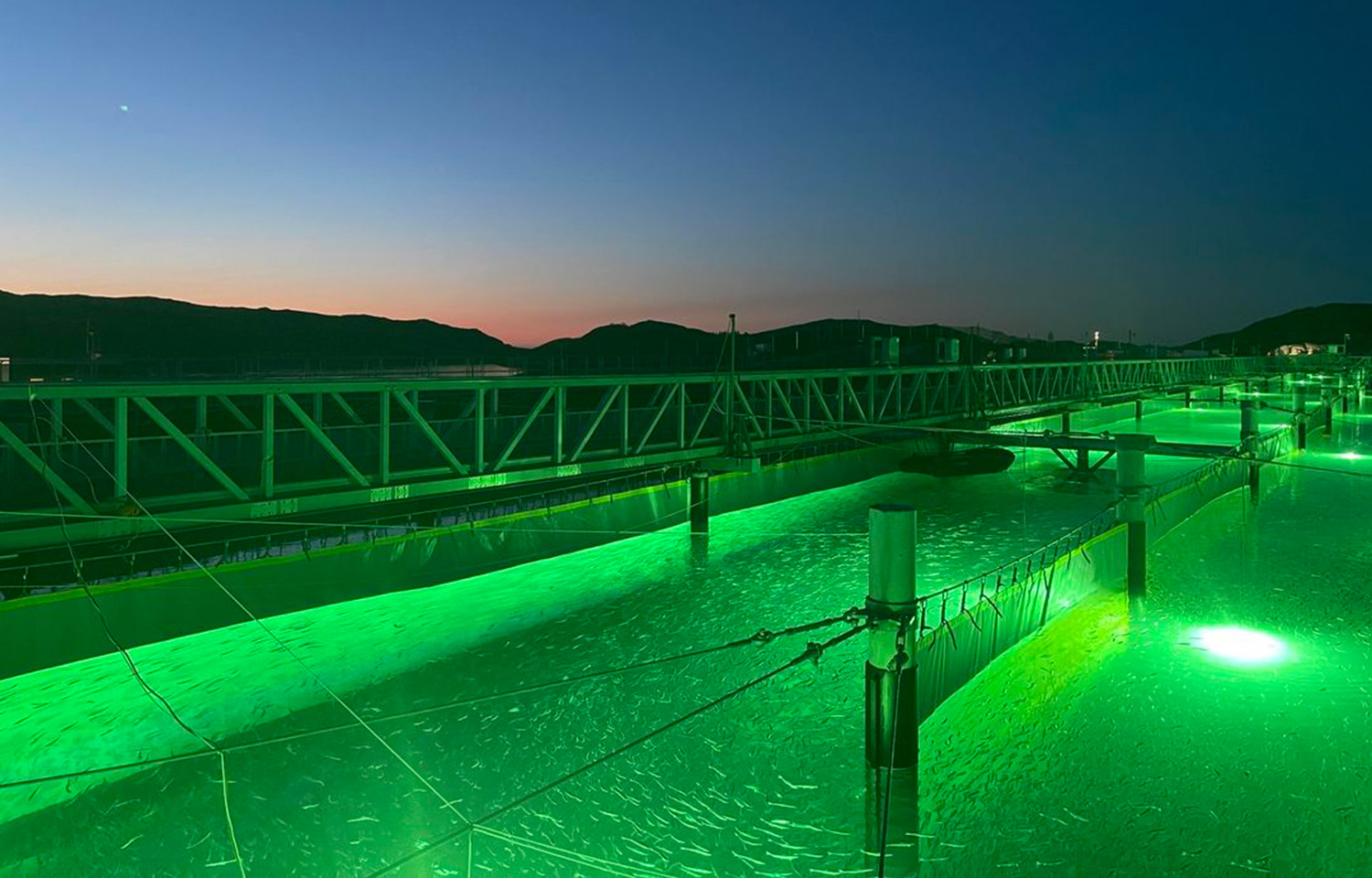
Land-based salmon farming company Gigante Salmon said it is cutting its 2027 harvest targets linked to continued biological challenges related to its 2025 generation.
In a post to the Oslo Børs, Gigante Salmon said it is cutting its harvest target from 10,600 metric tons (MT) to between 8,000 and 8,500 MT. In addition to the reduced harvest, the said its EBIT coast per kilogram has risen from NOK 58 (USD 6.25, EUR 5.37) to between NOK 60 and NOK 65 (USD 6.46 and USD 7.00, EUR 5.56 and EUR 6.02).
The company said the lower guidance is linked to challenges related to the 2025 generation, which has experienced elevated mortality.
“A contributing factor to the elevated mortality is that approximately 1 million fish were stocked as late as November 2024, which has led to significant challenges related to winter ulcers,” Gigante salmon said. “The elevated mortality has reduced the biomass available for harvest in 2027 and negatively impacted cost efficiency.”
The company said the mortality is a permanent loss of biomass and is the primary driver behind the reduced harvest volume expectations for 2027.
“The company has implemented operational and biological measures aimed at improving performance in subsequent generations and continues to closely monitor the development,” Gigante salmon said.
As a result Gigante salmon said it expects to have lower financial performance than expected, but those estimates remain subject to further developments.
“The Company will provide further updates as visibility improves,” it said.
Gigante Salmon said it has shifted to full operations in April 2026, and the company reported an operating profit at its facility in FY 2025.
The company reported the difficulties with the November salmon generation in its Q1 2026 report, and said that it had implemented measures to reduce mortality.
“Although such issues naturally arise during a scaling phase, the experience has provided valuable and concrete learning,” Gigante Salmon CEO Kjell Lorentsen said. “We are now working systematically to improve both feeding regimes and operating procedures, including better planning and execution of fish handling and grading, to ensure improved performance going forward.”
