



Australia is seeking to diversify away from a reliance on China as a source of demand for its agriculture and seafood products as well as services, according to a Hong Kong-based economist.
China’s economic slowdown and tensions with China over alleged interference in local politics and its expansionistic moves in the South China Sea will hurt Australian exports, noted Alicia Garcia Herrero, chief economist for the Asia Pacific region at French investment bank Natixis.
Tensions between China and Australia have been growing against a background of rising strategic competition between China and the United States, to which Canberra is traditionally allied.
Chinese officials warned of a boycott of food imports from Australia when the Australian government called for an independent global inquiry on China’s handling of COVID-19.
China continues to buy iron ore and coal imports from Australia, Garcia Herrero noted, but purchases of barley and beef have been disrupted after China raised issues over quality and food safety.
Australia has also looked to find new fonts of capital after a decade of huge investment from Chinese companies.
“China’s direct investment [into Australia] dropped by 72.3 percent from the peak reached between 2015 and 2018,” Garcia Herrero said. “In the meantime, the U.S., Canada, Singapore, and Japan expanded their foreign investment in Australia. Yet China has provided the largest number of tourists and, more importantly, [is] the biggest spender [on Australian goods] by far. This might be behind Australia’s push to diversify its trading partners towards India and Southeast Asian economies.”
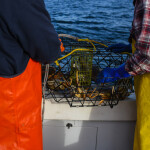
Even if back-up buyers emerge in southeast Asia, the scale of China's marketplace has made it a go-to for suppliers like the Geraldton Fishermen's Cooperative, which ships 90 percent of its crustacean catch to Chinese buyers. Meanwhile, Australia has been an attractive source of imports for China because of its premium products and superior logistics compared to alternative suppliers like Russia. In the seafood sector, imports of Australian lobster and abalone have been welcomed by Beijing for the taxes they stimulate at consumer level in particular.
China has pledged to rescue economic growth this year using fiscal policy and flexible monetary policy – but also by cutting administrative fees and taxes, which should spur businesses to increase trade.
While air freight has been impacted by the COVID-19 outbreak, Australia has a free trade deal with China and a large trade promotion network in the country that has ensured prestige and pricing power for Australian rock lobster and abalone. Other species like Russian king crab have increased in popularity and supply in China, but lack the prestige enjoyed by Australian seafood – which in turn makes it sought after by Chinese importers and traders.
Russia’s Far East – the source of seafood supply into China – is struggling to build the infrastructure needed to increase its trade with Chinese buyers, according to a new report co-published by think tanks Chatham House and the Royal United Services Institute in London.
“Without sustained and systematic improvements to the region’s transport networks, particularly railways, bridges, and ports, the Kremlin will be unable to attract the foreign investment needed to boost freight capacity and support export growth,” the report noted.
Western sanctions have weakened Russia’s relations with the U.S. and Europe and forced Russia to seek alternative economic partners in Asia. But some measures to encourage foreign investment into Siberia has yet to result in large-scale inward investment.
“Absent substantial new capital inflows, many major projects, such as the planned expansion of ports, are on hold,” the report said.
Photo courtesy of Alvin Loy Gin Hui/Shutterstock
