





Japan’s Fisheries Agency reported in a press release that the price of elvers, after declining for the last three years, increased in 2022.
The price of elvers, or glass eels, rose this year to JPY 220,000 (USD 1,602, EUR 1,587) per kilogram, up from JPY 132,000 (USD 961, EUR 952) in 2021. Prices were as low as low as JPY 16,000 (USD 116, EUR 115) per kilogram in 2003, but rose to an all-time high of JPY 299,000 (USD 2,177, EUR 2,157) per kilogram in 2018.
Japan caps the Japanese river eel elvers at 21.7 metric tons (MT), in an agreement with China, South Korea, and Taiwan. Those countries are allowed 36 MT, 11.1 MT, and 10 MT, respectively. There are separate caps on other species of eel.
Kabayaki shops in Japan, which specialize in eels, will pay about 40 percent more for live eels this year due to low supply, and they’re raising sales price for the dish by about 10 percent to cover the higher material costs. Some high-end kabayaki shops use live eels and make a display of butchering them on site.
Though there has been some experimentation in eel breeding in Japan, costs are still prohibitive, so that practically all farmed eels come from wild-caught glass eels netted as they migrate up rivers from the sea. They are raised for between six and 18 months.
For prepared dishes using frozen eel, a larger eel raised for 18 months gets yields meat. However, for the specialty shops, younger eels farmed for about six months are preferred, as they have soft bones.
Nikkei Shimbun reported that live eels from Aichi Prefecture weighing 250 grams were selling at JPY 4,800 (USD 35.10, EUR 34.89), 40 percent higher than the same period of 2021. Kagoshima, Aichi, Miyazaki and Shizuoka prefectures lead eel-farming production in Japan.
Live eel from China is JPY 4,300 (USD 31.44, EUR 31.26), a rise of about JPY 1,500 (USD 10.96, EUR 10.90), according to the report.
There was a good catch of eels in 2021, so larger eels are available. However, the upriver migration was delayed in the harvesting season that lasted from 3 November, 2021, to the end of April 2022, as drought prevented the glass eels from entering rivers, and the numbers were down from last year. As a result, more glass eels were imported from China via Hong Kong.
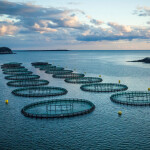
Photo courtesy of Avirut S/Shutterstock
