


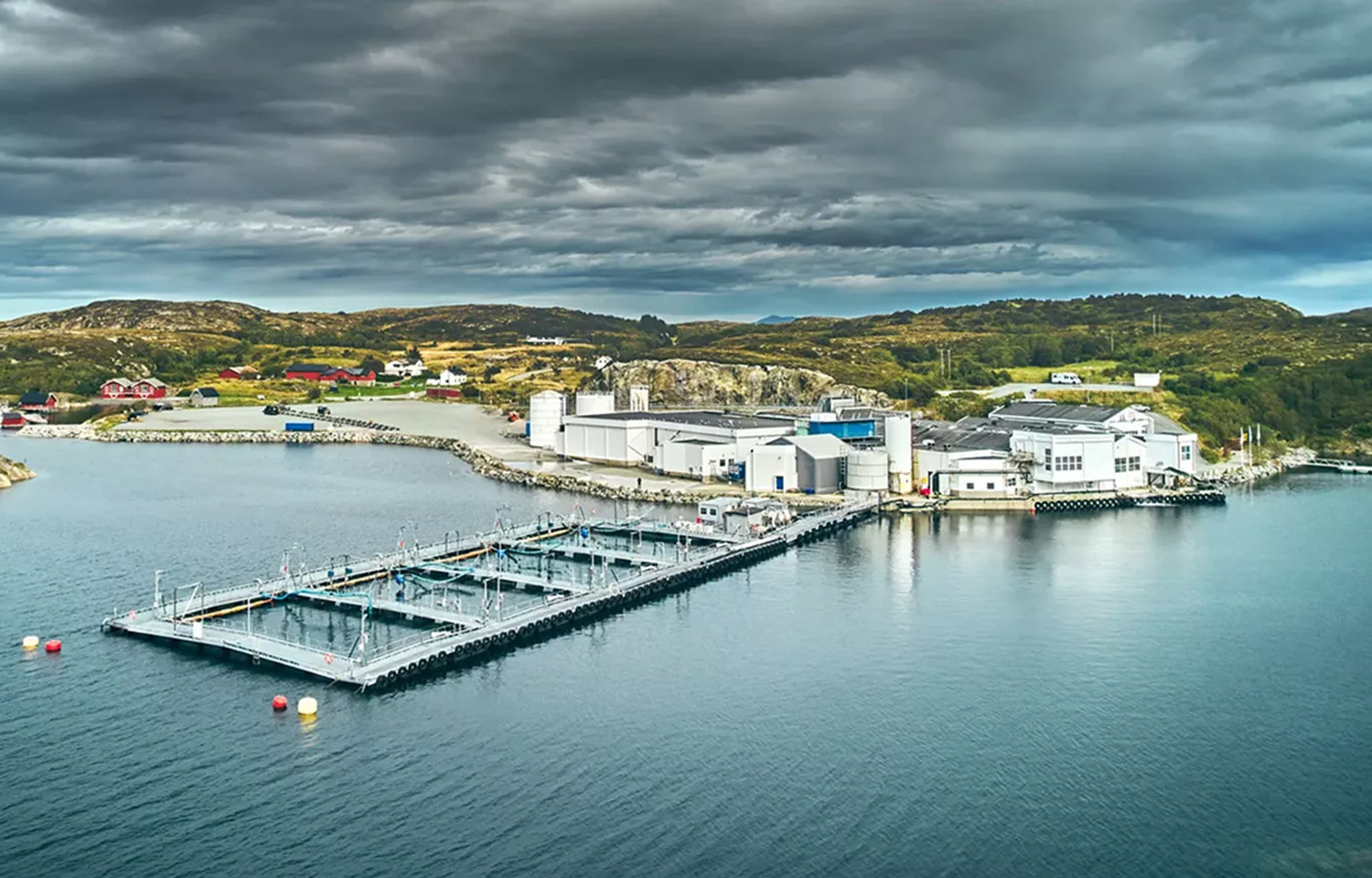
Bergen, Norway-headquartered Lerøy Seafood Group (LSG) harvested approximately 44,750 gutted weight tons (GWT) of Atlantic salmon and trout in the second quarter of this year excluding harvests from its 50 percent stake in Scottish Seafarms, marking a decrease of 4,150 GWT compared to the corresponding period of 2025.
According to the company’s latest trading update, its Lerøy Aurora operations harvested 7,100 GWT, Lerøy Midt produced 19,700 GWT, and Lerøy Sjøtroll harvested 18,000 GWT, of which 10,400 GWT was trout. By comparison, in Q2 2025, these regions’ volumes stood at 11,100 GWT, 16,900 GWT, and 20,900 GWT, of which 9,800 GWT was trout, respectively.
LSG’s wild catch operations in the latest reporting period, fulfilled by its Lerøy Havfisk segment, totaled 18,800 metric tons (MT), representing an increase of 1,100 MT year over year. The quarter’s catch included 1,500 MT of cod, versus 1,200 MT previously.
Earlier this year, LSG estimated a total salmon and trout harvest volume of 216,500 GWT including joint-ventures for the full year of 2026. This forecast comprises 195,000 GWT from Norway, as well as a 21,500-GWT share from Scottish Sea Farms.
Lerøy’s complete Q2 report will be released on 19 August 2026.
Fellow Norwegian producer Måsøval has reported a Q2 harvest of 9,350 GWT, up from 8,538 GWT in Q2 2025, with its Region Mid operations harvesting 5,210 GWT, Region West with 1,180 GWT, and 2,960 GWT through its co-location partners.
A year previously, these volumes stood at 1,403 GWT, 3,558 GWT, and 3,577 GWT, respectively.
The Frøya-headquartered company advised that its biomass at the end of the quarter amounted to 14,762 metric tons (MT) whole fish equivalent (WFE), comprising 10,733 MT of its own licenses and 4,028 MT registered on co-location partners’ licenses.
It also said it experienced strong sea production and solid biology during the quarter. Consequently, its guided volume for the full year of 2026 has increased again by 1,000 GWT to 29,000 GWT. Of this, 13,200 GWT is expected to be harvested in Region Mid, 8,300 GWT in Region West, and 7,500 GWT on co-location licenses.
Måsøval will issue its complete Q2 report on 27 August.
Meanwhile, Faroe Islands-based Bakkafrost Group, which recently announced progress on multiple Faroese hatchery projects, reported in its latest trading update that it produced a total Q2 2026 salmon harvest of 29,900 GWT, up from 23,000 GWT a year previously, with its Faroes operations contributing 26,700 GWT and its Scottish farms harvesting 3,200 GWT. In the corresponding quarter of last year, the group delivered Faroese and Scottish volumes of approximately 16,000 GWT and 7,000 GWT, respectively.
Bakkafrost previously raised its 2026 harvest guidance to 117,000 GWT, with 97,000 GWT coming from the Faroes and 20,000 GWT from Scotland. In the full year 2025, it harvested 106,823 GWT, with 83,638 GWT produced in the Faroes and 23,185 GWT in Scotland.
Bakkafrost’s full Q2 2026 report will also be released on 31 August.
