
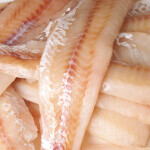


Seafood industry veteran Ronald Rogness joined the Association of Genuine Alaska Pollock Producers (GAPP) as its director of industry relations, partnerships, and fishery analysis in February 2023. In this position, Rogness oversees the GAPP Partnership Program and membership services including the production of GAPP’s fishery and trade reports. Rogness previously served as a consultant to the organization on economic and fishery matters, and prior to that, worked as vice president of sustainability and corporate relations at American Seafoods.
SeafoodSource: You had escaped the seafood business. Why are you jumping back in?
Rogness: When I left American Seafoods in 2018, the primary reason for doing so was I wanted to move back to Wisconsin to be closer to my family. And people laugh at me for saying this now, but I also wanted to experience four seasons, because Seattle only has two, and, of course, that first winter, it got to 41-below one night 35-below the next night, so I got a little tired of winter pretty quick. But I had accepted a position outside the seafood industry in supply services for the oil and gas business – frac sand supply and I was happy doing it, but shortly after GAPP CEO Craig Morris came on board,, he contacted me and said that he'd been looking for someone who could provide him a good, unbiased perspective on issues facing the Wild Alaska Pollock industry and people kept suggesting me, so he asked if I would be willing to consult with GAPP. And then in April of 2021, I decided I wanted to start moving out of oil and gas, and knew if there was a natural fit for me, it would be in Wild Alaska pollock, where I've worked in a variety of capacities since 1984. I just think Wild Alaska pollock is just one of the most amazing resources. It’s resilient, abundant – a wonderful sustainability story. Since Wild Alaska pollock was kind of in my DNA, I expanded my role to half time. Then in February of this year, I moved into a full-time position with GAPP.
SeafoodSource: What will you be doing in your new position?
Rogness: The primary change in my roles and responsibilities is the addition of managing GAPP’s Partnership Program. Christine Durkin did a phenomenal job over the last several years managing that program, and she had such a strong marketing expertise that she was able to leverage with our partners and it worked really well. Now she's moving on, and while I certainly don’t have Christine’s marketing chops, I had worked with marketing during my time in purchasing at Long John Silvers. I will also provide assistance in things that we're doing in the public relations arena on issues related to the fishery. And I’ll handle a lot of member services as I'm still kind of a go-to person when it comes to data requests and what's going on with trade data.
SeafoodSource: What are the biggest challenges you’ll face in your new role?
Rogness: There's a lot of administration associated with the partnership program, so it's going to test my organizational skills. Especially after Covid, with the challenges that it brought to the distribution chain, a lot of our planned events got shifted backward in time. So we still have a few programs running this year that were originally supposed to run in the prior years in addition to our new programs. But the biggest thing will be getting to know the people involved with the program and making sure that we are getting everything out of the partnership program that we can.
SeafoodSource: What are your goals for your work with the partnership program?
Rogness: The partnership program is for both retail and foodservice. We've got programs in both areas, and then in some different channels like institutional foodservice. It's definitely an objective to continue to get the word out on the partnership program and to expand into areas where maybe wild Alaska pollock hasn't had a strong presence historically. Colleges and hospital foodservice, to me, represent a great opportunity. And there will be an increased focus on international expansion. One of our objectives this year is to take a long-term look at what the appropriate balance of international and domestic programs will be. GAPP did a 2040 study that identified high-priority markets overseas that we’ll incorporate that into our work, and we’ll be identifying high quality potential foreign partners. And then I’ll just keep doing work to elevate the species to the extent that we can in new and higher-value markets. We love our current partners and we very much appreciate them, but we do want to expand the program into new channels.
SeafoodSource: The value proposition for pollock has always been its main selling point. If you had one message, is it that pollock is a less-expensive alternative to cod and other premium whitefish, or is it that Alaska pollock should be bringing in nearly as much money as cod should be, since it tastes just as good?
Rogness: The relative affordability of Alaska pollock compared to alternative whitefish is a reality, and given the food inflation that we've seen over the last few years, I think that the affordability message is very important. But yeah, clearly, I believe that Alaska pollock can rest on its own merits, whether it is its sustainability credentials, nutrition, or taste. Alaska pollock eats just as well as any whitefish out there. The partnership we are doing with Nordstrom featuring a blackened wild Alaska pollock and potato chowder and a blackened wild Alaska pollock taco salad, are perfect examples of the segments Wild Alaska pollock deserves to be in.
SeafoodSource: Where do you think GAPP stands in terms of importance for the Alaska pollock market?
Rogness: I think the biggest asset of GAPP and the most positive part of its presence is getting the industry into alignment on messaging. To some extent, every trade association has its challenges relative to different visions within different companies. But GAPP definitely does provide that venue for joint engagement, to have CEOs meet face-to-face and agree on where we want to take the species. Craig and his team have done a really great job in presenting that vision, getting industry alignment, and then going forward with a strategy that everyone has agreed to. It’s a constant, formal process of ensuring everything we do is executed in line with that strategy.
SeafoodSource: So what is your role in that strategy?
Rogness: For my first year, it will be to educate myself on the partnership program and help take it the direction the Board want to take it. The Partnership Program is a great way for the industry to get a very good return on its investment. GAPP could go out and just do it on its own, but through the partnership program, in some cases we're getting four to one or more of expenditures from our partners for every dollar that GAPP contributes to promote Wild Alaska Pollock.
SeafoodSource: What's the feedback been from the suppliers and from the retailers or the foodservice companies you're working with?
Rogness: We want to understand what has worked and what hasn’t, and then use that information to develop the partnership program in the right direction so that we get maximum value for the dollars we put into it. We are relying on the partners to identify what they thought had the greatest positive impact, but also what didn't work. Then we’re creating guidance documents to steer everyone away from things that weren't as successful and pointing towards things that have been more effective.
SeafoodSource: Seafood is a notoriously analog industry. Do you think the seafood industry could do better with its use of data analytics and metrics?
Rogness: I'm getting a good glimpse into how companies are starting to use the available consumer shopping data - identifying who's buying wild Alaska pollock, why they're buying it, what else do they buy, and then being able to zero in and target communications to those people that are already buying products made from wild Alaska pollock or who are likely to. Through the GAPP partnership programs, we're getting access to the data and maximizing its use. My own data experience has been mostly fisheries-related data. But it’s incredible to see how much we can learn about shopping behaviors through credit card transactions and tracking loyalty programs.
SeafoodSource: What do you think about the idea of a national seafood promotion board?
Rogness: I will defer to our members on that one, but I will say I don't think more money devoted to promoting U.S. seafood is a bad thing. Just as a disclaimer, I serve on the American Fisheries Advisory Committee, so it’s probably best for me to stay neutral on that issue.
SeafoodSource: Is Alaska pollock a national product, or do you see it as having certain strengths in some markets? Do you delineate markets geographically or by other means?
Rogness: Alaska pollock is annually the fourth or fifth most-consumed seafood in the United States. You're clearly not going to achieve that status without being a national product. But regional differences do exist, and they can really be seen in Lenten sales. When I was at Long John Silver’s, we had distribution centers in the U.S. South – especially Texas, and South Texas in particular – that would have to double their inventory in advance of Lent through the last week before Easter while others there was virtually no difference in pre-lent vs lent sales. It was also surprising to me how important not just Lent was, but how important the seven Fridays during Lent would in terms of dictating how successful the year would be for Long John Silver’s. The sales volumes were that important – if you got unlucky and had three or four bad Friday weather days, it really hurt.
SeafoodSource: Alaska is beginning to suffer from environmental changes, like warming ocean temperatures, which may have contributed to the crash of some species stocks, like crab and wild salmon runs in some areas. Do you have any concern about the state of the Alaska pollock stocks?
Rogness: Marine scientists are certainly looking at the issue very closely. I was heartened to see in this year’s stock assessment that the waters in the Bering Sea have returned to what we've seen as normal over the past. Around 1978, when the U.S. passed the Magnuson Act, water temperatures in the Bering Sea warmed up considerably after a prolonged cold period. During that cold period, Alaska pollock was not the dominant biomass in the Bering Sea; herring was. It wasn't until the temperatures changed where pollock kind of took over as the dominant species in the ecosystem.
I'm kind of a natural worrier. If it were an Olympic event, I'd probably be a multi-time medalist. But. Alaska pollock has proven to be unbelievably resilient to a variety of environmental conditions and it’s still going strong. As I said at the beginning it's a pretty amazing fish.
Photo courtesy of GAPP
