





The Russian Federal Agency for Fisheries is signaling it may seek to change a unilateral agreement, signed by the former Soviet Union and the U.S. in 1990, that gives American companies 80 percent of the Bering Sea pollock quota.
In 2021, U.S. companies caught 1.4 million metric tons (MT) of pollock in the region, while Russian companies caught 400,000 MT, the agency said.
Russian newspaper Kommersant reported that the Russian Federal Agency for Fisheries Head Ilya Shestakov proposed the idea at a meeting with Presidential Envoy to the Far Eastern Federal District Yuri Trutnev in late March. Shestakov proposed that the regulations should be reconsidered or even canceled altogether.
Trutnev, according to Kommersant sources, said quotas should be redistributed to a 50-50 agreement between the U.S. and Russia – an agreement which would more than double the catch available to Russian companies. While Trutnev refused to comment on the idea publicly, a representative of the agency confirmed to Kommersant that it conducted research into potentially increasing the total allowable catch (TAC).
According to the source, Russia is planning to conduct a new round of ecological research into the fishery, and the possibility of cancelling the current quotas is not being considered at the moment. If additional quotas are approved, however, the fishing rights will be distributed to companies that are already fishing in the area.
Shestakov’s initiative is being backed by the Russian political establishment. First Deputy Chair of the Agricultural Committee of Russian Parliament’s Upper Chamber Senator Sergey Mitin told SenatInform that the agreement was “was signed in the times of Mikhail Gorbachev,” and “the quotas were defined wrongly for some reasons.”
Despite the push for more quota, some seafood industry exports in the country are skeptical of the idea. Association of Fishery Fleet Shipowners Alexey Osintsev told Kommersant that the Bering Sea has less large pollock, and the share of juveniles is increasing. The quota, he said, should be reduced to make sure stocks are safeguarded.
Primorye Fisheries Association President Georgiy Martynov told TV channel Russia that a hike in catch can lead to a drop in prices for pollock in key markets. Pollock Catchers Association President Alexey Buglak, meanwhile, said that the TAC for Bering Sea pollock will be upped for Russian fisheries to 450,000 MT in 2023.
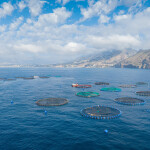
Photo courtesy of the Russian Federal Agency for Fisheries
