


The Fisheries Council of Canada (FCC) and the Canadian Aquaculture Industry Alliance (CAIA) have set an ambitious goal of propelling Canada into one of the top three positions in terms of global seafood production.
On Wednesday, 14 October, the two trade groups introduced Canada’s Blue Economy Strategy 2040, a “joint vision and action plan to capture the untapped potential of our waters.”
“Representing the national wild-capture and farmed seafood industries respectively, FCC and CAIA understand the proud and central role fishing plays in Canada’s identity,” they said in a joint statement. “Recognizing the opportunity in the Blue Economy Strategy to continue to lift Canada to even greater heights and support economic recovery from the current COVID pandemic, [we] have developed a proposal to generate sustainable development through the fish and seafood industry.”
The proposal includes large-scale recommendations to enable Canada’s seafood economy to reach the goals set by the FCC and CAIA, as a follow-up to the recent Governor General of Canada Julie Payette’s Speech from the Throne, which included commitments to blue economy developments in Canada. Those include entrusting and empowering a federal department to drive sector economic development; developing a separate organization with the specific mandate of growing Canada’s seafood sector; developing a series of five-year action plans for the seafood sector; expediting the development of Canada’s Aquaculture Act; completing the writing of regulations called for in Canada’s Fisheries Act; and ensuring the creation of seafood development areas through marine-based planning by 2025.
Canada’s adherence to the plan could result in a doubling of the value of Canadian seafood and the domestic consumption of seafood in Canada, and a twofold increase in the economic benefits the seafood market brings to the country, according to FCC President Paul Lansbergen.
“Canada is a water nation. With the longest coastline and among the most freshwater capacity in the world, communities and families across the country have built their lives and futures on capturing value from our precious waters,” Lansbergen said. “We are ready to work with the federal government to strengthen sustainable economic growth from these waters.”
Lansbergen and his CAIA counterpart, Timothy Kennedy, said the proposal is designed to aid the industry in innovating and developing a path to “seize the podium” and become a top-three global seafood producer. According to the Food and Agriculture Organization of the United Nations, the world’s top three seafood-producing nations by volume are China, Indonesia, and India, and the top three seafood exporters by value are the European Union, China, and Norway.
“Canada needs to regain pride in its seafood sector, and in doing so stimulate coastal community development and job creation, sustainable food production, and Indigenous reconciliation,” Kennedy said. “Our country needs improved economic opportunities as we begin to build back better from COVID-19, and we believe our industry can lead the way with a blue recovery.”
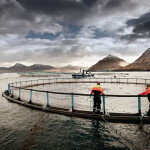
Photo courtesy of Max Lindenthaler/Shutterstock
