


Vietnam has seen its sales of wild-caught seafood to the European Union drop following a “yellow card” imposed nearly two years ago, Vietnam’s Directorate of Fisheries said in a statement on 27 September.
The European Commission issued a yellow card to Vietnam in October 2017, warning it would ban Vietnam’s seafood exports entirely unless the country did more to tackle illegal, unreported, and unregulated (IUU) fishing.
Since the issuance of the warning, the export value of wild-caught seafood sent to the E.U. from Vietnam has declined steadily. The region is now the fifth-largest buyer of wild-caught seafood from Vietnam, accounting for 13 percent of Vietnam’s exports, down from its status as Vietnam's second-largest export recipient. Prior to the yellow card being issued, the E.U. accounted for 18 percent of Vietnam's wild-caught seafood exports.
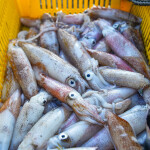
Exports of wild-caught seafood from Vietnam to the E.U. last year were worth nearly USD 390 million (EUR 356.7 million), down 6.5 percent year-on-year, while the wild-caught export value from the bloc in the first eight months of this year was USD 251 million (EUR 229.5 million), slightly down, by 0.3 percent, year-on-year. Of the total, the export value of tuna between January and August this year declined 6.3 percent, and that of squid and octopus slid more than 13 percent from the same period last year.
Vietnam's wild-caught exports have been affected partly because shipping now takes between seven to 10 days, and in some cases even up to 20 days, for clearance at E.U.’s ports. Before the yellow card, most exports from the Southeast Asia nation had enjoyed automatic clearance.
Cao Thi Kim Lan, general manager of Binh Dinh Fishery Joint Stock Company (Bidifisco) in central Vietnam – which mainly processes and exports tuna – lamented the impacts caused by the yellow card at a conference in Hanoi on 25 September. Presently, she said, her cargo needs requires 10 to 15 days to clear ports in the E.U., her company's primary market.
The longer-than-expected clearance has made exports more costly and weakened the competitiveness of her company in the E.U. Lan said sales to the E.U. are now extremely difficult.
The conference, chaired by Vice Minister of Agriculture and Rural Development Phung Duc Tien, included participation by relevant government agencies and the Vietnam Association of Seafood Exporters and Producers (VASEP). It was designed to ready Vietnam for a potential visit next month by a delegation from the European Commission, the directorate of fisheries said.
Their review will include revising Vietnam’s legal framework to ensure compliance with international and regional rules applicable to the conservation and management of fisheries resources; ensuring the effective implementation and enforcement of the country’s revised laws; and increasing the traceability of its seafood products and preventing sales of IUU products.
In late June, the directorate also reported a potential visit by the Directorate for Maritime Affairs and Fisheries, possibly in late October, but the E.C. did not respond to a request for comment and it is not clear whether the inspection took place.
Photo by Toan Dao/SeafoodSource
