






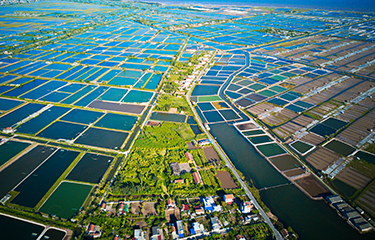
Vietnam's shrimp industry is concerned about falling behind Ecuador and India, as longstanding internal weaknesses continue to plague its progress.
Reduced global demand and increased competition from Ecuador and India, which offer lower-priced shrimp, are taking a toll on Vietnam's shrimp industry. Between January and May 2023, Vietnam exported shrimp worth USD 1.2 billion (EUR 1.07 billion), a 34 percent year-over-year decline. In May, sales fell 28 percent year-on-year to USD 331 million (EUR 295 million), with China and the U.S. remaining the top two markets for Vietnamese shrimp.
Between January and April 2023, Vietnam exported shrimp worth USD 887 million (EUR 817.9 million), a 36 percent year-over-year decline. Exports to the U.S. dropped 45 percent to USD 159 million (EUR 146.6 million), while shipments to Japan fell 28 percent to USD 146 million (EUR 134.6 million). Vietnam’s shrimp exports to China (including Hong Kong) declined 27 percent to USD 136 million (EUR 125.4 million), and South Korean exports sunk 30 percent to USD 105 million (EUR 96.8 million).
The dropoff steepened in April, with Vietnam's shrimp exports cratering 35 percent in value year-over-year to USD 287 million (EUR 264.6 million), including a 42 percent drop in U.S. exports to USD 55 million (EUR 50.7 million) and a 26 percent drop in exports to Japan, falling to USD 41 million (EUR 37.8 million), according to data from Vietnam Association of Seafood Exporters and Producers (VASEP).
The Chinese market, which had been looked at as having great promise following the end of its zero-Covid policy in November 2022, has failed to provide the boost expected by many Vietnamese shrimp exporters.
According to Chinese customs data cited by VASEP, China imported 100,310 metric tons (MT) of shrimp valued at USD 579 million (EUR 516 million) in May, up 77 percent by volume and 55 percent by value, and 274,479 MT valued at USD 1.4 billion (EUR ) in Q1 2023, up 34 percent by volume and 16 percent by value.
VASEP did not provide shrimp export volumes from Vietnam to China thus far in 2023. However, Vietnamese suppliers have not been able to leverage their geographic proximity to China to boost shipments to this huge market, with their sales to China declining 40 percent to USD 54 million (EUR 48.1 million) in Q1 2023 and sales dropping 22 percent and 11 percent by value year-on-year in April and May, respectively, according to VASEP.
At the same time Ecuador and India both recorded growth in their shrimp sales to China. Ecuador was the largest supplier of shrimp to China in May, suppling 72,520 MT – nearly double its total from May 2022 – worth USD 392 million (EUR 349.3 million), up 70 percent year-on-year; followed by India with 10,872 MT (up 30 percent), worth USD 62 million (EUR 55.2 million), up 7 percent year-on-year. Through April, Argentina also boosted its sales to China to 6,952 MT, 205 percent higher year-on-year; as had Saudi Arabia with 4,744 MT, which jumped 231 percent; and Thailand, with 4,280 MT, up 1 percent.
The decline in shrimp exports has had a significant impact on the performance of Vietnam’s biggest seafood companies. Leading shrimp exporter Minh Phu reported a loss of VND 95 billion (USD 4 million, EUR 3.7 million) in Q1 2023, marking its first Q1 loss in seven years. Its sales value in the first three months also dropped by half to VND 2.1 trillion (USD 88.6 million, EUR 81.7 million) compared to the same period in 2022. Another major shrimp company, Fimex (Sao Ta), exported 948 MT of shrimp in May, down 39 percent year-on-year, earning USD 10.9 million (EUR 10 million), down 44 percent year-on-year.
Fimex Chairman Ho Quoc Luc said the decline in global shrimp demand and the intensified competition from Ecuador and India representedmajor challenges to Vietnam’s seafood industry. Luc said Ecuador and India are achieving higher success rates in their shrimp farming, with survival rates of up to 80 percent, while small-scale farms in Vietnam areaveraging below 40 percent survival to harvest size.
Do Ngoc Tai, the general manager of Tai Kim Anh Seafood, which operates a 12,000-square-meter shrimp-processing plant in southern Vietnam, said Ecuadorian shrimp companies have 25 to 30 percent lower costs, enabling them to flood the global shrimp market. Tai said Ecuador’s larger shrimp companies independently breed shrimp broodstock and have implemented extensive low-density farming methods that allow them to avoid using antibiotics. In contrast, Vietnam’s industry struggles with low-quality broodstock and shrimp seed, fragmented farming areas, challenges related to higher-density shrimp farming, polluted water supplies, and elevated costs for shrimp feed and electricity.
In a conference held by Vietnam’s government in April, Minh Phu CEO Le Van Quang called on the Vietnamese government to impose a ban on the use of antibiotics in shrimp farming, saying said Vietnam is suffering through a diminishment of its competitiveness in the global shrimp market, due in part to the unregulated use of antibiotics.
Partially as a result, the expense of antibiotics testing at farms, processing plants, and in export markets place a significant burden on processors, Quang said. He estimated the cost of testing and other antibiotic-related measures at VND 10 trillion (USD 423 million, EUR 390 million) annually.
Quang said Vietnam must also endeavor to lower its shrimp-production costs to become more competitive.
"There is no other way than finding a solution to reduce production costs," Quang said at a seminar organized by VASEP in May, suggesting that the industry should focus on establishing large-scale concentrated farming areas where suitable farming technologies are applied.
Quang said Minh Phu is working on a draft project aimed at enhancing the competitiveness of Vietnam's shrimp industry, focused on reducing production costs, improving the quality of broodstock, and establishing standardized shrimp seed production zones to produce high-quality, disease- and weather-resistant shrimp seed
Separately, Fimex’s Luc in April 2023 sent a letter to VASEP prior to a meeting between the trade group and Vietnam Prime Minister Pham Minh Chinh, proposing the government issue standardization requirements for the country’s shrimp hatcheries.
Fimex said Vietnam has more than 2,000 shrimp hatcheries, making it hard for local authorities to conduct proper quality control surveillance, while the number of hatcheries in Ecuador and Thailand is much lower. Fimex also urged the government to support more shrimp farms to obtain Aquaculture Stewardship Council certification. Currently, just 1 percent of Vietnam’s shrimp farms are ASC-certified. According to Fimex, one of the primary reasons Ecuador has gained market share in premium markets like the E.U. is its high count of ASC-certified farms, which represent around 20 percent of their total shrimp-farming areas.
Photo courtesy of David Nguyen VN/Shutterstock
