





New research from the Norwegian Institute of Food, Fisheries, and Aquaculture Research (Nofima) has found freezing haddock before rigor mortis sets in can cause yellow discoloration and higher liquid loss during thawing, leading to potential financial and reputational risks for supply chains.
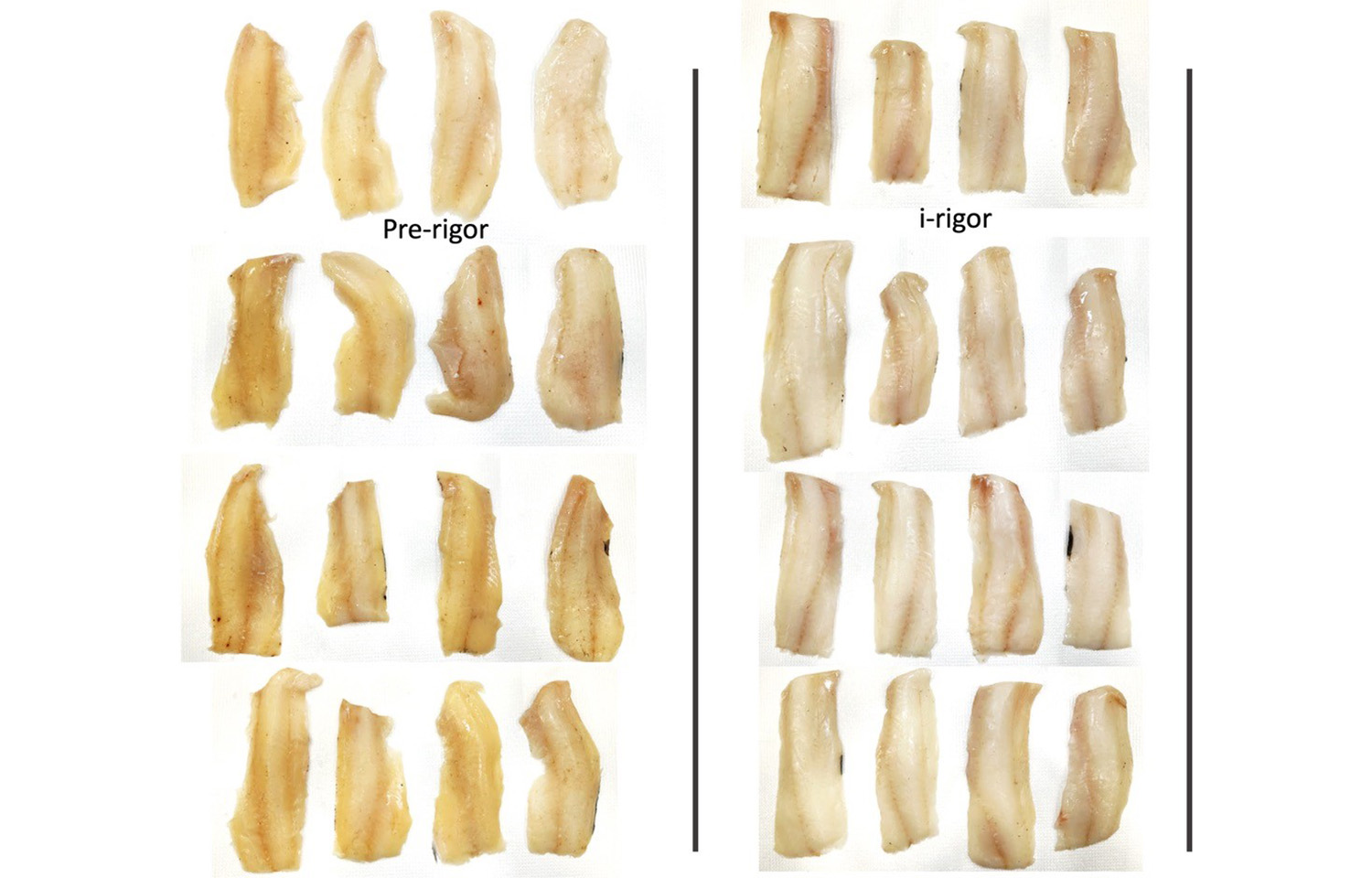
The study, “Effect of rigor state before freezing of cod and haddock raw material,” found that fillets frozen pre-rigor turned visibly yellow after just 20 weeks in frozen storage, while those frozen post-rigor largely retained their quality.
With the industry is increasingly exploring pre-rigor freezing thanks to improved onboard handling and live deliveries – in an effort to ensure frozen fish is as fresh as possible – Nofima researchers insist that timing is critical. Identifying the optimal point for freezing, they argue, could be the key to safeguarding both product quality and profitability.
The project, funded by FHF – the Norwegian Seafood Research Fund and supported by the Båtsfjord trade fisheries group and fishing company Bluewild, set out to document how the timing of freezing affects yield, quality, and consumer appeal. The researchers studied the differences between fish frozen pre-rigor, in-rigor, and post-rigor and measured thawing loss, subsequent drip loss, and sensory qualities such as texture and coloration following chilled storage.
Project Lead Svein Kristian Stormo said he expected that the level of liquid loss would prove the most interesting finding in the study but soon found out he was wrong, explaining that while it’s important to document thawing and drip loss, the “most surprising and interesting result” was the discoloration.
Stormo said liquid loss and discoloration are “highly unfavorable” from a consumer perspective and that such deviations can lead to significant financial losses for the industry. He stressed that with the industry focused on freezing raw materials in the freshest state possible, it’s important that there is greater awareness of this problem.
“There is plenty we still don’t know about this, such as how to adjust protocols. If you wait – we really don’t know how long for sure – the problem resolves itself, but the industry doesn’t want to wait,” he said.
Already, one international company has been in touch with the Nofima team that’s struggling with its haddock turning yellow after frozen storage, Stormo said.
“They use live-stored fish for this production, but they had no clue that frozen storage had any impact,” he said.
Stormo advised that delaying freezing is one solution to avoiding negative effects but cautioned that other degrading effects will take hold if the period is too long.
For quality and practical reasons, it is essential to establish the optimal point in time for freezing, he said.
Stormo said that moving forward, it will be useful to conduct thorough documentation through controlled trials with both cod and haddock, especially as farming of the former species grows in popularity, and that these should monitor the effect that varying degrees of freshness have on raw material during freezing and frozen storage.
“I think that the main [thing now] is to make the industry aware that there might be a challenge and that undue yellowing might come as a result from freezing ‘superfresh’ whitefish. Of course, the drip loss is also worrisome,” he said.
