





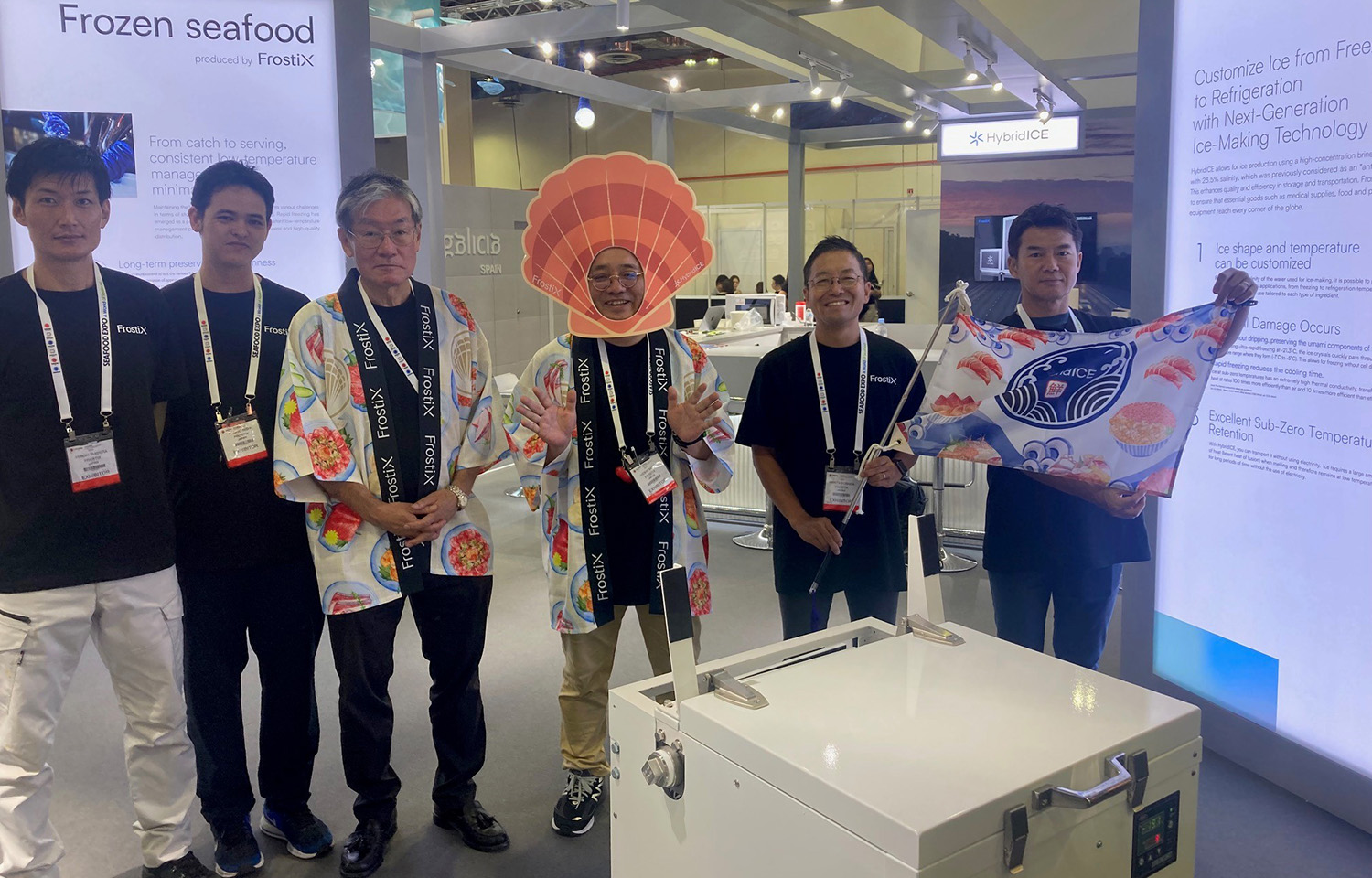
Frostix CEO Hideki Mori is convinced ultra-rapid cooling in a high-salinity brine is the optimal solution for freezing seafood.
The Tokyo, Japan-headquartered freezing solutions specialist touted its HybridICE technology at the 2024 Seafood Expo Asia in early September in Singapore. The technology creates ice using a brine solution with 23.5 percent salinity, allowing for ultra-rapid freezing at minus-21.3 degrees Celsius, allowing for freezing without cell damage. That helps preserve the umami quality of seafood, according to Mori.
“At that temperature, the seafood freezes in about 10 seconds,” he told SeafoodSource. “By freezing so fast, we can [maintain] the freshness and the quality of the product.”
Frostix’s range of machinery produces a liquid bath or ice chips with customizable sizes and temperatures, from slurry to snow. Mori said his company’s ice allows for transportation of seafood without the need for electricity, as the product is maintained at low temperatures for long periods of time.
“Because it's frozen in this special process, even if it comes out of the super-frozen state on it’s way to market, it is still okay for a while afterwards,” Mori said. “If it stays in the super-freeze, it can be stored without significant loss of quality for five years or more.”
Frostix’s equipment is roughly equivalent in pricing – or even cheaper – than other freezing solutions on the market, giving seafood companies looking for a new freezing solutions supplier an incentive to explore the company’s product line, according to Mori. And it can be used to freeze practically any type of seafood, he said.
Frostix’s superfreezing capabilities extend to negative-60 degrees Celsius, the eutectic point for yellowfin tuna and other seafood, but the company is primarily selling that equipment to the medical industry currently. But Mori said he’d like that to change.
“It’s a great technology,” he said.
Around 80 percent of Frostix’s sales are to the domestic Japanese market, but the company has set the goal of inverting that figure toward overseas sales within the next three years.
“Overseas sales have huge potential for us, as there are many markets without adequate logistical capacity,” he said. “Companies can take control over their cold chain and seafood quality by relying on HybridICE.”
