





U.S. lawmakers seem largely uninterested in carrying out U.S. President Donald Trump’s request to integrate NOAA Fisheries’ Office of Protected Resources into the U.S. Fish and Wildlife Services (USFWS), opting to keep the office within NOAA.
Trump has pushed to reduce or eliminate conservation funding within NOAA Fisheries, and part of that effort has included moving the agency’s responsibilities for administrating both the Endangered Species Act (ESA) and Marine Mammal Protection Act (MMPA) over to USFWS. The administration argued that the move would help streamline permitting and improve efficiency in implementing endangered species protections.
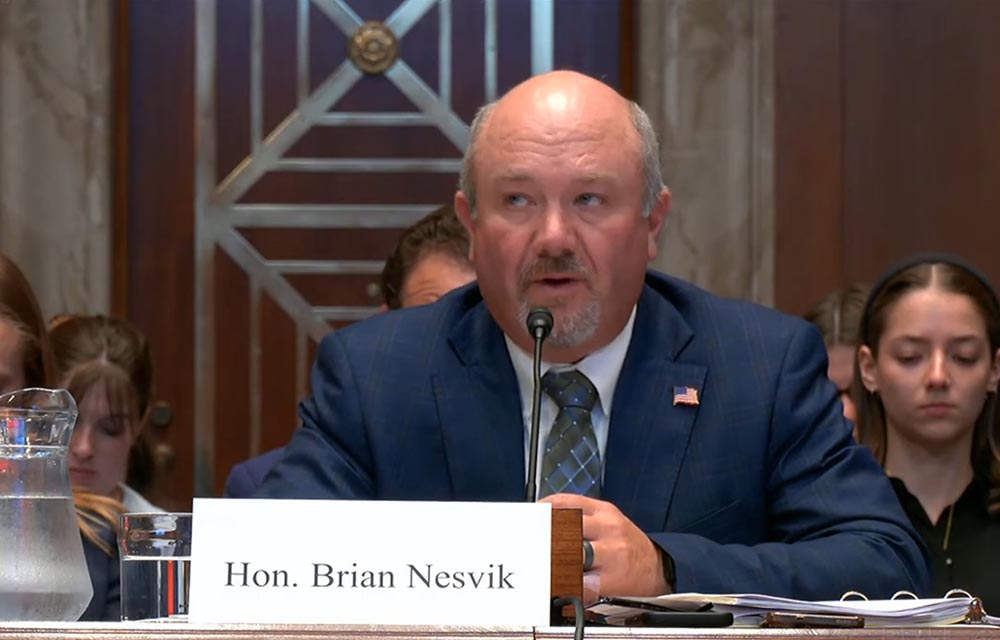
“Consolidation of [NOAA Fisheries and USFWS] will improve the efficiency of ESA implementation by ensuring that only one agency needs to review activities that potentially impact endangered species. This merger streamlines ESA implementation and facilitates more effective and efficient management of our land and water resources while decreasing costs over time,” USFWS Director Brian Nesvik testified before the Senate Environment and Public Works Committee 10 June.
The Trump administration made the same push last year, but lawmakers in Congress ultimately rejected the proposal, arguing that the White House had not given them enough time to consider the consolidation.
“Due to the extremely late submission of the NOAA congressional budget justification, the Committee lacks the necessary information to evaluate the validity of the proposed consolidation and therefore continues to fund the [Office of Protected Resources] within [NOAA Fisheries],” the Senate Committee on Appropriations said in its 2026 report.
Congress ultimately rejected most of Trump’s proposed fiscal year 2026 cuts to NOAA Fisheries in a compromise appropriations bill passed in January 2026, choosing to keep funding roughly flat with fiscal year 2024 spending.
Undeterred, the Trump administration made the same request in its fiscal year 2027 NOAA Budget proposal released earlier this year, which called for a 41 percent budget cut. The proposal would eliminate the USD 58 million (EUR 49 million) budget for the Office of Habitat Conservation, eliminate regional habitat offices, shutter the USD 65 million (EUR 55 million) Pacific Coastal Salmon Recovery Fund, and drop funding for the Saltonstall-Kennedy grant program.
However, lawmakers in the U.S. House have seemed largely uninterested in carrying out those plans, at least in their entirety. The proposed consolidation was not discussed in a 13 May markup of the appropriations bill that funds NOAA Fisheries, nor was it brought up when U.S. Secretary of Commerce Howard Lutnick testified on the budget proposal before both the House and Senate appropriations committees.
During the 10 June hearing on the Department of the Interior’s budget, U.S. Senator Sheldon Whitehouse (D-Rhode Island) questioned Nesvik on whether USFWS had the staffing or biological expertise to take on the responsibilities currently held by NOAA’s Office of Protected Resources.
“Certainly, if this merger, this integration, was to come to fruition, there is existing expertise within NOAA [Fisheries] that potentially would be available. The details of that potential are not worked out yet, but you know, certainly we would leverage expertise that currently relies within [NOAA Fisheries],” Nesvik testified. “Within the Fish and Wildlife Service, we do have several very highly qualified biologists that understand marine biology, that understand the Marine Mammal Protection Act, and that we do have biologists that work on these issues.”
The Department of Commerce appropriations bill currently being considered by the Republican-controlled House also includes funding proposed for elimination by the Trump administration, albeit at lower levels than previous years. The White House proposed eliminating all funding for Protected Resources Science and Management once ESA and MMPA responsibilities are transferred over to USFWS, with some of the salmon conservation funding in that budget item being transferred to another part of NOAA Fisheries. The House legislation includes USD 132.5 million (EUR 114.4 million) for that budget, roughly half of the USD 268 million (EUR 231 million) enacted by Congress for fiscal year 2026.
The Senate has yet to introduce its version of the appropriations bill, though their fiscal year 2026 legislation rejected Trump’s proposed cuts entirely.
