






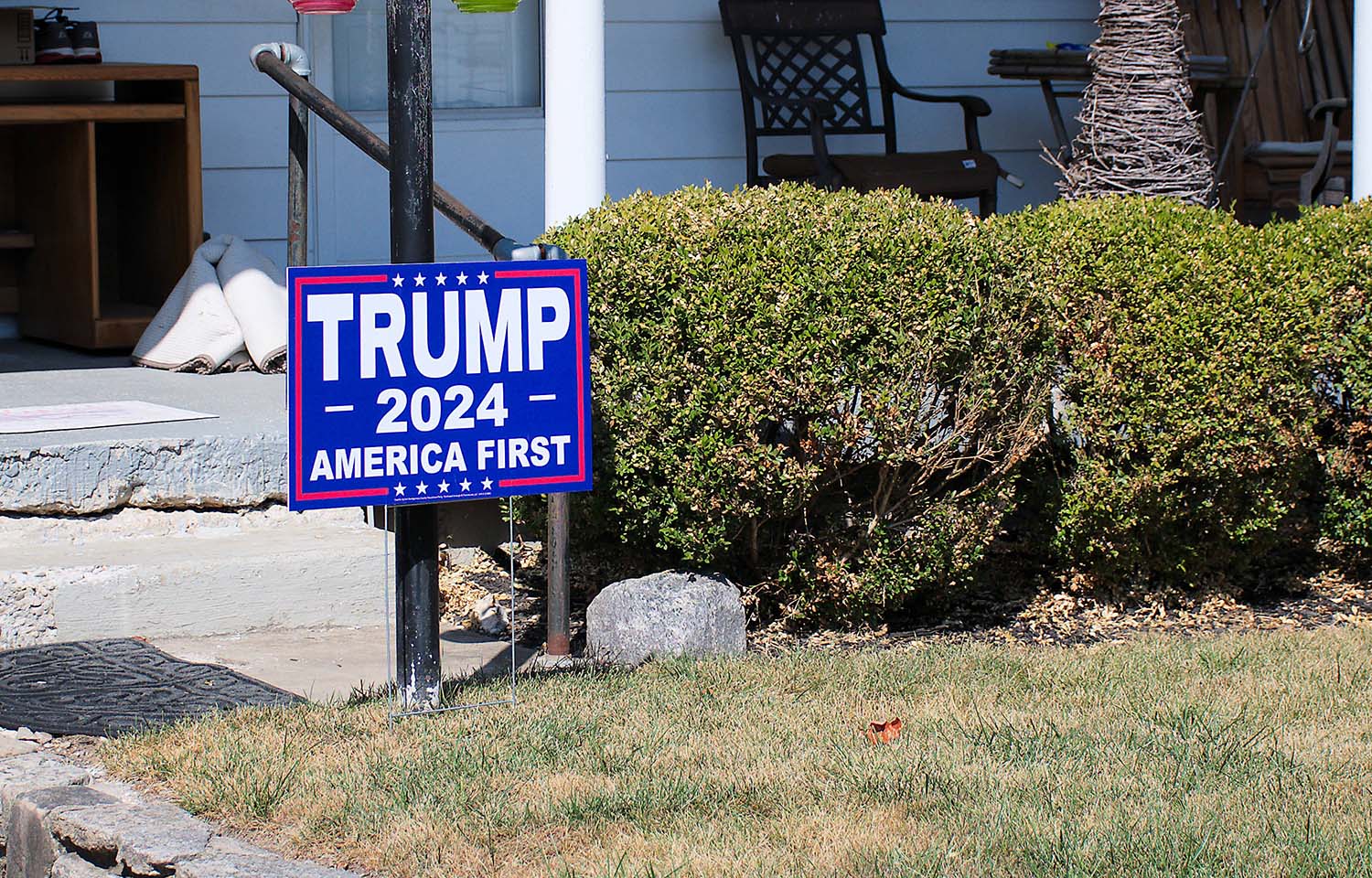
Donald Trump campaigned on a policy of aggressive tariffs intended to spur manufacturing in the United States and strengthen U.S.-based supply chains. Now that he’s been elected, some business groups are expressing concerns about how such changes would affect American industries.
National Retail Federation (NRF) Vice President for Supply Chain and Customs Policy Jonathan Gold told SeafoodSource the proposed tariffs are likely to pass major costs on to American consumers, who are already suffering from record inflation post the Covid-19 pandemic.
“Throughout the campaign President Trump has talked about tariffs in a variety of different ways: as a negotiating tactic for other countries, as a means to bring production back to the U.S., and as a means to replace income tax and pay for tax bills,” Gold said. “You can talk about a variety of different reasons for tariffs, but I think the most important thing for folks to understand is that a tariff is a tax that is paid by the U.S. importer, and it leads to price increases.”
Other business leaders have corroborated Gold’s prediction on prices, including Walmart CFO John David Rainey. Rainey told CNBC on 19 November that he expected some prices to go up if Trump’s proposed tariffs went into effect. Though the company reported record profits, Rainey said that “there will probably be cases where prices will go up for consumers.”
Others, like AutoZone CEO Philip Daniele, said that consumers should prepare for prices to go up even before tariffs go into effect.
“If we get tariffs we will pass those tariff costs back to the consumer,” Daniele said.
Though Trump did put some tariffs into effect during his first presidency, they were largely directled at raw materials, like aluminum and steel, which enter the production process long before individual consumers come into the picture. This focus on what are known as economic inputs likely lessened the effect of previous tariffs on individual consumers. Inflation Insights founder Omair Sharif told the NY Times, “these are not things you go out and buy at Home Depot on the weekend.”
The tariffs which Trump proposed during his 2024 campaign, however, would affect what are known as economic outputs: the actual products individual consumers buy.
“It’s not at all clear that this is going to be anything like it was the last time around,” Sharif said.
Some of the tariffs imposed during the last Trump administration did impact the seafood industry, especially when China placed retaliatory tariffs on U.S. seafood. While many producers, processors, and importers in the seafood industry told SeafoodSource that it was simply too early to say anything definitive about what to expect, they did say the earlier trade war prepared them for whatever comes.
The National Fisheries Institute said it is optimistic that it will be able to champion the industry under the new administration, however, saying that it was “evaluating the new administration’s plans and are eager to work with them to ensure seafood is a priority.”
Massachusetts-based Channel Fish Processing, which recently won a number of government contracts to supply fish and seafood products to the U.S. Department of Agriculture, acknowledged that that it was “closely monitoring the new presidential administration’s tariff discussions, which will significantly impact our business, especially for core species like cod and haddock that are already facing limited global supply due to total allowable catch reductions and geopolitical issues.”
“We rely on the National Fisheries Institute to guide us through these policy changes,” Channel President Tom Zaffiro said. “Their dedicated team supports us and keeps us informed, allowing us to make sound business decisions. With 78 years of experience and the help of the NFI, we are confident in our ability to navigate these challenges.”
Ultimately, Zaffiro said, the global upheaval of the last few years has prepared Channel to weather change.
“The last round of tariffs and global supply issues from Covid-19 have already pushed us to diversify our supply chain, leaving us well-prepared for potential changes,” he said. “At this point, the key to success once all information is known is proactive and transparent communication with our customer base. Due to the diverse range of species our company offers, we can usually offer alternatives to limit any significant impacts on price for our customers.”
While the seafood industry is more prepared to weather any issues thanks to the last trade war, a recent study produced by the NRF explored how tariff-related costs might affect individual households by looking at six popular consumer product categories that would be affected by Trump’s proposed tariffs. These categories were apparel, toys, furniture, household appliances, footwear, and travel goods. Across the board, despite these categories accounting for just 7 percent of total U.S. imports, the NRF found that increased costs would be too much for U.S. retailers to absorb and would thus result in higher consumer prices.
According to the report, U.S. consumers would likely pay USD 13.9 to 24 billion (EUR 13.1 to 22.7 billion) more for apparel; USD 8.8 to 14.2 billion (EUR 8.31 to 13.4 billion) more for toys; USD 8.5 to 13.1 billion (EUR 8 to 12.38 billion) more for furniture; USD 6.4 to 10.9 billion (EUR 6.1 to 10.3 billion) more for household appliances; USD 6.4 to 10.7 billion (EUR 6.1 to 10.11 billion) more for footwear, and USD 2.2 to 3.9 billion (EUR 2.1 to 3.7 billion) more for travel goods than they are currently paying.
The high costs, Gold said, would be especially devastating for low and middle-income consumers.
“In all six [key retail] categories prices rose significantly and impacted low and middle-income consumers the most,” he said. “If the next administration is all about lowering costs and deep inflation, a universal tariff is not the way to do that.”
Other experts have concurred that the proposed tariffs plans would disproportionately affect lower-income Americans. A policy brief from the Peterson Institute for International Economics, for instance, found that such tariffs would “reduce after-tax incomes by 3.5 percent for those in the bottom half of the income distribution and cost a typical household in the middle of the income distribution about USD 1,700 (EUR 1606) in increased taxes each year.” Erica York, Senior Economist and Research Director at the nonpartisan Tax Foundation, has similarly written that “a new 10 percent tariff on all imports would reduce the size of the U.S. economy by 0.7 percent and eliminate 505,000 full time-equivalent jobs.”
The squeeze on individual families would likely affect small and medium-sized businesses first.
“It’ll be consumer choices,” Gold said. “If [consumers] decide those products have become too expensive, they’re not going to buy those products. Those small and medium sized companies have less sales, which means they could potentially go out of business.”
When asked whether the short term pain of tariffs could increase long term supply chain security, Gold was skeptical.
“Unfortunately you’re not going to see this huge rush of production back to the United States. It’s just not possible," he said. "There might be some strategic industry that could return tech and things like that. But again, we can’t make everything in the United States. It’s just not possible. We don’t have the workforce to enable us to do that much manufacturing.”
Matt Priest, CEO of Footwear Distributors and Retailers of America, echoed Gold’s point, and said he was “skeptical that there’s a pathway for us to figure out how to make two and a half billion pairs of shoes in the U.S. every year.”
One seafood sector that could be positively affected by the proposed tariffs is RAS farming. With tariffs putting pressure on importers, and the Trump administration friendly to deregulation, U.S. land-based aquaculture may be poised for a major expansion.
As SeafoodSource reported in the immediate aftermath of the election, Denmark-based Thue Holm, who founded and manages Aquafounders Capital and co-founded and advises at Atlantic Sapphire, said that regulatory challenges which Trump is likely to ease are a significant hurdle to businesses like his.
“One of the biggest challenges,” he said, “of building in the U.S. is navigating its complex regulations, standards, and certifications. The construction sector is primarily focused on housing and infrastructure, making it particularly challenging to build manufacturing facilities. If Trump aims to bring manufacturing back, addressing some of these challenges will be essential to make factory construction more feasible.”
Holm pointed out that this moment of likely decreased regulation presents a real opportunity to the RAS industry.
“With approximately 90 percent of seafood consumed in the U.S. being imported, there’s a strong opportunity to boost domestic production, and RAS farms could play a pivotal role in meeting this demand. If building becomes easier and domestic production is supported,” he said, “I’m optimistic about seeing more RAS farms across the U.S.”
