




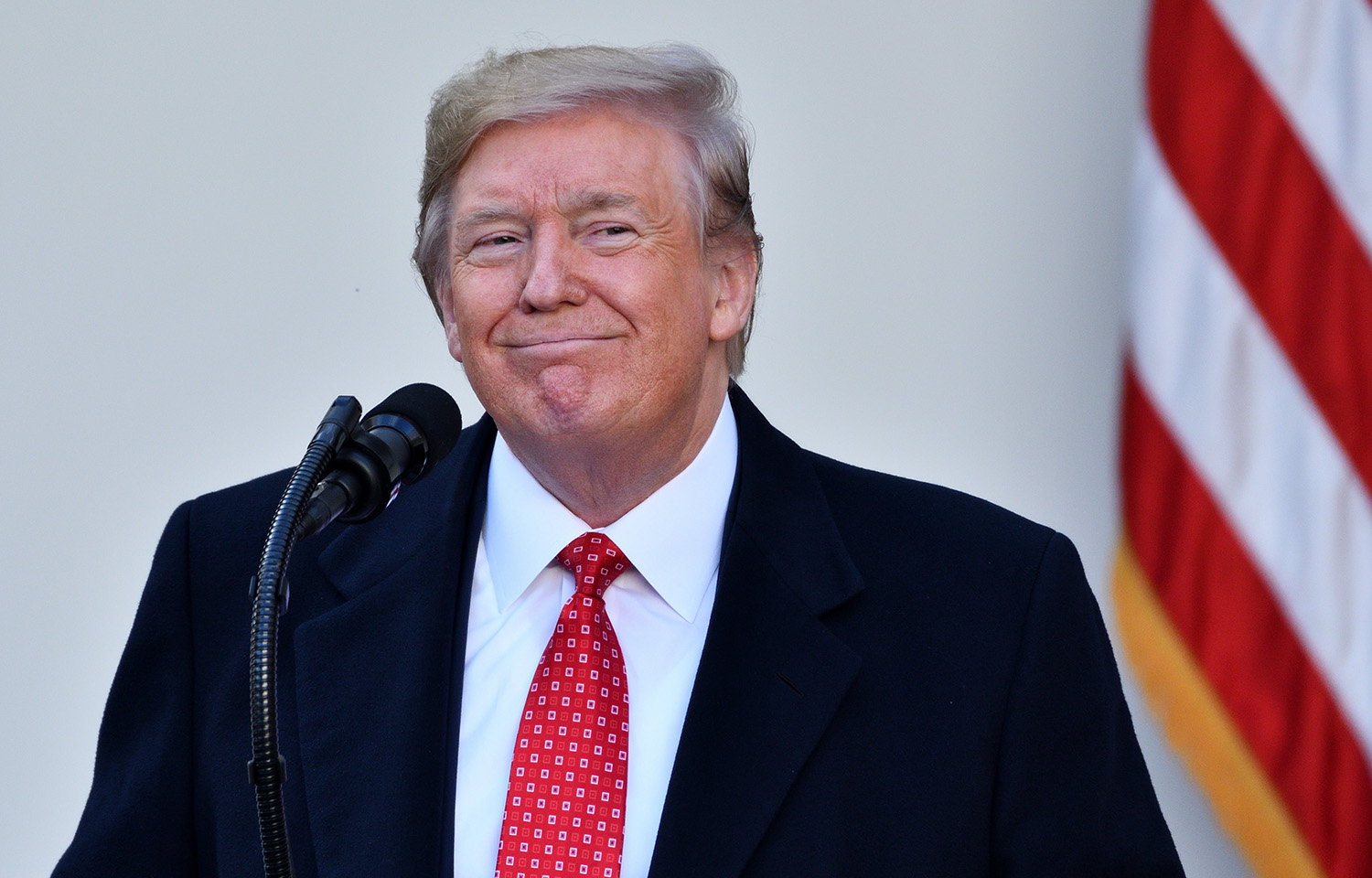
U.S. President Donald Trump followed through on his original order to institute 25 percent tariffs on Canada and Mexico, launching tariffs on goods from both countries on 4 March after a one-month pause.
In addition to the 25 percent tariffs on Canada and Mexico, Trump also instituted an additional 10 percent tariff on Chinese goods on top of the 10 percent he announced in February, meaning certain goods from China are now subject to a 45 percent import tariff.
The new tariffs will impact roughly USD 5.6 billion (EUR 5.3 billion) in seafood imports from the three countries.
Trump said the tariffs on Mexico and Canada are related to the “major threat of illegal aliens and deadly drugs killing our Citizens, including fentanyl,” when he announced them in early February. He has also made comments about an unfair trade relationship with Canada. Canada is currently trading with the U.S. under the United States-Mexico-Canada Agreement, which replaced the existing North American Free Trade Agreement in 2018 after Trump negotiated the new deal.
Canada Prime Minister Justin Trudeau, as well as the premiers of certain Canadian provinces, immediately promised a retaliatory response to the tariffs. Certain provinces have already stopped buying U.S. products – with Canadian government-controlled retailers halting all purchases of U.S. alcohol and Ontario’s LCBO planning to halt them soon, the CBC reported.
During a press conference on 4 March, Trudeau said there is no justification for the trade war.
“Today, the U.S. launched a trade war against Canada – their closest partner and ally, their closest friend,” Trudeau said.
Trudeau said it was difficult to determine a reason for the tariffs, especially given comments from Trump.
“I think what President Trump said yesterday, that there is nothing Canada or Mexico could do to avoid these tariffs, underlines very clearly what a lot of us have suspected for a long time: These tariffs are not specifically about fentanyl, even though that is the legal justification he must use,” he told the CBC.
He also speculated it was a hostile action by Trump made in an attempt to destabilize Canada’s economy.
“What he wants is to see a total collapse of the Canadian economy because that’ll make it easier to annex us,” Trudeau said. “First of all, that’s never going to happen. We will never be the 51st state.”
The Canadian government hit back and announced a “robust tariff package” starting on CAD 30 billion (USD 20.6 billion, EUR 19.5 billion) in U.S. imports, which includes seafood items. Among those listed were fats and oils and their fractions of fish or other marine mammals (HTS 1504.20.00); crustaceans, molluscs, and other aquatic invertebrates (HTS 1605.21.00); and shrimp and prawns, not in an airtight container. No other items were listed.
Canada said it will also impose another CAD 125 billion (USD 86 billion, EUR 81 billion) in tariffs on remaining U.S. products in 21 days. The exact items that will be subject to tariffs is still being determined, and the government is seeking comment on items to target – but that list includes hundreds of seafood items including lobster, crab, flat fish, salmon, tuna, and more.
Mexican President Claudia Sheinbaum also condemned the U.S. tariffs and said that her government would respond with its own measures – though she did not offer any details on what those measures would be.
"There is no reason, rationale, or justification to support this decision that will affect our people and nations ... Nobody wins," Sheinbaum said during a press conference.
She added that the country would give a more detailed response to the tariffs on Sunday, 9 March.
In response to both country’s tariffs, Trump posted to his social media platform Truth Social that any retaliatory tariff will be met with a reciprocal tariff increase “by a like amount.”
Trump’s decision to start a trade war with two close allies of the U.S. and throw out the trade deal he negotiated was met with condemnation from a number of trade organizations in both the U.S. and Canada.
The National Retail Federation, which has long opposed new tariffs, said the new tariffs on the U.S.’s largest trading partners will only hurt American consumers and businesses.
“Tariffs are just one tool at the administration’s disposal to achieve a secure border, and we urge it to explore other options to accomplish the same goals. As long as these tariffs are in place, Americans will be forced to pay higher prices on household goods,” NRF Executive Vice President of Government Relations David French said in a release. “We urge the Trump administration and our Canadian and Mexican counterparts to work together to quickly resolve our outstanding border security issues.”
The B.C. Salmon Farmers Association said the Canadian aquaculture industry will be hit hard by the tariffs, as 70 percent of the salmon raised in British Columbia is sold to the U.S. The association said the tariffs would likely drive down demand by as much as 40 percent and drive down revenues by between CAD 131.5 million and CAD 142.4 million (USD 90 million and USD 98 million, EUR 85 million and EUR 92 million) per year.
“Salmon farming relies on an integrated supply chain built on products from Canada and the U.S., from ingredients in salmon feed to food-safe packaging, with many suppliers and services in between,” the association said.
The association also pushed the government of Canada to commit to salmon farming in the B.C. area to enhance food security and economic stability in the area.
