






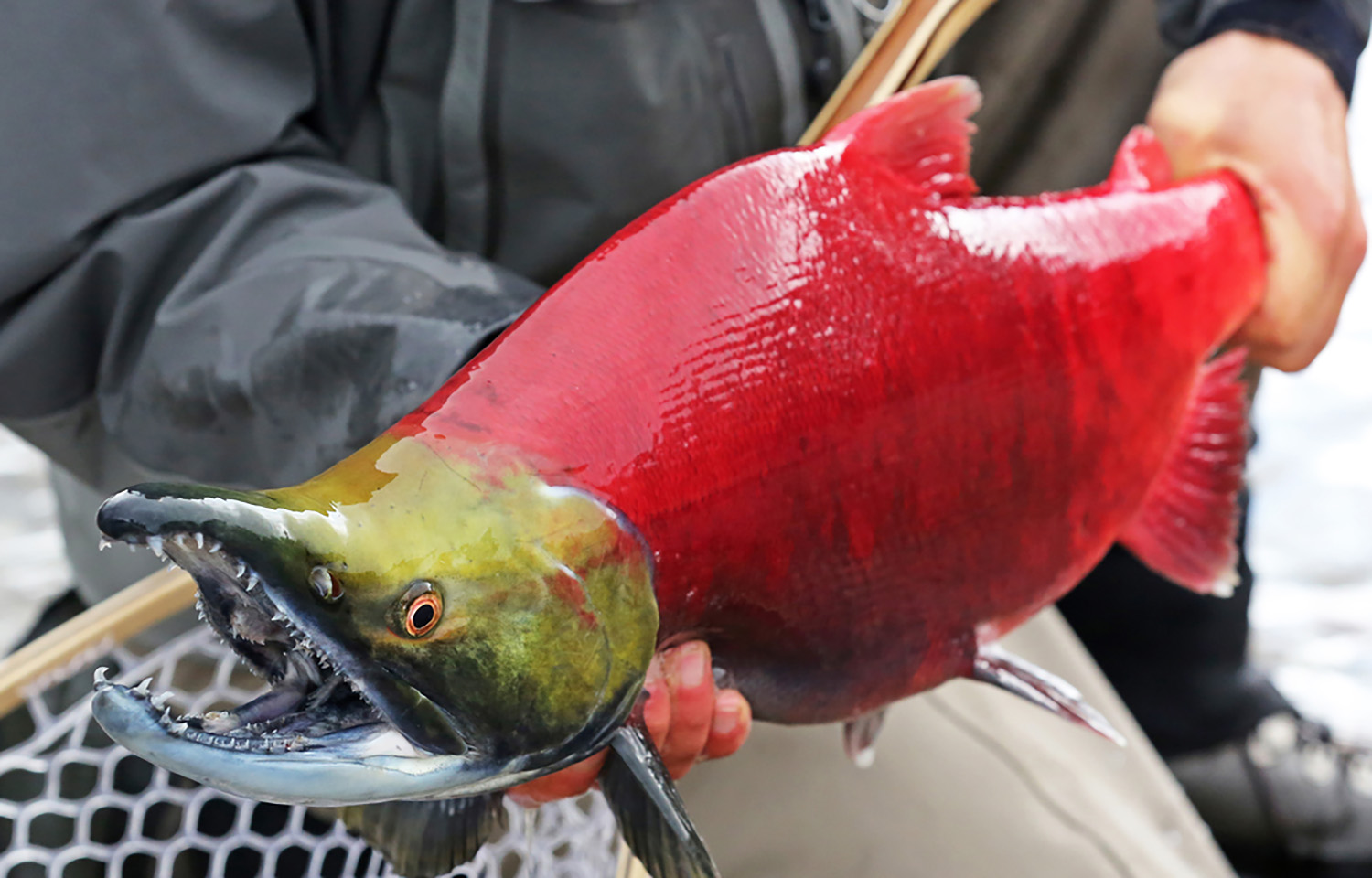
The Alaska Department of Fish and Game (ADF&G) has forecast a strong Bristol Bay salmon run in 2025, which could help offset low salmon runs that fishers in the area suffered in 2024.
The ADF&G is estimating between 51.3 million and 65.6 million fish for next year’s salmon run. A run of 51.3 million sockeye salmon would allow for a potential harvestable surplus of about 36.4 million fish: 34.8 million fish in Bristol Bay and 1.6 million fish in the South Peninsula June fishery, according to the department.
“A Bristol Bay inshore harvest of this size is less than the most recent 10-year average harvest of 40.9 million fish, but 50 percent greater than the long-term average harvest of 23.3 million fish,” the ADF&G said.
The ADF&G calculated the percentiles of total runs from 1961 to 2023 and noted that since 2005, the department’s preseason forecasts have underforecast the actual run by 15 percent on average.
Even if the prediction is forecast accurately, the estimate is welcome news for the industry, as salmon catches and sizes throughout the state have wreaked havoc on a struggling sector this year.
By late August, around 87 million total salmon were caught in Alaska – far short of the 230.2 million salmon harvested in 2023 and tracking well below the ADF&G’s forecast of 135.7 million fish by season’s end.
Additionally, salmon in Alaska this year have been much smaller than average, and ADF&G said the average sockeye in Bristol Bay was the smallest the agency had ever recorded through July.
“We saw the smallest and lightest size of fish we have ever seen in our history – not by a huge margin … but it definitely is the smallest we've ever seen. 2020 was a close second.” ADF&G Biologist Stacy Vega told KDLG.
Elsewhere, Russia’s pink salmon season landed only 50 percent of its forecasted total, and Canadian seafood trading firm Tradex called 2024 “one of the worst seasons on record” for pink salmon, with catches down 62 percent from 2022.
“The current combined harvest for pinks from Alaska and Russia is over 80 percent lower than last year’s global total and 47 percent below the last even-year harvest,” Tradex President and CEO Robert Reierson said in a recent market update. “The general consensus from the ADF&G is that, overall, this year’s pink salmon returns appear to be very poor and that there are not currently any indications that the returns are significantly late.”
Pink salmon caught in Prince Williams Sound off the Gulf of Alaska this year averaged 3.5 pounds each, with Russian fish at 2.5 pounds each. In 2023, Alaska’s pink salmon were also below the five- and 10-year averages for weight, and with 99 percent of the expected sockeye caught for the season, their average size has been just 4.2 pounds, marking only the fourth time in the past 20 years that the fish weight fell below 5 pounds.
