


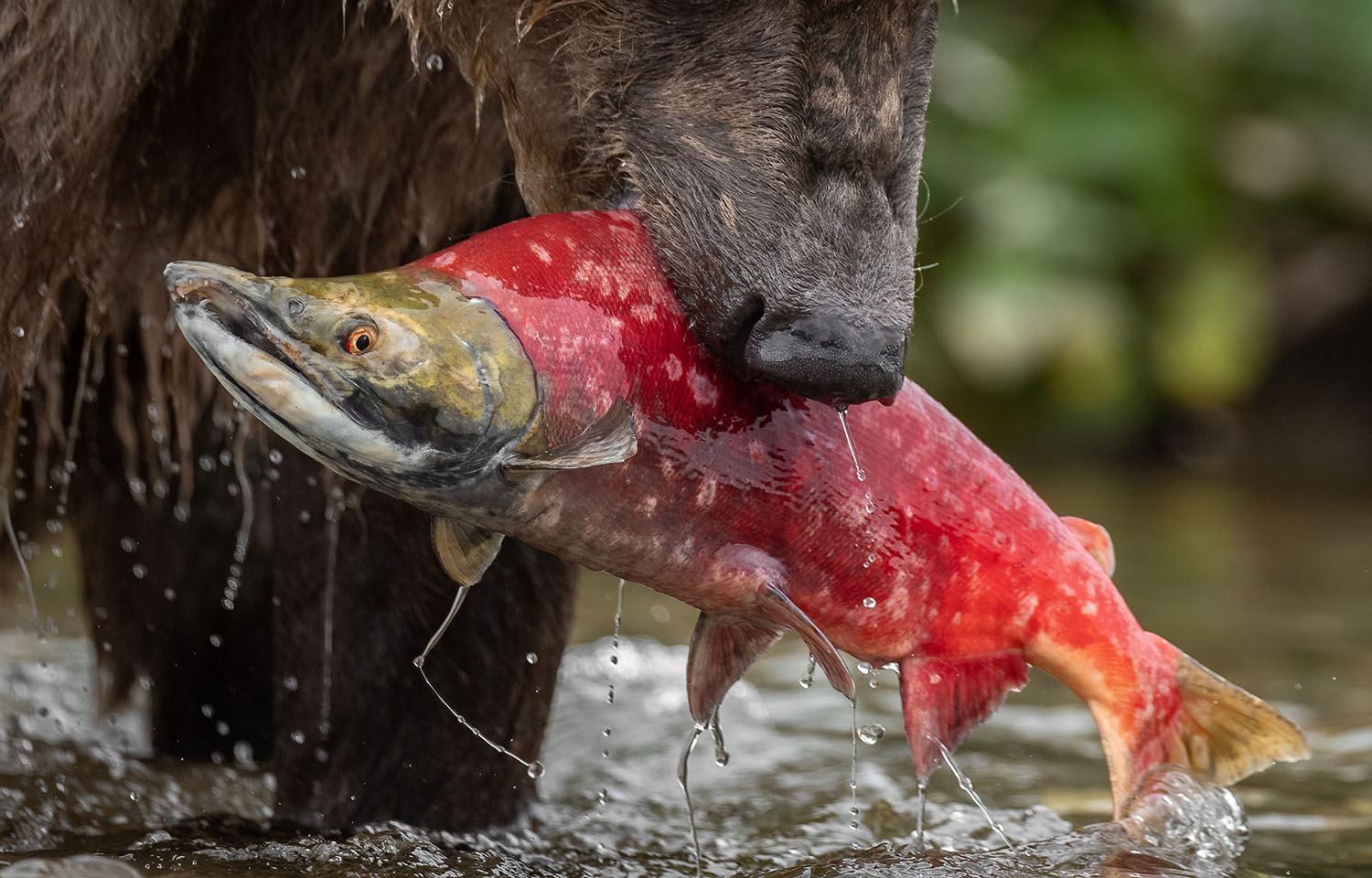
The Alaska Department of Fish and Game (ADF&G) has forecast another strong run of sockeye salmon in Bristol Bay next year, but the estimated number of returning salmon is still well below average for the last decade.
“A total of 45.32 million sockeye salmon (with a range of 31.12 million to 59.52 million) are expected to return to Bristol Bay in 2026. This is 26 percent smaller than the most recent 10-year average of 61 million fish and 21 percent greater than the long-term average of 37.4 million fish (1963–2025),” ADF&G announced.
However, “forecasting future salmon returns is inherently difficult and uncertain,” according to the department, which noted that its preseason forecasts have underestimated the actual run by 14 percent since 2006.
The estimated run of 45.3 million sockeye would allow a commercial harvest of 32.3 million salmon in Bristol Bay and another 1.3 million salmon in the South Peninsula’s June fishery. That inshore harvest would be 21 percent below the 10-year average of 41 million but 38 percent higher than the long-term average of 23.4 million.
While other salmon species have dwindled in the region, sockeye salmon have surged in Bristol Bay due to warming waters, according to University of Washington Alaska Salmon Program Research Daniel Schindler.
“Sockeye salmon the last 25 to 30 years – in fact more than 50 years – have really boomed in concert with this warming climate trajectory,” Schindler said in a September presentation to the United Tribes of Bristol Bay. “Sockeye seem to be responding in a positive way to that warming trend.”
According to ADF&G, 2025 was the 11th season in a row with an inshore sockeye run exceeding 50 million fish.
Commercial fishers were pleasantly surprised by the above-average run in 2025, with the run of 56.7 million sockeye exceeding the preseason forecast by 14 percent. That strong run enabled commercial harvesters to land 41.2 million sockeye – 23 percent higher than the 20-year average and 18 percent higher than anticipated. This resulted in an ex-vessel value of USD 215.3 million (EUR 183.1 million) for the 2025 harvest, 7 percent above the 20-year average.
The 2026 forecast release comes just ahead of Bristol Bay Salmon Week, an annual celebration hosted by the Bristol Bay Regional Seafood Development Association (BBRSDA) in the Seattle, Washington, area. Roughly 40 restaurants are set to participate in the event, offering limited-time sockeye salmon dishes from 17 to 22 November.
“Seattle chefs embrace this annual event and serve Bristol Bay sockeye salmon year-round because they care deeply about the fish and the story behind it,” BBRSDA Executive Director Lilani Dunn said in a release. “Bristol Bay salmon is wild, responsibly harvested, and carefully handled by independent fishermen and fishing families to ensure the highest quality from boat to plate. That commitment is something these kitchens are proud to support and something that diners can taste in every dish.”
