




U.S. commercial fishers have a simple request: to be treated the same as American farmers by the U.S. government.
The U.S. agriculture sector has long received substantial support from the federal government, whether that be crop insurance, equipment subsidies, financial services and low-interest loans, or direct injections of cash. In 2025, the administration of U.S. President Donald Trump announced USD 12 billion (EUR 10.4 billion) in direct financial relief to farmers impacted by tariffs.
The commercial fishing sector has also received government support, but fishers say it pales in comparison to their farmer counterparts. According to the Southeastern Fisheries Association, farmers receive roughly USD 17.5 billion to USD 55 billion (EUR 15.2 billion to EUR 47.8 billion) in annual subsidies, while commercial fishers receive a paltry USD 100 million to USD 300 million (EUR 86.9 million to EUR 261 million). However, America’s fishing fleets face a number of steep challenges – a limited and declining labor pool, aging vessels, and shrinking profits – and without a substantial increase in government support, the group claims, the commercial fishing industry will die.
“Pretty much everybody in the commercial fishing industry will tell you the same thing: If we don’t get some serious government support and help with what we need, in 10 years, you won’t have an American commercial fishery,” Southeastern Fisheries Association Executive Director Bob Zales told SeafoodSource at the 2026 Seafood Expo North America (SENA), taking place from 15 to 17 March in Boston, Massachusetts, U.S.A.
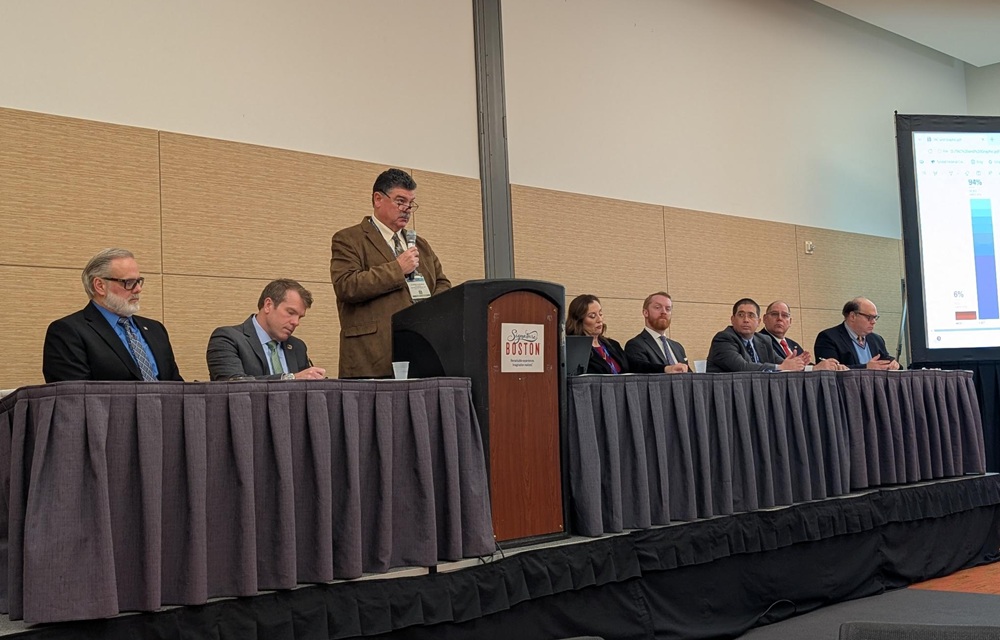
Zales and Southeastern Fisheries Association Board Chair Eugene Raffield of Port St. Joe, Florida, U.S.A.-based Raffield Fisheries gathered commercial fishers and representatives of the U.S. Small Business Administration (SBA) Office of Advocacy and U.S. Department of Agriculture at SENA to push for increased federal support for commercial fishers.
“This industry will not survive without its own country’s support. It will not. End of story,” Raffield said.
In recent years, the U.S. seafood sector has pushed to increase its presence within the U.S. Department of Agriculture in the hopes of securing some of the many benefits afforded to its farmer counterparts. In 2023, the National Fisheries Institute (NFI), the Seafood Harvesters of America (SHA), the Pacific Seafood Processors Association (PSPA), the At-Sea Processors Association (APA), Pacific Seafoods, and Trident Seafoods sent a letter to Congress asking for a designated seafood representative within USDA, more seafood purchases for federal nutrition programs like school lunches, and clarity that commercial fishers and aquaculture companies can utilize USDA loans and financial services.
In November 2025, Congress delivered on one of those requests by establishing the seafood liaison position within USDA, but the Trump administration has yet to announce who will fill the role.
Despite that win, a substantial gap between how the U.S. government treats its fishers and farmers remains. For Raffield, the distinction between how farmers and fishers are treated makes no sense; they’re both food producers.
“Our boats are our tractors. The ocean is our field. Our catch is the crop that feeds this nation,” Raffield said.
Raffield and Zales rattled off a litany of areas where they see farmers receiving preferential treatment, including disaster aid, equipment subsidies, access to labor, and marketing support.
“Take tornadoes as an example. A tornado comes in, takes out a farm. Pretty quick, that farmer gets some kind of compensation for the damage done to his crops. If his equipment is torn up, he either gets it replacement equipment or he gets preferred financing for new equipment. Fisheries don’t get anything for disasters, and I’ve been personally affected by this,” Zales said, referencing Hurricane Michael in 2018. “I didn’t get any disaster money for three and a half years.”
The time frame is not uncommon for the Fishery Resource Disaster Program, which typically delivers financial relief years after a disaster took place. While the SBA will often offer low-interest loans to those affected by a disaster, commercial fishers are left in limbo as they wait for the government checks they need to replace lost equipment, vessels, and revenue.
Similarly, USDA offers loans and grants to farmers who need to replace aging or broken equipment and machinery. While other countries subsidize fishing gear and provide financial support for purchasing or repairing vessels, commercial fishers are largely left on their own, Zales said.
“When you look at farm equipment, there’s old stuff out there, but it gets replaced pretty easy. When you look at the American commercial fleet, they’re all antiques. Nobody is building a new boat today. You can’t afford it,” Zales said.
At SENA, the Southeastern Fisheries Association organized a panel of representatives from the SBA, the Office of Advocacy, and USDA to address their concerns.
SBA New England Regional Administrator Peter Steele was quick to support fishers’ call for more USDA inclusion.
“As you mentioned, you’re food producers, right? It doesn’t make sense to the average American that you’re under NOAA,” Steele said. The USDA has “a tremendous amount of funding for farmers, and you guys are the farmers of the sea.”
USDA State Director Chris Lyon didn’t directly reply to calls for more USDA funding of fishers, but he did note that “we would be happy to have some changes happen that would give the USDA more authority.”
In a separate panel, NOAA Fisheries Assistant Administrator Eugenio Piñeiro Soler acknowledged that he was having conversations with USDA about promoting seafood.
“We’ve already started having those conversations with them, and it’s going quite well. Secretary [of Agriculture Brooke] Rollins and Secretary [of Commerce Howard] Lutnick. I’ve had very extensive conversations, and that’s what we want,” Piñeiro Soler said.
While the informal gathering of government officials and commercial fishers at SENA may have been a valuable first step, the annual trade show offers a unique opportunity to unite the fragmented fisheries of the U.S. to push the federal government for more support moving forward, Raffield said.
“Why can’t we take this seafood show and turn it into the representative of what we need?” Raffield said. “We come here and we trade, but why can’t we come here and identify the bigger problem? How are we going to keep us in business?”
Raffield said he’s not sure what that united front would look like, and he said he doesn’t want to lead it, but he’s “optimistic as heck” that this first SENA meeting was a step toward a more organized national effort.
“The end goal for me is to have the seafood industry create a board, a working group of all four corners of this country and the interior, and that we can let Washington – whether its Democratic of Republican – know what our needs are for that year,” Raffield said. “We need one voice. We don’t need a voice just for shrimp or for lobster. We need it for everything that provides protein.”
“We’re the last generation” Raffield added. “If we don’t do something now, it’s over. I mean, our industry is over.”
