




Abalone has been a cultural delicacy in China for over 1,000 years and is frequently used in gatherings such as Chinese New Year celebrations, weddings, and more.
“Ancient Chinese believe the dried abalone shape is like a gold nugget, so it’s very meaningful for the Chinese culture and is thought to bring happiness and wealth,” Nancy Bartaska, the senior executive manager of Melbourne, Victoria, Australia-based abalone firm Kansom, told SeafoodSource at the 2026 Seafood Expo Global (SEG).
Founded in 1985, Kansom aims to continually honor the traditional usage and symbolism of abalone in the Chinese market, including through its recently released line of abalone products that reference the Year of the Horse under its Gold Prince brand.
However, the company simultaneously wants to modernize its usage and perception around the globe, mainly through innovative, value-added formats that introduce new consumers to what may otherwise be an unfamiliar product.
“Our philosophy is to respect the nature, refine the process, and add value. We put heart and soul into our food and believe consumers can feel that,” Bartaska said.
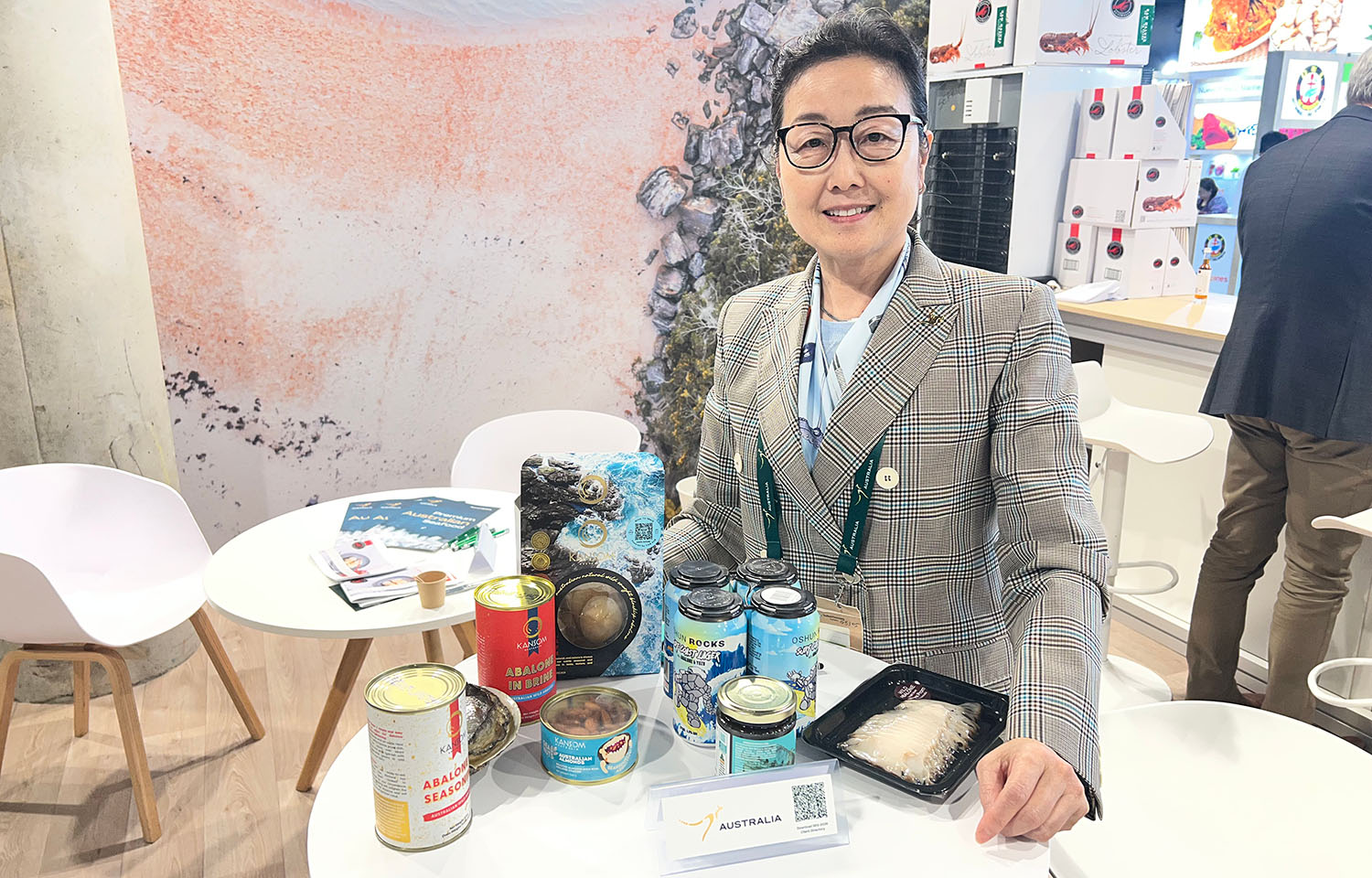
At this year’s SEG, Kansom promoted value-added products such as an abalone sea sauce, canned almonds coated with the firm’s sea sauce, and a collaboration with local brewers on a Japanese lager brewed with abalone and yuzu.
Kansom also promoted several products aimed at convenience, including blacklip abalone in a retorted pouch that consumers can simply slice and serve, as well as pre-sliced abalone that can be served in a carpaccio style with such sauces as yuzu, soy sauce, melted butter and garlic, and more.
Bartaska acknowledged that many global chefs do not have experience preparing abalone, and therefore, the barrier to entry in some markets can be high. However, she likened one possible preparation to the way jamon is prepared in Spain, with shaved slices representing an approach that can be more accessible for chefs looking for innovative menu items.
“For Western markets, either chefs don’t have experience or a way to practice … and in Asian markets, it’s often served whole and can be more expensive. I tell people that when they use caviar, they don’t sell the whole tin to one consumer. You shave truffle; you don’t have the whole truffle in front of people. Abalone is no different. It’s a great source of protein and can be approachable.”
Besides a lack of product recognition and knowledge on how best to prepare abalone in some markets, another challenge that many abalone producers deal with when exporting includes illegally harvested products flooding markets such as China with lower-priced goods.
Recently, South African seafood firm Sea Harvest Group announced that operations at its Kleinzee and Whale Rock abalone farms have been paused, citing, among many causes, illegal poaching that has presented legal products with unfair competition.
Bartaska said that while the issue exists in the Chinese market, Australia does not have the same issues with poaching domestically that South Africa has. She also stressed that the firm has maintained its focus on providing high-quality premium products that do not compare to illegally produced abalone.
All of Kansom’s branded abalone products include hand-harvested abalone off the coast of Victoria. The firm is also vertically integrated, and, besides its own products, its processing facilities handle products from around Australia, including farmed abalone.
“We are a bespoke seafood harvester and a circular economy processor. We are pioneers in [Australian abalone] and take the risk of being a leader with our innovation,” Bartaska said.
