



Bangladesh’s frozen fish and shrimp exports surged in the fiscal year ending 30 June, driven by stronger demand from India and China, as well as improved compliance with export requirements, traceability, and quality control.
The South Asian nation’s seafood export value rose 19.3 percent year over year in the period to USD 388.7 million (EUR 333.4 million), The Business Standard reported 13 October, citing data from Bangladesh’s Export Promotion Bureau. The rebound came even though Bay of Bengal fish catches dropped 21 percent and the nation has experienced ongoing challenges in shrimp farming.
Expounding on the issues in shrimp farming, Bangladesh Frozen Food Exporters Association Senior Vice President Tariqul Islam Zaheer said that production challenges persist due to unfavorable weather, siltation, and restrictions on using saline water needed for shrimp farming.
“Exporters are incurring losses because of low production despite high processing capacity. Besides, securing bank financing is difficult, which further slows growth,” he said.
Nevertheless, he said one reason why those issues did not hold the sector back too much in the period was that exporters moved fast to meet new compliance rules.
“Improved traceability, quality control, and disease management are now yielding results,” he said.
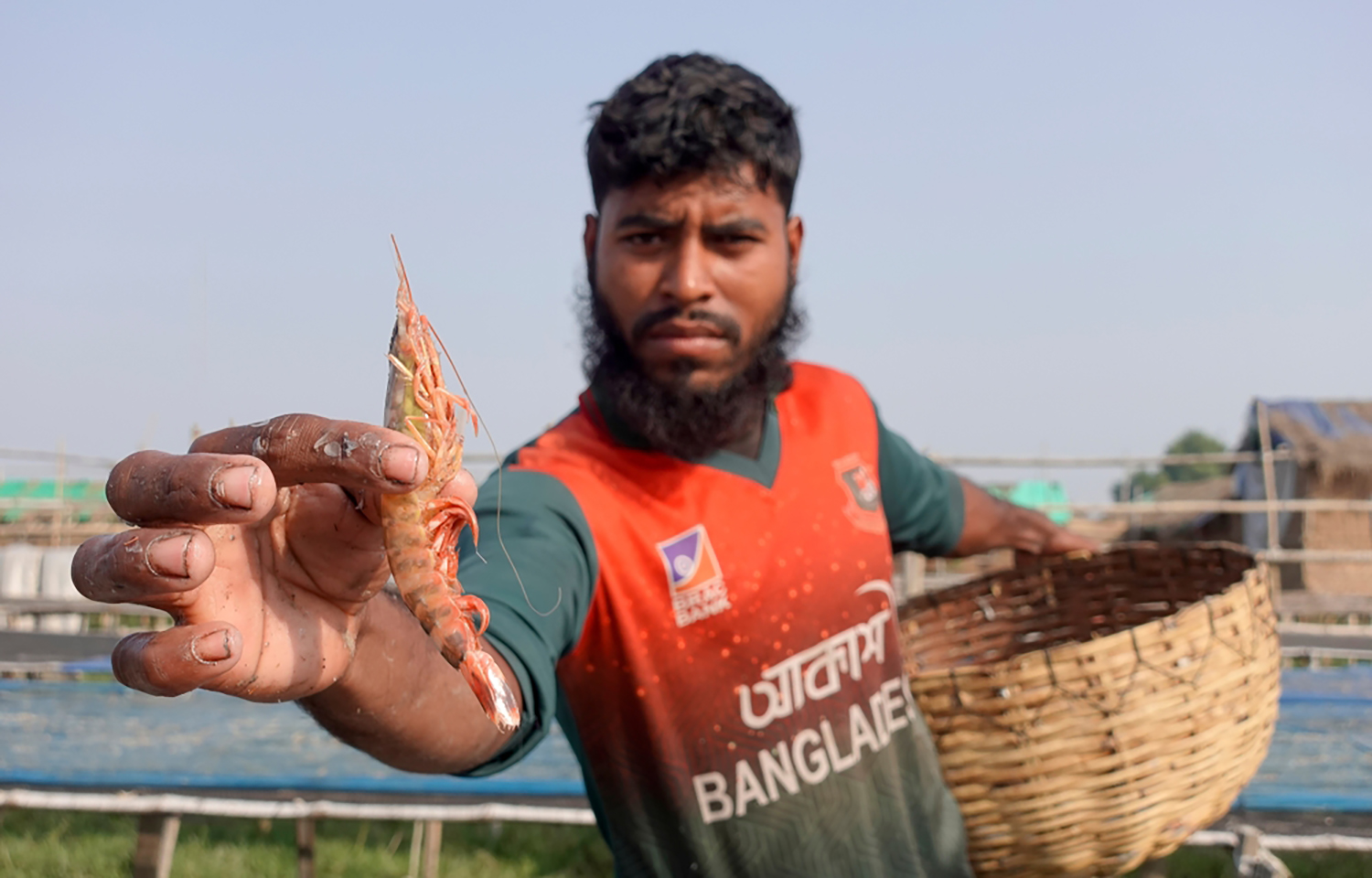
Shrimp is by far the top product comprising Bangladesh’s seafood exports. The country shipped 23,238 metric tons (MT) of frozen shrimp valued at USD 296.3 million (EUR 254 million) in the period, marking increases of 19.3 percent by value and 21.5 percent by volume. The average export price slipped slightly to USD 12.75 (EUR 10.93) per kilogram from USD 12.98 (EUR 11.13) year over year amid stronger competition from Vietnam and India.
Frozen fish exports increased 19.4 percent by value to USD 92.4 million (EUR 79.2 million), though volumes dropped 10.7 percent to 7,951 MT. The average price grew to USD 11.62 (EUR 9.96) per kilogram from USD 8.69 (EUR 7.45), indicating stronger demand for higher-value species.
China was the top shrimp buyer from Bangladesh during the fiscal year, buying USD 56.7 million (EUR 48.6 million), followed by the Netherlands at USD 47.4 million (EUR 40.6 million) and the U.K. at USD 45 million (EUR 38.6 million). For frozen fish, India led by buying USD 62.5 million (EUR 53.6 million), followed by China with USD 59 million (EUR 50.6 million) and the U.K. with USD 52.9 million (EUR 45.4 million).
The sector’s comeback follows steep declines in seafood exports between 2019 and 2023 caused by global inflation, pandemic disruptions, and disease outbreaks such as early mortality syndrome.
Industry representatives have credited the rebound to investment in modern processing and cold-chain facilities that meet E.U., U.S., and Japanese standards, a weaker domestic currency that has boosted competitiveness, and renewed orders from China and Europe.
Still, fisheries continue to face high costs, limited financing, and disease risks.
“Without proper traceability and farm-to-factory transparency, we risk losing premium markets,” Chattogram, Bangladesh-based exporter Dodul Kumar Datta told The Business Standard.
Of 110 processing facilities, only 30 to 40 remain active, with around 10 operating at full capacity.
“The numbers show recovery, but structural reform is needed, including better hatchery management, disease control, eco-friendly farming, and investment in cold-chain infrastructure,” Datta said.
