






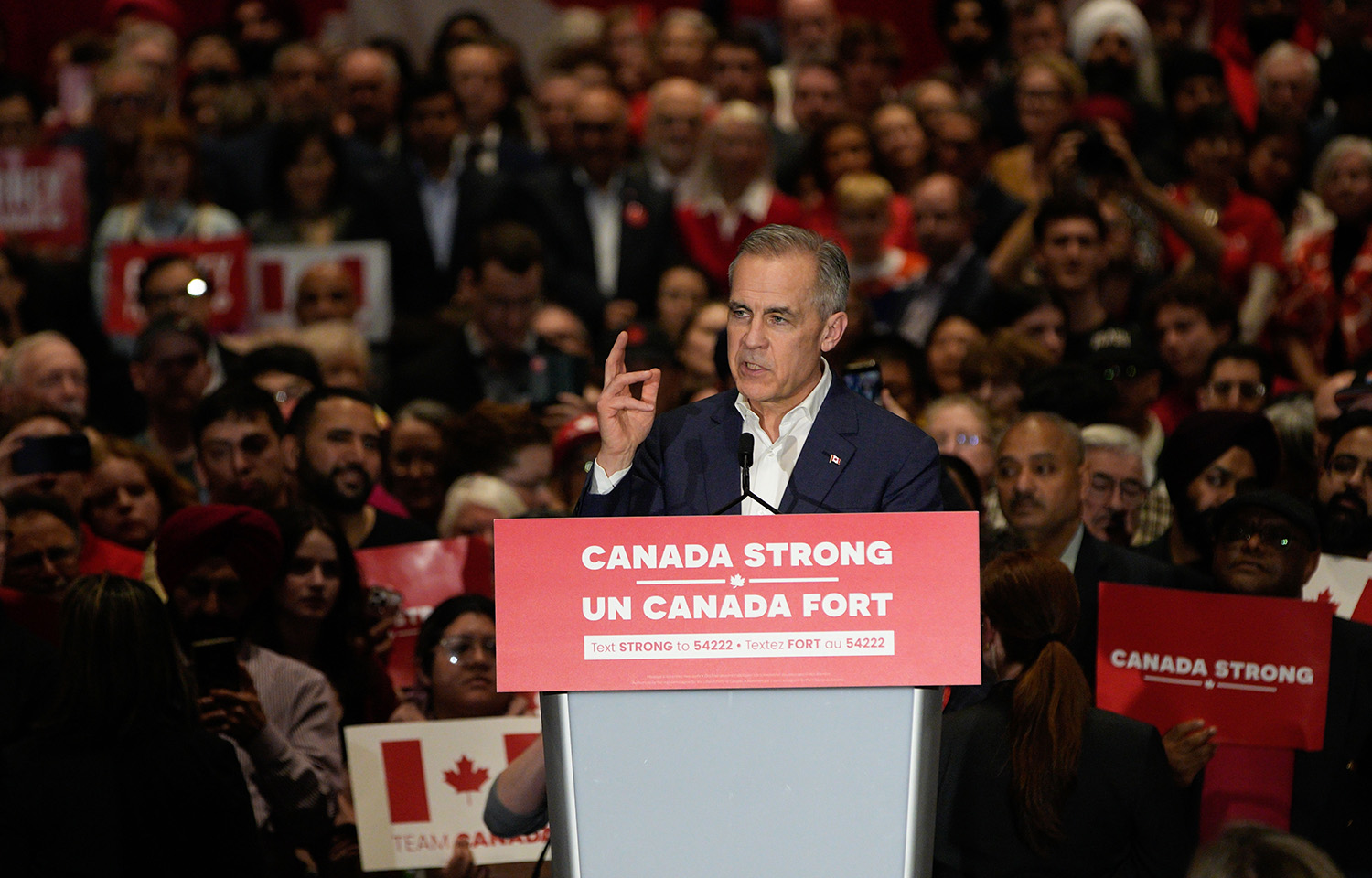
Canadian Prime Minister Mark Carney has announced a set of strategic measures aimed at responding to the impacts of U.S. trade policy, and the nation’s seafood industry appears likely to benefit.
“We cannot control what other nations do,” Carney said in a press release about the Buy Canada policy package he announced on 5 September. “We can control what we give ourselves – what we build for ourselves.”
Carney said the program aims to particularly help sectors hit hardest by U.S. trade policy, and his government named agriculture in general, and especially “grain, fish, and seafood,” as sectors that had been especially hard hit and which would be prioritized.
The ambitious plan includes increasing funding to small- and medium-sized enterprises, investing in marketing Canadian agricultural exports around the world, setting up a Strategic Response Fund worth CAD 5 billion (USD 3.6 billion) to support Canadian companies as they navigate the new trade landscape, funding training programs for up to 50,000 workers, and creating a Buy Canada program that will require the federal government to buy from Canadian suppliers and provide guidance to provinces and other local governments that want to adopt the policy.
The U.S. has had a similar policy in place since 1933 called Buy American Provisions, but Canada was often granted an exception to it, making it possible for Canadian businesses to benefit from U.S. government contracts. When former U.S. President Joe Biden updated the policy by executive order in 2021, however, he ended many of those exemptions.
At the time of that executive order, the Canadian government under then-Prime Minister Justin Trudeau expressed its confidence that the U.S. would ultimately work with Canada on trade restrictions.
"Once we show to our American neighbors and trading partners the extent to which every trading relationship with Canada is not a simple one-way trade but is about a set of mutually dependent, really, really complicated manufacturing and trading relationships, we find that we are very often able to explain to our American partners that trade is in the mutual interest of Canadians and of Americans,” then-Deputy Prime Minister Chrystia Freeland said at the time.
Tariffs introduced this year by U.S. President Donald Trump have worsened the trade relationship between Canada and the U.S. further, requiring action to alleviate, according to Carney.
“What’s going on is not a transition; it’s a rupture,” he said. “Canada’s public procurement is following outdated rules of free trade that no longer exist. For years, we have been buying significantly from foreign suppliers for short-term gain. Now, we need to use government procurement, using Canadian taxpayer dollars, to spur Canadian businesses for long-term prosperity.”
Minister of Government Transformation, Public Works, and Procurement Joël Lightbound praised the announcement.
“At this pivotal moment, we need to ensure our economy is resilient and self-reliant," he said. "Through the new Buy Canadian policy, we are leveraging our purchasing power to strengthen domestic supply chains and drive prosperity. As we build at a speed not seen in generations, public procurement will spark growth for workers and businesses across Canada.”
Carney acknowledged that the plan – and its massive financial investments – would require some sacrifices but said that economic independence would be worth the struggle.
“We know we need to act now ... precisely when it's hard,” Carney said. “We are charting an economic strategy to move Canada from reliance to resilience [and] from uncertainty to prosperity.”
