



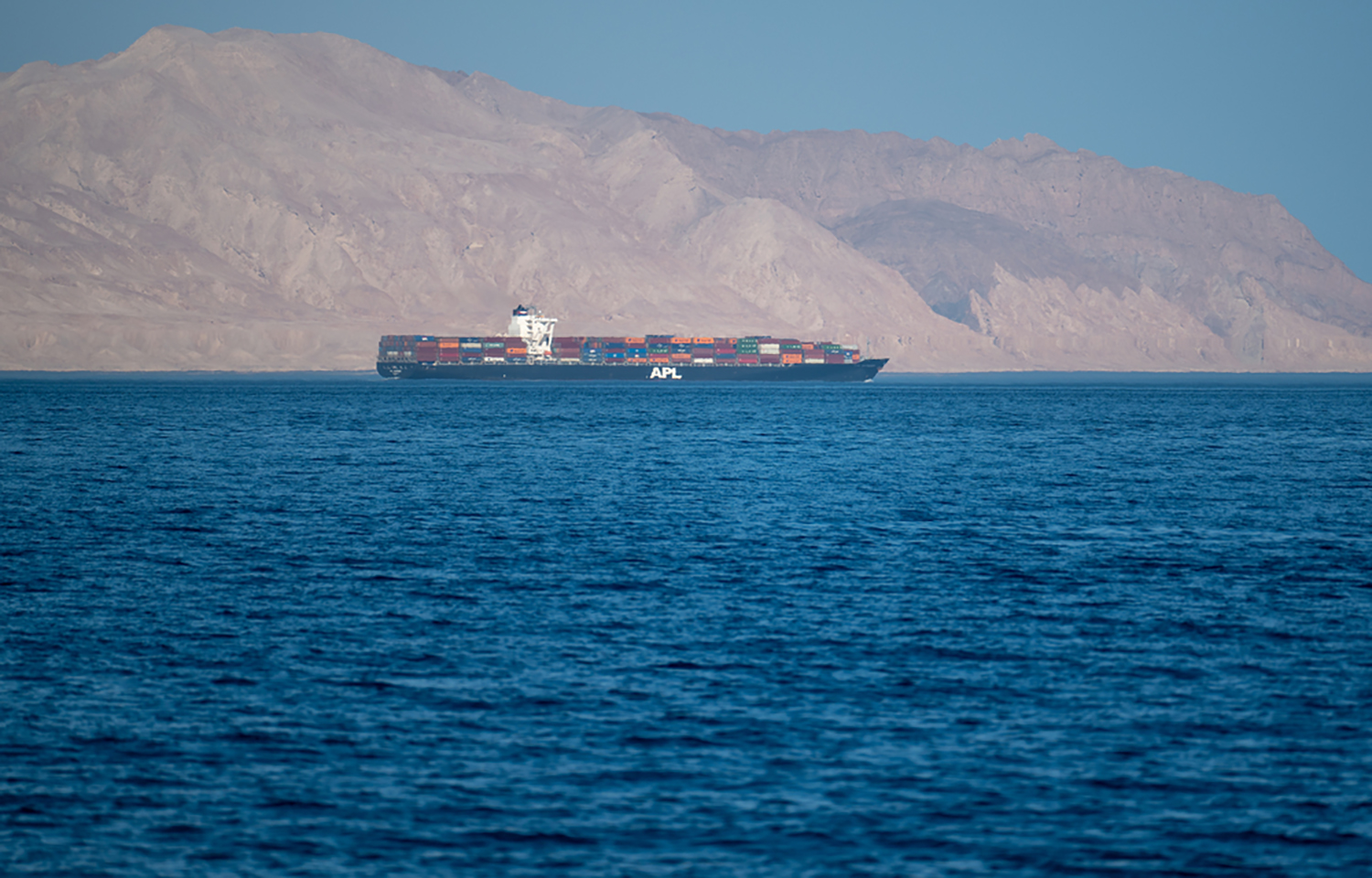
Seafood importers and exporters in China have expressed wariness of higher freight rates prompted by recent conflict in the Middle East.
Didier Boon, the head of Beijing, China-based East China Seas, which sources shrimp and tilapia for export, said he has already seen the impact of the conflict hit his firm.
“The cost of freight has gone up by USD 1,000 [EUR 860],” Boon told SeafoodSource. “I guess boats will be diverted and/or canceled. I guess freight may go up by up to USD 5,000 [EUR 4,300] if this lasts longer than a month.”
Landy Chow, the head of China operations at export firm Siam Canadian, said he believes freight companies are taking advantage of the Middle Eastern conflict to raise freight rates.
“The current war with Iran is in the Persian Gulf, which is a shipping lane for mainly oil and gas exports. Normally, commercial vessels from China to Europe do not go through that area at all,” he said.
Chow opined that some shipping lines have already increased their freight rates to Europe to make up for a year of low profit.
“The main reason is that the freight rates were very low in 2025; last year, a 40-foot container cost only USD 2,500 [EUR 1,275] from China to main ports in the E.U. At such rates, the shipping lines might not have made money,” Chow said.
Seafood firms themselves have also expressed consternation.
Josephine Wang, who is a sales manager at tilapia firm Hainan Golden Spring, said the conflict is causing uncertainty in the global market for tilapia, which has already faced heavy pressure from shifting tariffs over the past year.
“Demand will be on hold for a while until we get a clearer picture,” she told SeafoodSource. “Freight prices are [skyrocketing], and we are impacted by this unfortunately.”
Sigmund Bjorgo, the head of the Norwegian Seafood Council’s office in China, said the events in Iran have also affected airfreight, not just shipments at sea.
“This has led to an expected supply shortage on Chinese wholesale markets and a spike in the prices of Norwegian salmon from CNY 90 [USD 13, EUR 11.26] per kilogram last week to CNY 130 [USD 18.5, EUR 16.20] per kilogram on the wholesale market in Shanghai,” he said.
Bjorgo said that though the events have caused a disturbance, he expects shippers to adapt and mitigate the damage.
“I see that new cargo freighters are being set up between Oslo and Shanghai, and the forwarders are working on finding new routes to substitute the hubs in the Middle East,” he told SeafoodSource. “Therefore, I expect this to be a short-term bump in the road and that the supply situation will normalize quite soon.”
Others are not so optimistic the situation will be short-lived.
Vigo, Spain-based Inter-Atlantic Group, which has an office in China, warned in an email to clients that “this situation threatens to have a significant impact on global transport and logistics flows of fish products, given that this enclave is a strategic corridor for the maritime routes connecting Asia with the Mediterranean.”
Gary Wilcox, CEO of logistics agency JAG UFS, which has offices in China, the United Arab Emirates, and the U.K., told SeafoodSource that shipping companies are likely to avoid the Persian Gulf and sail around South Africa, which would raise rates. However, he said he is hopeful that increases in freight rates will be limited, at least for Chinese traders, due to it being an off-peak time of year in China.
“China factories remain in a lull period after the Chinese New Year; therefore, any increase in rates will be minimal for the moment. It’s a bit early to call,” he said.
