



From the 2008 financial crisis, to the Covid-19 pandemic, to China’s four-year ban on Australian seafood, to the recent spike in fuel prices affecting fleets all over the world, Hendon, Australia-based seafood firm Ferguson Australia has experienced several global shocks affecting its operations over the past 15 years.
Through these upheavals, Managing Director Andrew Ferguson said his firm has built resilience by continuing to focus on innovation and quality.
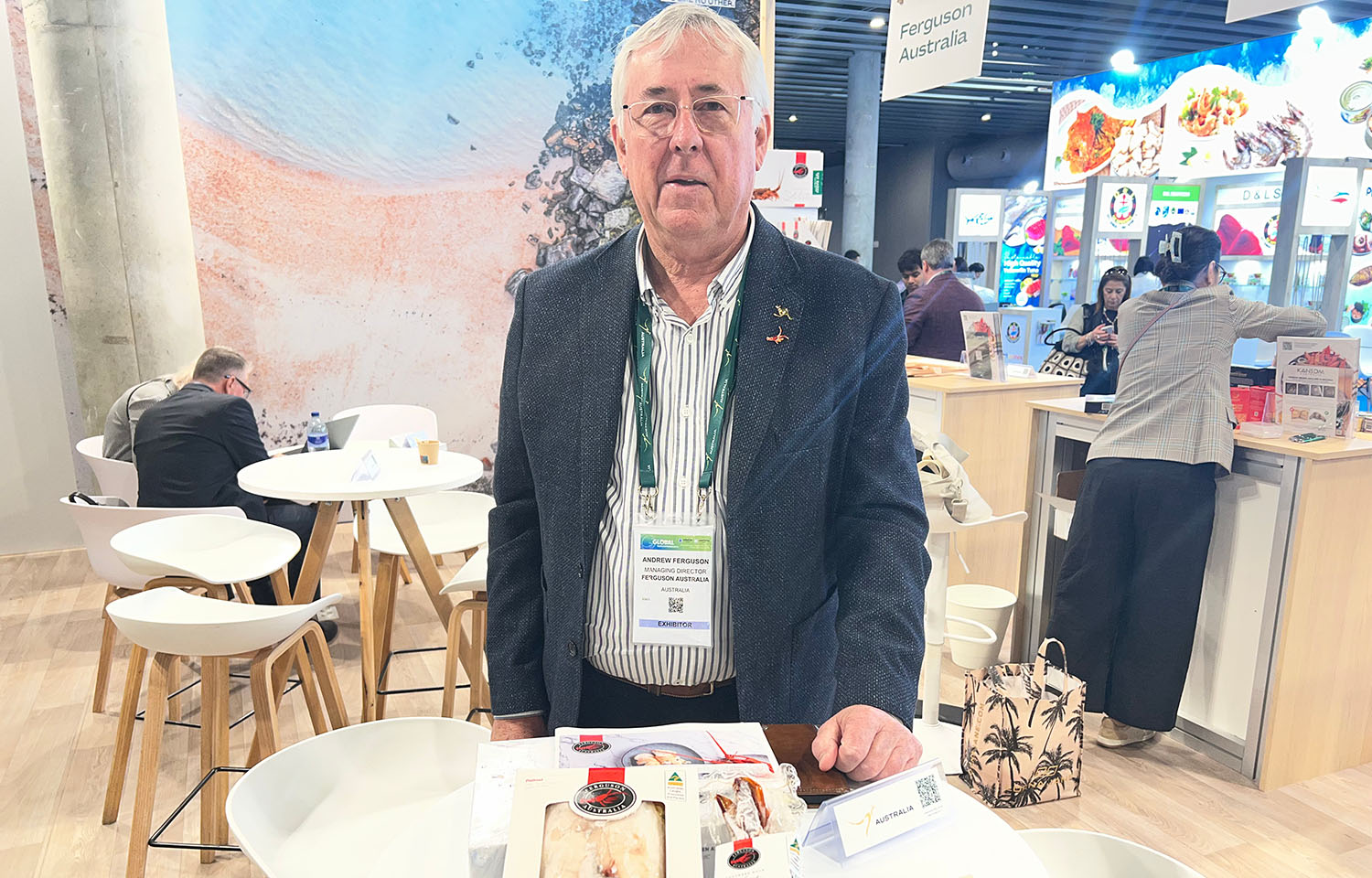
At the 2026 Seafood Expo Global (SEG), which took place in Barcelona, Spain, from 21 to 23 April, Ferguson told SeafoodSource that his firm began expanding its export capabilities around 2001 and heavily relied on export sales to Europe until the 2008 financial crisis hit.
Pivoting away from Europe as markets crashed, Ferguson soon was heavily supplying China with live lobsters – a market that dried up virtually overnight in 2020 when China decided to ban imports of Australian seafood and did not open back up until 2024.
“The Chinese ban really hurt us, so we spent time developing new products and looking at new markets again,” he said.
That necessary time and money poured into research and development resulted in several new offerings, including packaged products like its Southern Rock Lobster Frozen Half, which was a finalist within the HoReCa category at the 2026 Seafood Excellence Awards
“We are very proud of the product. It’s a great and simple product, and it works very well,” Ferguson said, adding that the product drew particular interest at this year’s SEG from Italian and other European customers. “These markets are looking for quality products packaged with convenience. This trade show has been very encouraging for us. We’ve had some great meetings.”
Besides lobster, Ferguson’s range also includes crab, tuna, prawns, and more for foodservice customers, while its retail range, mostly available domestically in Australia, includes flathead, mullet, and whiting fillets, as well as packaged prawn and scallop products.
The company’s continued innovation remains as important as ever, Ferguson emphasized, especially as current challenges like the ongoing fuel crisis due to war in Iran have affected global fishing firms and even partially led to the closure of such companies as fellow Australian fishing firm Raptis and Sons.
“We know Raptis very well because we were buying from their boats, so that will affect our species, even though we can go elsewhere. We had a trusted relationship with Raptis, and they were very good to deal with,” Ferguson said. “It’s a real shame.”
He further explained that the domestic fishing sector has also had to deal with negative perceptions associated with a recent massive algal bloom that has grounded vessels across South Australia where Ferguson is active, as well as more general economic issues like increased cost of living making it difficult for consumers to prioritize seafood.
“We’ve just got to keep going and seek out the niches. We’ve got to be very mindful of what we produce and what we market, servicing the top end of the market with higher-quality Australian product and aligning the branding and everything else with that as well,” Ferguson said.
