



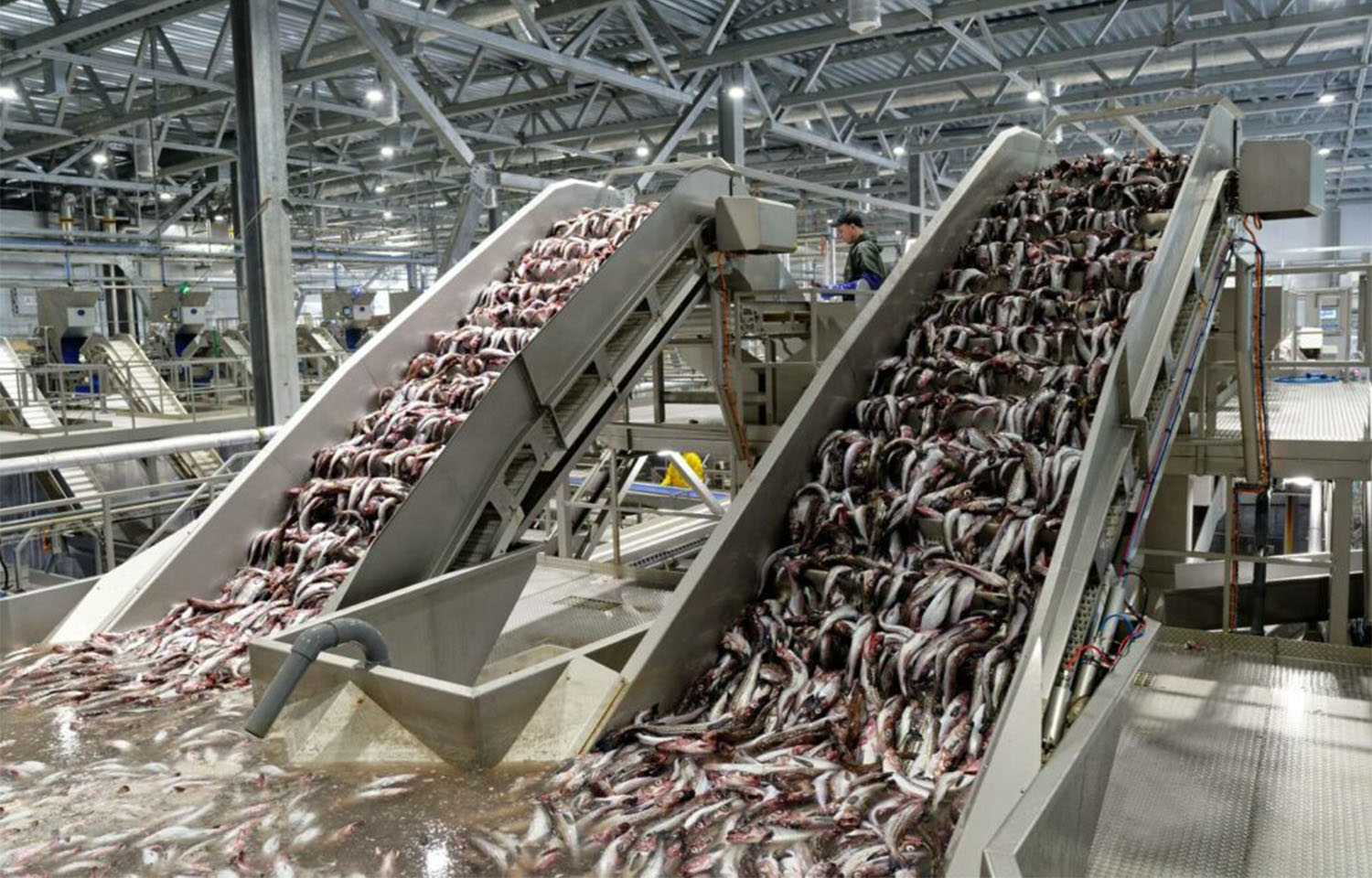
Despite delays that forced Russia to heavily postpone the deadline of its investment quota program, the country said new processing facilities and vessels stemming from the program are benefiting the industry.
Russia’s investment quota programs got their start in the country’s crab industry in 2018, which saw the government auction off 50 percent of available quotas via auctions that came with additional investment requirements for companies. Those requirements included the construction of new fishing vessels in Russian shipyards or new seafood-processing facilities, with the goal of modernizing the country’s seafood infrastructure.
The Russian Federal Fisheries Agency (Rosrybolovstvo) said that a total of 11 new fishing vessels and three new processing facilities were completed in 2025 thanks to that program. According to the Russian state agency, 30 modern processing plants have been built in recent years, and the share of highly processed fish products being produced by the country has increased from 15 percent of all output in 2017 to 34 percent by the end of 2024.
Rosrybolovstvo said in late 2024 that RUB 200 billion (USD 2.5 billion, EUR 2.2 billion) had been invested in the country’s fisheries through the investment quota mechanism.
The investment quotas got off to a rocky start, as early delays at Russian shipyards began to put the programs at risk as deadlines for construction slipped by. Later, Russia’s invasion of Ukraine and subsequent global sanctions caused more issues, and in 2024, Russia floated extending the deadline for vessels as shipbuilding delays continued.
In 2024, the Russian Ministry of Agriculture extended the period of time that participants in the program are given production rights from 15 to 20 years. It also approved multiple extensions of the investment project implementation period, stretching it from the initial six years to eight years and then more recently stretching that from eight years to 12 years.
Russia originally projected it would build 106 vessels by the end of 2024; however, the 11 completed in 2025 only brings that total to 43 vessels.
The All-Russian Association of Fishing Industry (VARPE), in a post on its Telegram channel, said the industry has faced a “black swan” event every decade since the 1970s, with the fleet construction program being one of them, and called for state support.
“Less than a decade has passed, but it’s clear to everyone that, for various reasons, the ‘technocratic breakthrough’ in shipbuilding, fueled by financial flows from the fishing industry, has failed to materialize," VARPE said. “Therefore, the need for state support for the fishing industry is clear to everyone.”
