






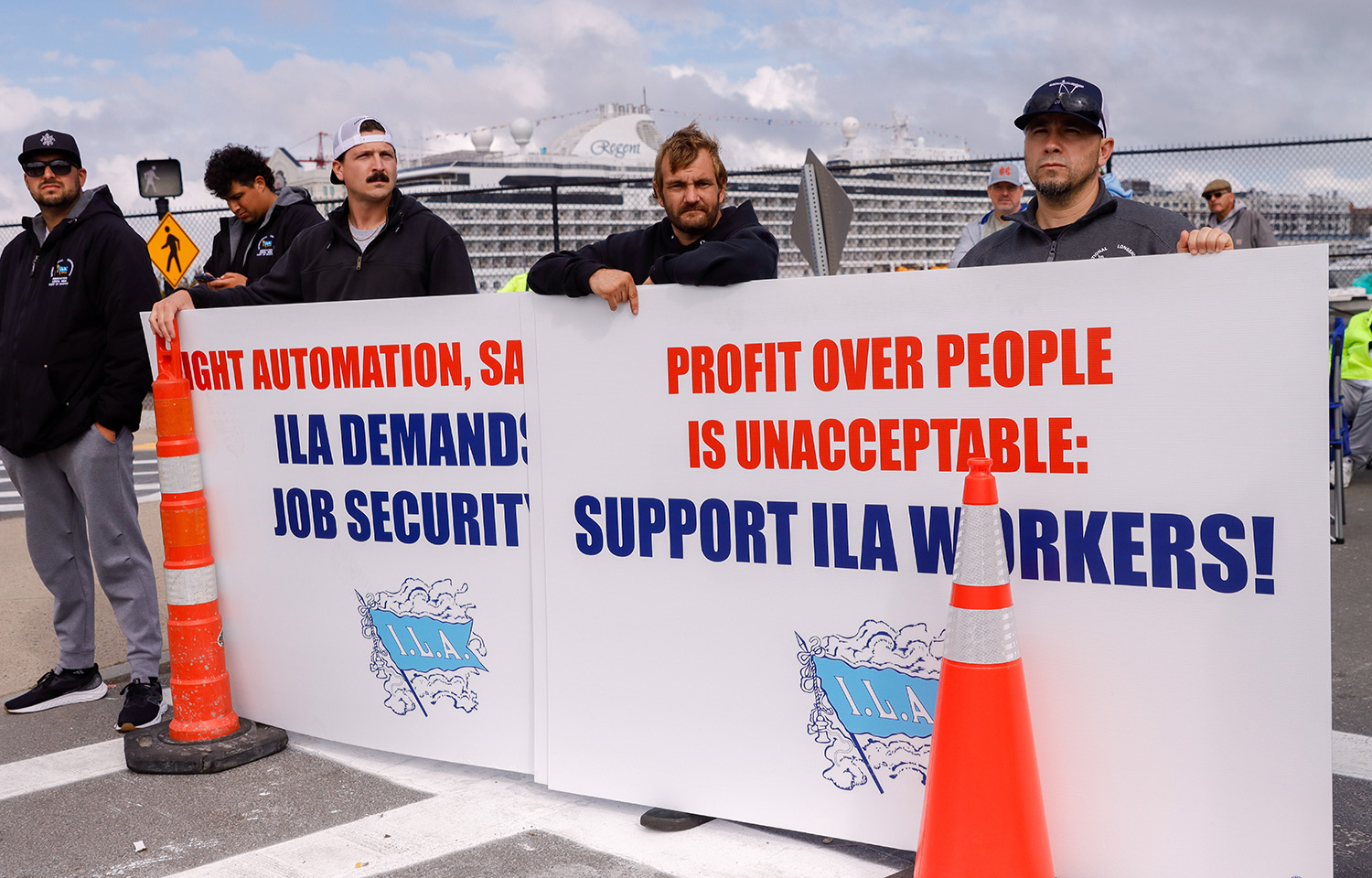
The International Longshoremen's Union (ILA) and the United States Maritime Alliance (USMX) are reportedly going to reopen stalled contract negotiation talks.
The current contract extension, which ended the October 2024 East and Gulf Coast port strike, is set to expire on 15 January 2025. According to anonymous sources who spoke on the matter to FreightWaves, the bargaining negotiations will resume on 7 January thanks to behind-the-scenes efforts on the part of both sides.
“[The ILA and USMX] have been working informally, as you do in this situation," an anonymous source told FreightWaves.
In expectation of a mid-January strike, Hapag-Lloyd and other liner operators recently announced that they would begin container surcharges on 20 January, the date of President-elect Donald Trump’s inauguration. In mid-December, Trump made a public statement in support of the ILA, which echoed the Union’s concerns about the toll automation would take on port worker jobs.
The last round of negotiations broke down in November over the issue of automation, when ILA leadership walked away from the bargaining table, saying there was no movement to be made on the contentious topic. USMX has maintained that semi-automated cranes are necessary to modernize U.S. ports and will not threaten jobs, though when West Coast ports integrated automation, some jobs were lost.
Both the National Fisheries Institute (NFI) and the National Retail Federation (NRF), as well as numerous other retail lobby groups, have repeatedly called for a return to the negotiations.
The National Retail Federation has been particularly outspoken on the issue. This week, Supply Chain and Customs Policy Vice President Jonathan Gold said on X that if the parties were not able to achieve a deal by the strike deadline, “they must do another extension to avoid a strike.”
At this point, even an averted strike will likely pass on significant costs to American consumers, since retailers and importers have been preparing for the potential strike, as well as for the President-elect’s proposed import tariffs, for months.
“The window to frontload goods on vessels arriving before a potential strike is quickly closing," Hackett Associates founder Ben Hackett said in December 2024. "Then, there are issues as President-elect Trump promises to increase tariffs when he takes office. It is not clear whether this will actually take effect immediately or whether it will take time to implement the tariffs, but shippers are moving up as much cargo as they can before then.”
