






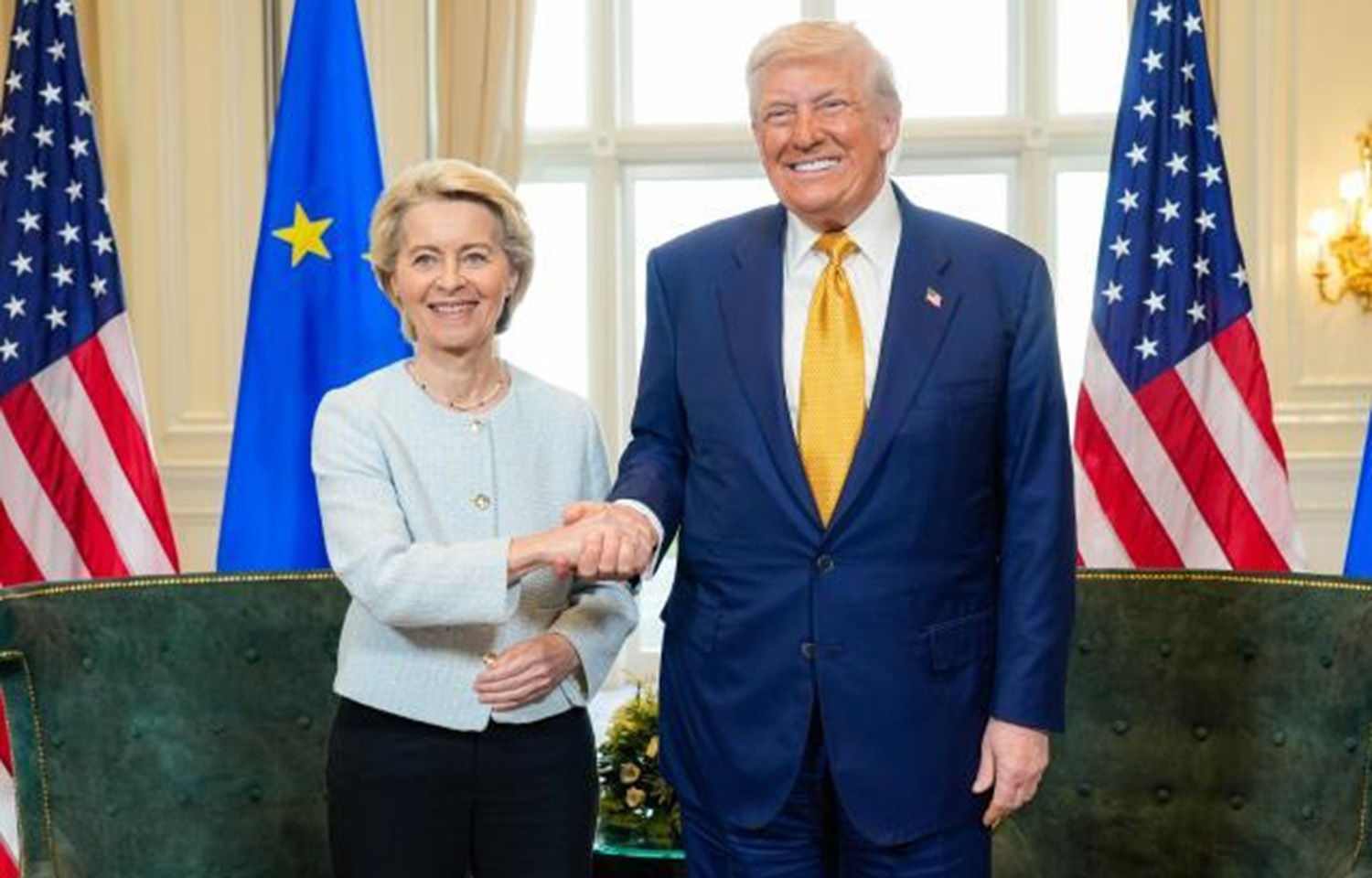
The European Union is moving forward on a potential trade deal with the U.S. it first announced in 2025.
The administration of U.S. Donald Trump announced it reached a trade deal with the E.U. in July 2025. That deal would see the U.S. set a base tariff rate of 15 percent on goods from the E.U., and the E.U. agreed to reduce tariffs on a range of goods to zero.
The E.U. Council and Parliament announced 20 May that they struck a deal to implement the tariff elements of the E.U.-U.S. joint statement announced on 21 August, 2025, which gave seafood preferential market access to the European market.
“The E.U. and the United States share the world’s largest and most integrated economic relationship,” Republic of Cyprus Minister of Energy, Commerce, and Industry Michael Damianos said. “Maintaining a stable, predictable and balanced transatlantic partnership is in the interest of both sides. Today, the European Union delivers on its commitments. We are and will remain a trusted and reliable partner in global trade. We have ensured in our agreement robust safeguards to be able to protect European interests, businesses and workers.”
According to an E.U. release, the first main regulation eliminates duties on U.S. industrial goods and also grants preferential market access, and reduced tariffs for some U.S. seafood and “non-sensitive agricultural products.” The second regulation extends a suspension of duties on imports of lobster, including processed lobster.
“The agreement includes a dedicated safeguard mechanism, which gives the E.U. the means to address possible significant increases in imports from the U.S. that cause or threaten to cause serious injury to domestic producers,” the E.U. Council said.
The European Commission said liberalized market access granted to U.S. exports will give the bloc greater access to needed goods, while also protecting domestic industry through the safeguard clause.
“Today's agreement ensures that the key objectives of the EU-US Joint Statement – maintaining stable, fair, predictable and mutually beneficial transatlantic trade and investment – are achieved, and opens the path to boosting transatlantic trade by exploring further areas for reducing tariffs for EU exports,” the commission said.
