


Norway saw its seafood export value decline slightly in the first half of 2026, and the Norwegian Seafood Council (NSC) is attributing that drop to lower quotas, geopolitical unrest, and a strong Norwegian krone.
Norway exported seafood worth NOK 84.5 billion (USD 8.62 billion, EUR 7.54 billion) in the first half of 2026, a decline of NOK 669 million (USD 68 million, EUR 59 million), or 1 percent, over the same period of 2025.
"Seafood exports in the first half of the year were influenced by both domestic and international factors," NSC CEO Christian Chramer said in a release. "Here at home, low quotas for several wild-caught species have resulted in record-low export volumes and record-high export prices, while geopolitical unrest in the markets has made global trade even more challenging."
One of the biggest declines in exports was to the United States, which was formerly one of the fastest-growing destinations for Norwegian seafood. While the U.S. remained one of the top export markets for Norwegian seafood in H1 2026, Norway exported just NOK 6.3 billion (USD 642.82 million, EUR 562.05 million) worth of seafood to the country in the period, marking a decline of NOK 2.4 billion (USD 244.88 million, EUR 214.11 million), or 28 percent, compared to the same period of 2025.
Despite the decline, Norway Minister of Fisheries and Ocean Policy Marianne Sivertsen Næss said the strong export values show the continued strength of Norway's seafood industry.
"Overall, seafood exports are solid, which is impressive at a time characterized by a shifting trade policy landscape. Although exports to the U.S. have fallen, they have increased in other markets. At the same time, I understand that the situation is challenging for companies that have focused on the U.S. market," she said. "The government is committed to strengthening market access for the seafood industry and will continue to prioritize this work."
The decline also came against a backdrop of being compared to record-setting export values in 2025. Norway's H1 2025 seafood export value hit NOK 85.2 billion (then USD 8.69 billion, EUR 7.60 billion), a 6 percent increase over 2024. At the time, the U.S. was rapidly becoming one of the top destinations for Norwegian seafood, growing 38 percent in H1 2025 over the same period of 2024.
A year later, Norwegian exporters are increasingly seeking other markets as the NSC and exporters have been forced to reckon with a number of tariff threats the administration of U.S. President Donald Trump has made against Norwegian products, including some in January that would have seen tariffs on Norway increased to 25 percent, up from the 15 percent it was already dealing with.
The Norwegian industry has continued to keep an eye on the U.S. market throughout the year and hosted media events during this year's Seafood Expo North America emphasizing the continued importance of the market despite increased challenges.
NSC Head of Market Access Oystein Valanes told SeafoodSource at the time that the industry is also keeping an eye on the United States, Mexico, Canada Agreement (USMCA), as it could have implications for Norwegian trade. The Trump administration has already indicated it plans to not sign an extension of the trade deal, beginning a decade-long process to wind it down.
Despite those challenges, Norway's exports to other markets grew enough to almost make up for the declines in the U.S. Norway's seafood exports to Poland increased by 32 percent, reaching NOK 10.1 billion (USD 1.03 billion, EUR 900 million), and its exports to China increased 31 percent to NOK 7.4 billion (USD 760 million, EUR 660 million). Exports to the Netherlands also grew by 6 percent, reaching NOK 5.1 billion (USD 520 million, EUR 460 million).
Among the top 10 markets for Norwegian seafood, many saw slight declines.
France saw a 1 percent drop in export value, with Norway sending NOK 4.8 billion (USD 490 million, EUR 430 million) worth of seafood to the country in H1 2026. Exports to Denmark fell, dropping 16 percent to NOK 4.5 billion (USD 460 million, EUR 400 million), and exports to the U.K. also dropped, falling 12 percent to NOK 4.3 billion (USD 440 million, EUR 380 million).
By species, salmon continued to dominate in terms of Norway's total export value, with the country exporting NOK 58 billion (USD 5.92 billion, EUR 5.17 billion) worth of the species, representing an increase of 1 percent. That value makes it by far the most valuable seafood export from the country, amounting to more than double the value of the next nine most valuable seafood exports combined.
Norway exported 655,598 metric tons (MT) of salmon in the period, an 8 percent increase in volume over the same period of the prior year. Poland, China, and France were the largest markets during the six months.
NSC Seafood Analyst Paul T. Aandahl attributed Poland's growth to exporting more salmon directly to the country, rather than to the transit and processing market in Denmark.
China was also a growth market, seeing a 42 percent increase in value year over year, building on the 59 percent increase in value the country saw in H1 2025.
"The Chinese salmon market has strong underlying growth," NSC Special Envoy to China Sigmund Bjørgo said. "In 2025, total imports from all salmon-exporting countries rose by as much as 50 percent. This growth has continued into 2026. While China was the world's eighth-largest salmon market in 2023, only the U.S. is now larger."
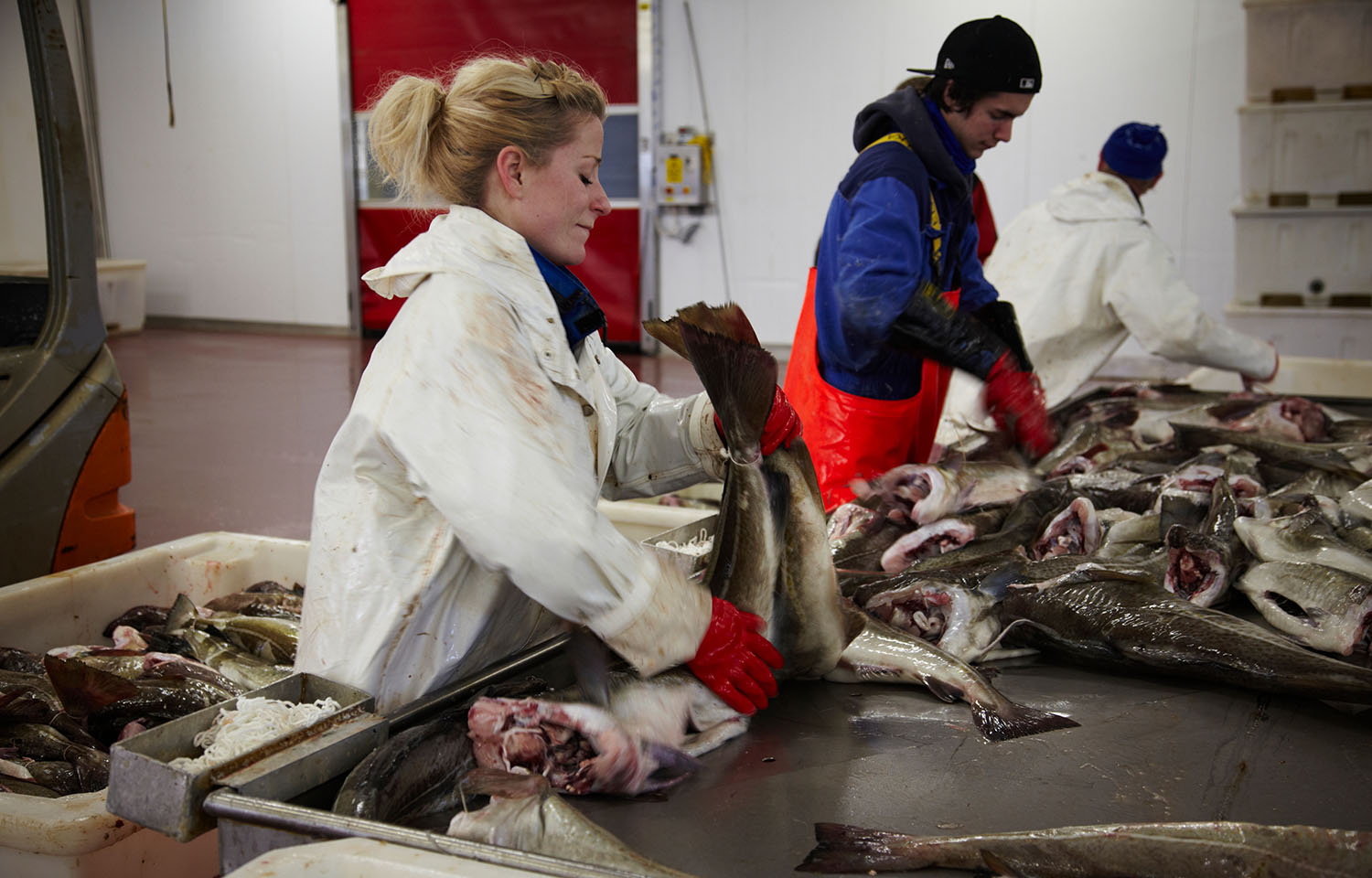
The second most valuable export, cod, saw its value drop by 10 percent to NOK 6.1 billion (USD 620 million, EUR 540 million). Quotas for the species have dropped, and landings dropped with them. As a result, Norway exported NOK 18,071 MT of fresh cod worth NOK 1.7 billion (USD 173 million, EUR 151 million) in H1 2026, a fall of 20 percent and 4 percent, respectively.
That decrease is in part due to competition over raw materials, according to NSC Seafood Analyst Eivind Hestvik Brækkan.
"This means that an ever-increasing proportion of Norwegian landings of fresh cod is being used for the production of salted fish, stockfish, and clipfish. This is at the expense of the export volume of fresh wild cod," he said.
As wild-caught fresh cod exports dropped, farmed exports are continuing to increase. The export value of fresh farmed cod hit NOK 595 million (USD 60 million, EUR 53 million) in H1 2026, an increase of 9 percent.
"Farmed cod accounted for 35 percent of the export value of fresh cod. This is a record-high share, up 5 percentage points from the first half of last year," Brækkan said.
While most wild-caught species saw value declines, including mackerel, saithe, snow crab, prawns, and redfish, herring saw large gains that offset much of the declines of other top species.
Herring set a new export record in H1 2026, with Norway exporting 139,517 MT of the species worth NOK 2.6 billion (USD 265 million, EUR 231 million), an increase of 40 percent and 29 percent, respectively.
"The record is the result of a 33 percent increase in the quota for Norwegian spring-spawning herring and a strong winter fishing season, during which 64 percent more was landed than the previous year," NSC Head of Pelagic Species Jan Eirik Johnsen said.
Johnsen said export patterns have also shifted, with exports of fresh/chilled whole herring increasing 134 percent, whole frozen herring increasing 70 percent, and frozen fillets increasing by 26 percent. Exports of marinated products, however, dropped by 70 percent.
"Once again, we see that the fillet markets are more stable and that volumes of frozen whole herring vary to a greater extent depending on availability," Johnsen said. "The sharp fall in exports of marinated herring products is due to capacity challenges in Norway, not market conditions."
