






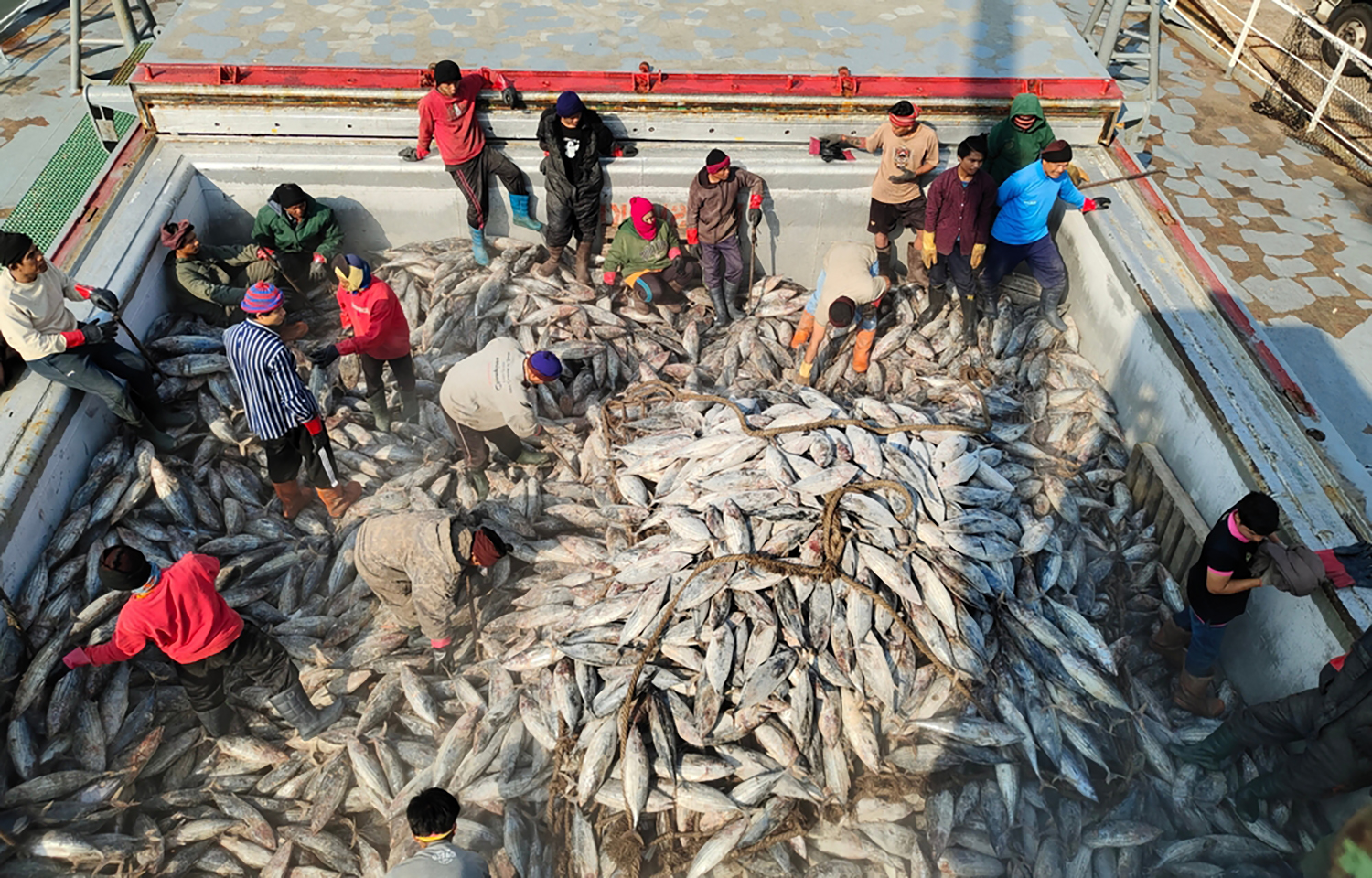
The European Union and Thailand are in talks to sign a free trade agreement (FTA) that could enable the duty-free passage of Thai tuna, among other products, into the E.U. market.
If the FTA goes through, it would cause immediate damage to Europe’s tuna fleets and increase the likelihood of consumers being exposed to inferior and potentially illegal products, European fishing industry representative body Europêche has warned.
Thailand is one of the world’s top producers and exporters of tuna, with an annual production of about 470,000 metric tons (MT) of canned and prepared products. Currently, around 10,000 MT of these products are exported to the European Union each year and are subject to a 24 percent tariff.
However, Europêche said that if the FTA were to include tuna products, it would lead to a much greater influx of imports.
Europêche Tuna Group Director Anne-France Mattlet told SeafoodSource the likely economic impact of this would include lower tuna prices at European retailers, which would in turn impact the profitability of European fleets.
This would occur due to the lower cost structure of Thai tuna production, she said, adding that as Thai exports to the E.U. increase, there would be reduced demand for European tuna, which would become comparatively more expensive.
“The combination of reduced demand and pressure on prices could lead to layoffs and lower job creation in the European tuna sector, particularly affecting tuna purse-seine companies,” Mattlet said. “Both direct and indirect employment would be negatively impacted, as fewer vessels may be required to meet reduced market demand.”
At the same time, the economic uncertainty created by increased competition from duty-free imports could deter investment in European tuna fleets, further exacerbating employment challenges in the sector, she said.
“A duty-free tuna trade with Thailand could undermine the competitiveness of European fleets, particularly in terms of price and market share, leading to negative consequences for employment and investment,” Mattlet said.
Europêche is also “deeply concerned” about the risk of increased imports linked to illegal, unreported, and unregulated (IUU) fishing, and highlighted that Thailand sources a significant portion of its tuna from fisheries with lower standards – lower control, monitoring, and surveillance – and that some Thai tuna vessels perform at-sea transshipments, which is forbidden within the European tropical tuna purse seine fleet.
In contrast, it said the European fleet of tuna purse seiners is recognized as “a model of sustainability and responsibility” for, among other things, adhering to strict quotas, being monitored around the clock, having 100 percent observer coverage, and applying stringent control, monitoring, and control regulations. The fleet is also certified to the Marine Stewardship Council (MSC) standard, as well as the Spanish AENOR (APR) and French AFNOR credentials regarding environmental and social standards.
According to Europêche, these rules and standards make Europe’s fleet the world’s most expensive tuna fleet to run.
To ensure the future viability of Europe’s tuna fleet, Europêche is recommending the duty on tuna loins and canned tuna should remain at 24 percent to avoid incentivizing the importation of lower-standard tuna.
“Tuna should not be treated as a generic commodity in trade deals; as a product of the primary sector, it contributes to E.U. food security.”
The organization also wants to maintain a continuing dialogue on IUU issues within the Thai fleet. To that end, Mattlet pointed out that the E.U. is already in talks with Thailand regarding IUU practices, with the country currently being monitored in light of potential changes to its national law that are putting the country at risk of garnering another “yellow card” trade restriction label.
This dialogue must continue until the E.U. is confident that Thailand has implemented robust measures to eliminate IUU fishing from its supply chain, Mattlet said.
Moving forward, to ensure sustainability and ethics, Mattlet and Europêche recommend that only tuna caught by E.U.-flagged vessels or by vessels that are majority-owned by E.U. operators should qualify for preferential treatment under rules of origin.
“We also hope that the due diligence that retailers and processors in the E.U. will be required to conduct on their supply chains will ensure that all tuna is sustainably caught and free from labor exploitation,” she said. “These due diligence requirements should be enforced through audits and penalties for non-compliance.”
FTAs should also impose the use of the electronic CATCH certification database on foreign producers if they want to export to the E.U., Mattlet said.
Additionally, alongside a higher level of import control across all member states, Europêche would like a reconsideration on the use of autonomous tariff quotas (ATQs), which allow duty-free imports of certain products, including tuna.
“These imports should be subject to sustainability criteria and higher scrutiny, ensuring they meet the same standards as E.U. tuna in terms of environmental maritime and labor conditions,” Mattlet said.
