





European seafood trade body Europêche has applauded a new E.U. regulation that sets stricter brine-freezing conditions for tuna purse seiners in the bloc’s fleet.
The European Commission recently approved Delegated Regulation 2025/1449, which outlines new hygiene rules for both the slaughter of domestic ungulates and for frozen tuna in brine and highly refined products.
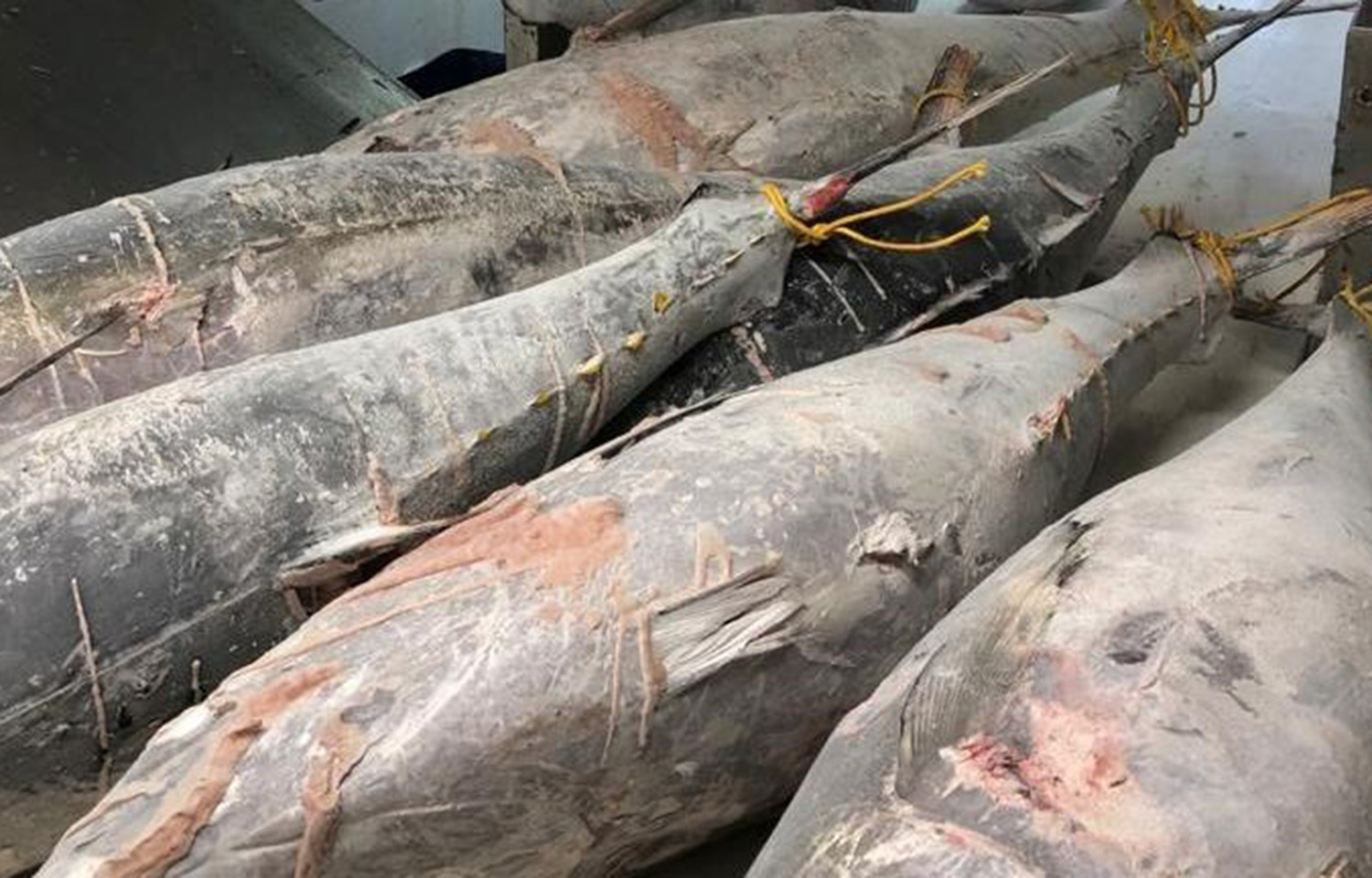
The new regulation requires new temperature controls for all tuna and that any freezer vessel needs to have equipment capable of freezing as quickly as possible “and with a thermal arrest period as short as possible” to bring core temperature down to minus 18 degrees Celsius or lower.
Europêche said a crucial portion of the new regulations is that the brine temperature must be monitored electronically in real time, with full records available for authorities. Only vessels meeting the requirements can be entered onto an authorized list – a requirement for any company trying to sell tuna on the E.U. market.
“This should eliminate fraudulent practices of re-freeze at [minus] 18 degree Celsius tuna that was first frozen at higher temperature and meant for other use to sell it to consumers as ‘fresh’ or ‘frozen,’” Europêche said. “Such practices can make tuna develop dangerous levels of histamine, which poses a serious health risk to consumers.”
Europêche said the new regulations aligns E.U. requirements with the investments being made by the E.U. fleet and recognizes its commitment to verified safety.
“Long before this regulation, European operators had already equipped their vessels with advanced brine-freezing and monitoring systems, tested and documented under real conditions,” the trade body said. “The industry did the science and proved the technology to make E.U.-frozen tuna at [minus] 18 degrees Celsius a global reference for safety and reliability. This is the standard others will now have to match to reach the E.U. market.”
Europêche said the move both levels the playing field between the E.U. and outside fishers and protects consumers.
“The two latest RASFF alerts in October concerning histamine contamination in tuna from Indonesia and Sri Lanka clearly highlight the need for such a level playing field,” Europêche Tuna Group Director Anne-France Mattlet said. “European consumers have the right to expect that any tuna sold in the E.U. is completely safe, regardless of its origin. The high sanitary standards applied by the E.U. fleet must, therefore, become the prerequisite for any fleet wishing to access the E.U. market.”
