





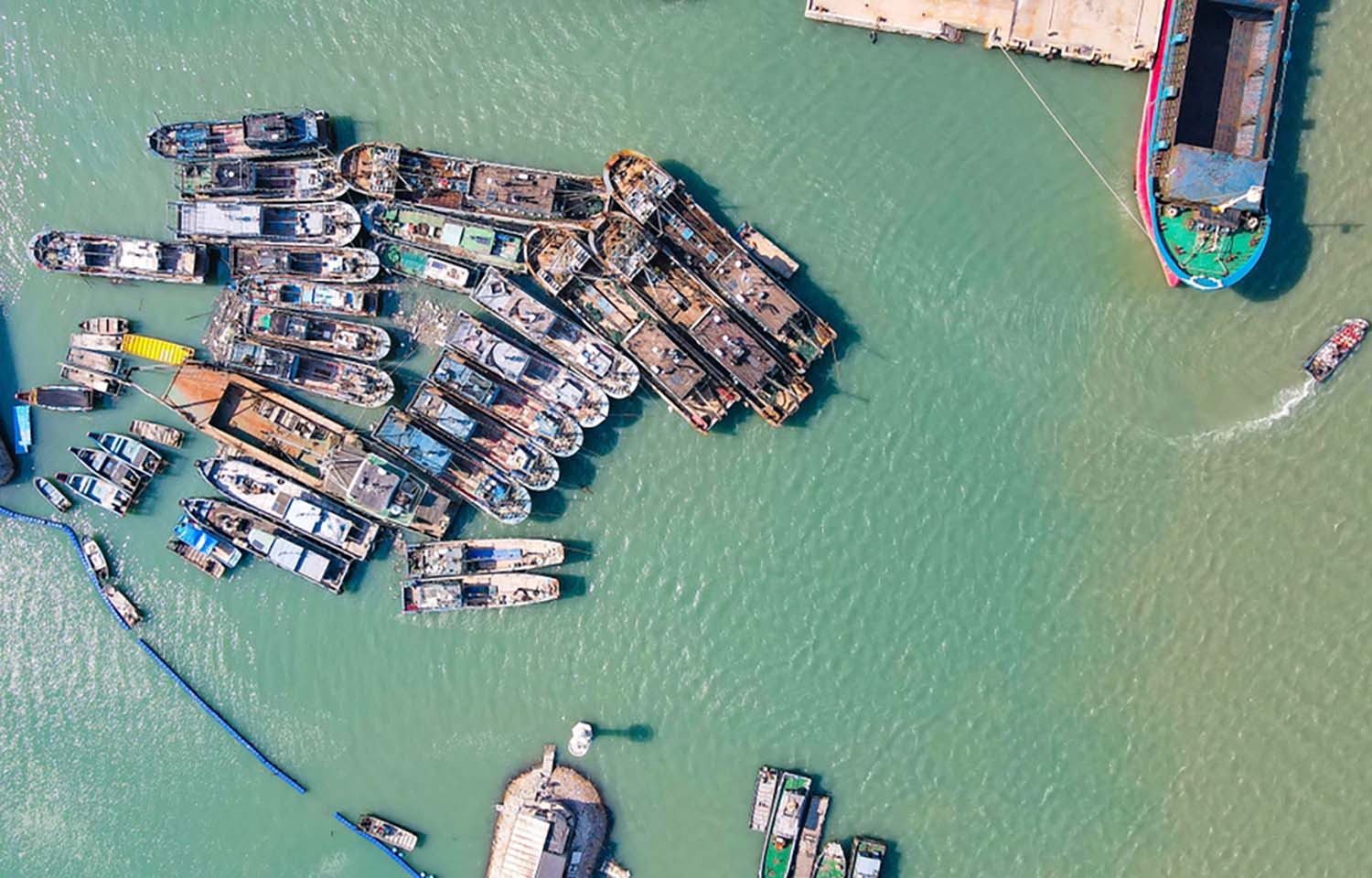
The Zhangzhou fishing port in the southern Chinese province of Fujian is offering a CNY 40 million (USD 5.6 million, EUR 4.8 million) subsidy through the municipal government that will be put toward purchasing new Antarctic krill-fishing vessels as part of a support package to help expand the local distant-water fleet.
The payments also include a “one-off reward” of CNY 100,000 (USD 14,000, EUR 12,000) per vessel to any fishing company that enters a “new fishing country” – marking an effort to expand the geographical reach of Zhangzhou’s fleet.
Aside from the funding available for new krill vessels, Zhangzhou authorities are also paying CNY 3 million (USD 420,000, EUR 360,000) and CNY 900,000 (USD 126,000, EUR 108,000) for new tuna purse seiners and squid jiggers, respectively.
This comes in addition to other subsidies Zhangzhou offers.
For instance, companies can apply to have 30 percent of the costs of modernizing their vessels, such as installing new navigational equipment, covered by the city government, which also pays up to 40 percent of the interest payments incurred by companies interested in securing new or renovated vessels.
Distant-water fishing companies registered in the city can also apply for a payment of CNY 300 (USD 42, EUR 36) per metric ton of seafood they transport back to Zhangzhou for processing or consumption.
The latest round of subsidies from Zhangzhou will likely be closely scrutinized by environmental groups, as well as nations around the world, which have argued that such subsidies as these have inflated the size of the nation’s distant-water fleet to unsustainable levels.
“China’s colossal distant-water fleet is monopolizing the world’s oceans. [For example,] this fleet is emptying the waters surrounding the Galápagos of marine life, disappearing from the public eye, and fueling unregulated fishing practices beyond the horizon,” Oceana Campaign Director Max Valentine said in 2024.
Last year, China itself acknowledged that some distant-water fishing firms in the country do not meet the terms outlined in a 2022 World Trade Organization deal meant to limit harmful fisheries subsidies and has pledged to cancel subsidies to these firms.
