





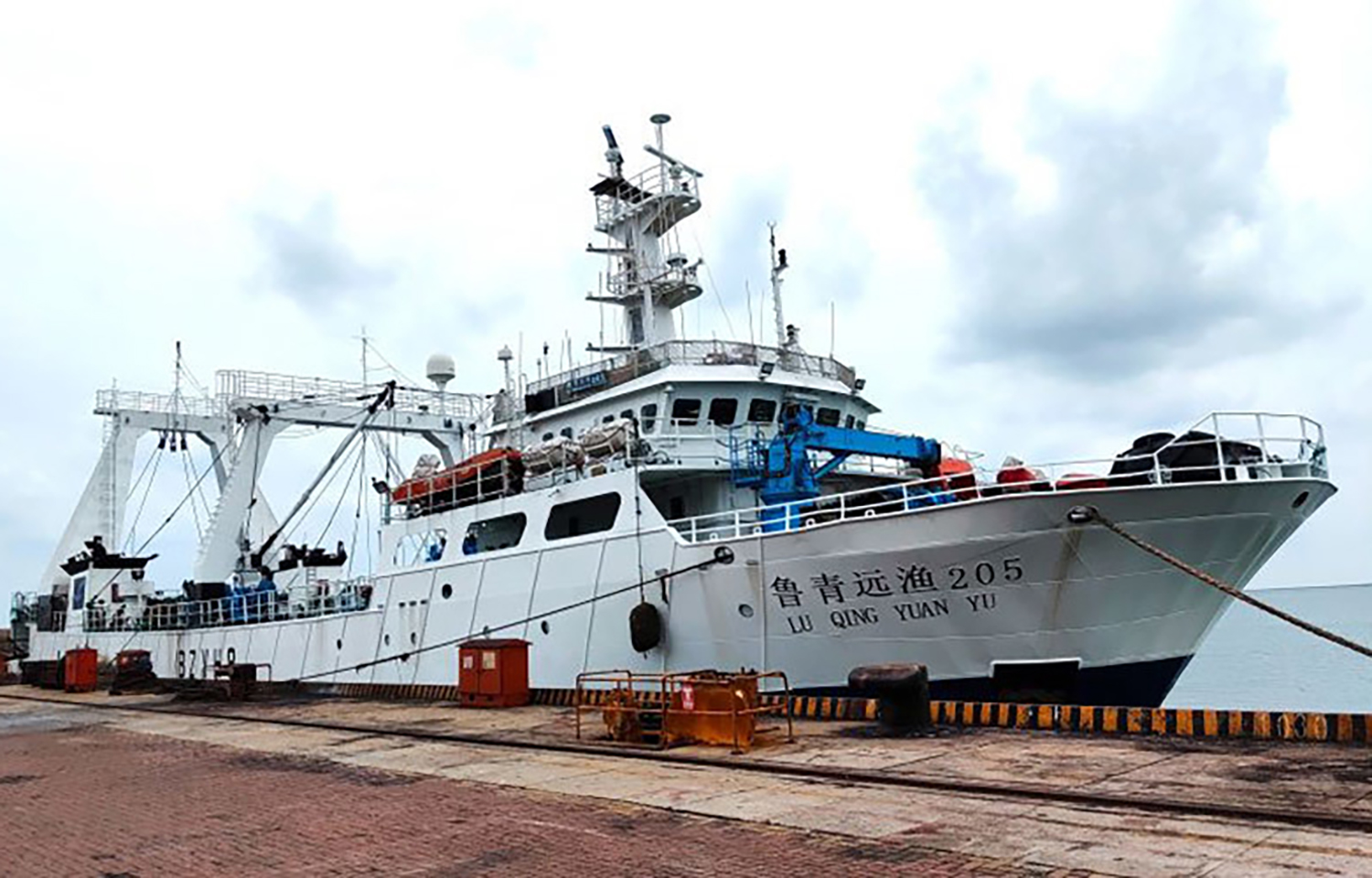
A World Trade Organization (WTO) deal struck in 2022 aimed at ending harmful fisheries subsidies around the world recently entered into force, and a particular clause in the deal may significantly impact the bottom line of China’s distant-water fishing fleet.
The deal, which officially entered into force in September after two-thirds of WTO member nations ratified it, bans subsidies linked to IUU fishing, overfished stocks, and fishing on the unregulated high seas.
François Mosnier, head of the Oceans Program at London, U.K.-based based think tank Planet Tracker, said that the ban on the latter form of subsidies is set to particularly affect Chinese fishing operations, given that most of the Chinese distant-water catch of species like squid comes from the high seas, which are unregulated areas not subject to the rules of a regional fishery management organization (RFMO).
With the deal now in force, the Chinese distant-water fleet is “likely to suffer from a reduction in subsidies,” Mosnier said.
In a 2024 report titled “Fishful Thinking,” Planet Tracker calculated that at least 45 percent of profits accrued by the Chinese distant-water fleet comes from subsidies, meaning that any reduction in subsidies is likely to affect profitability.
For instance, Chinese distant-water fishing firm CNFC Overseas Fishery, which mainly targets squid and tuna, reported it received CNY 267 million (USD 37.7 million, EUR 32.4 million) in government subsidies in the first half of 2025, helping the firm to record a profit of CNY 53 million (USD 7.5 million, EUR 6.4 million) during the period.
China’s fishing on the high seas has prompted scrutiny around the world, including in the Southwest Atlantic Ocean, where stakeholders have called for the establishment of an RFMO to prevent chronic overfishing, as well as human rights and marine wildlife abuses, all of which China’s fleet has been accused of committing in the region.
However, the establishment of an RFMO in the Southwest Atlantic has been hampered by longstanding territorial disputes concerning the Falklands, a group of nearly 800 islands over which the U.K. and Argentina both claim sovereignty.
While those disputes continue to play out, experts like Daniel Skerritt, a senior analyst on the Science and Strategy team at nonprofit Oceana, are hopeful that the WTO deal – as well as a follow-up deal, which is still under negotiation, specifically aiming to end subsidies that lead to overcapacity and overfishing around the globe – can accomplish some of the goals that the establishment of an RFMO would help achieve.
“The [Southwest Atlantic] squid fishery is a prime example of where [the WTO deal’s subsidy] rule should apply,” Skerritt told SeafoodSource. “Structural overcapacity – too many boats chasing too few fish – in distant-water fishing fleets is clearly driven by harmful fisheries subsidies.”
