

Emelia Arthur, Ghana’s fisheries and aquaculture development minister, has inaugurated a new board of directors for the nation’s Fisheries Commission, paving the way for the West African nation to begin implementing key projects laid out in its fishery management plan.
Arthur was appointed as minister earlier this year and quickly set out to address accusations of high-level corruption in Ghana’s fisheries sector, a lack of transparency, and other concerns that were raised when the European Union issued the country a second yellow card in 2021.
“I pledge to move quickly to address these issues and have the E.U. take off the yellow card from Ghana, because the status is affecting the industrial fishers who catch and export tuna that brings nearly USD 400 million [EUR 382 million] to Ghana,” she said.
Now, with the 10-member board in place, Arthur said management of Ghana’s fisheries sector, which generates an estimated USD 1 billion (EUR 848 million) annually, needs to advance, as previous efforts have only “been scratching the tip of the iceberg.”
“It is time to delve deeper so that fisheries and aquaculture can significantly contribute to Ghana’s development,” she said. “It demands bold decision-making, data-driven strategies, and a strong commitment to environmental and social responsibility.”
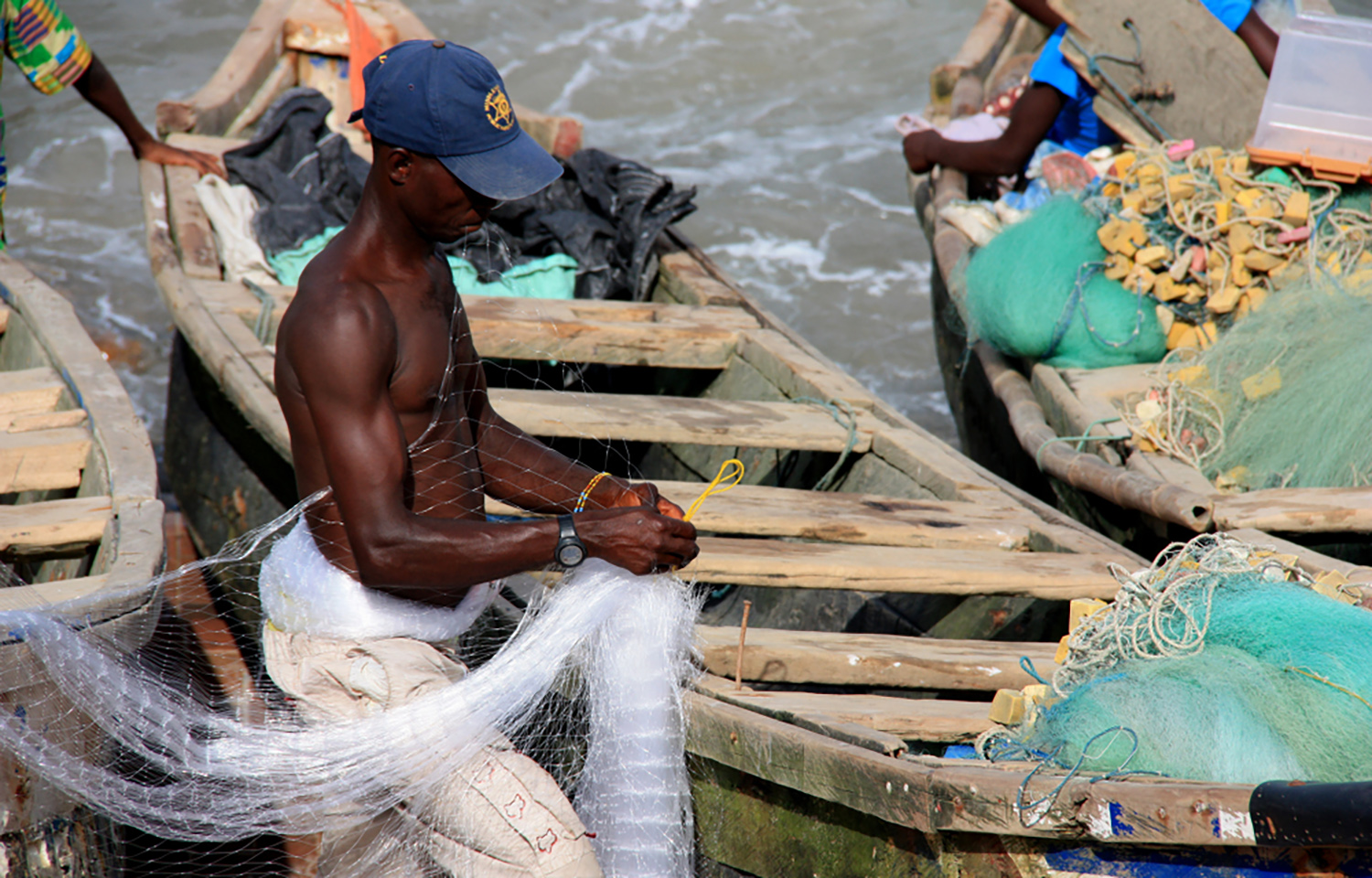
The board is chaired by Wisdom Akpalu, with Benjamin Campion serving as executive director. To ensure Arthur’s goals of committing to environmental and social responsibility, the group is expected to lead the creation and operation of a Blue Economy Commission, which would oversee the development of Ghana’s Blue Economy Agenda and accomplish such goals as tackling illegal fishing by foreign and domestic vessels, as well as overfishing that has threatened extinction of some fish species in Ghanaian waters.
The new board is also focusing on growing aquaculture in the country, mainly through a National Aquaculture Development Plan that the government hopes would enable the country to “expand, utilize, manage, and regulate the sustainable development and management of the aquaculture subsector.”
To that end, the Aquaculture Stewardship Council (ASC) and Ghana's Chamber of Aquaculture (COA) recently signed a memorandum of understanding to improve the sustainability of the country’s aquaculture sector.
“The Aquaculture Improvement Project under the Improver Program by ASC will reshape the aquaculture scene in Ghana by allowing businesses to reach international markets that seek certified farmed fish while also drawing in new investment to the country’s aquaculture industry,” COA CEO Jacob Adzikah said in a release. “The project is a step-by-step initiative that would help farms improve their practices in areas like sustainability, food safety, and social responsibility, with the ultimate goal of achieving ASC certification and meeting global standards.”
Meanwhile, Ghanaian government officials are pursuing other strategic partnerships to advance the nation’s fisheries and aquaculture sectors.
Ghana’s Ministry of Fisheries and Aquaculture is strengthening its partnership with the Korea Maritime Institute in Busan, South Korea, aiming to secure investments in fish processing.
The institute is currently working with the ministry, as well as the Ghana Women Fishermen Association, in the development of fish processing technology and infrastructure specifically targeted toward assisting women fishers.
The partnership aligns with Ghana’s goals to prolong the shelf life of fish and fishery products in the country and create awareness on appropriate handling, processing, and distribution of fish and fishery products.
