




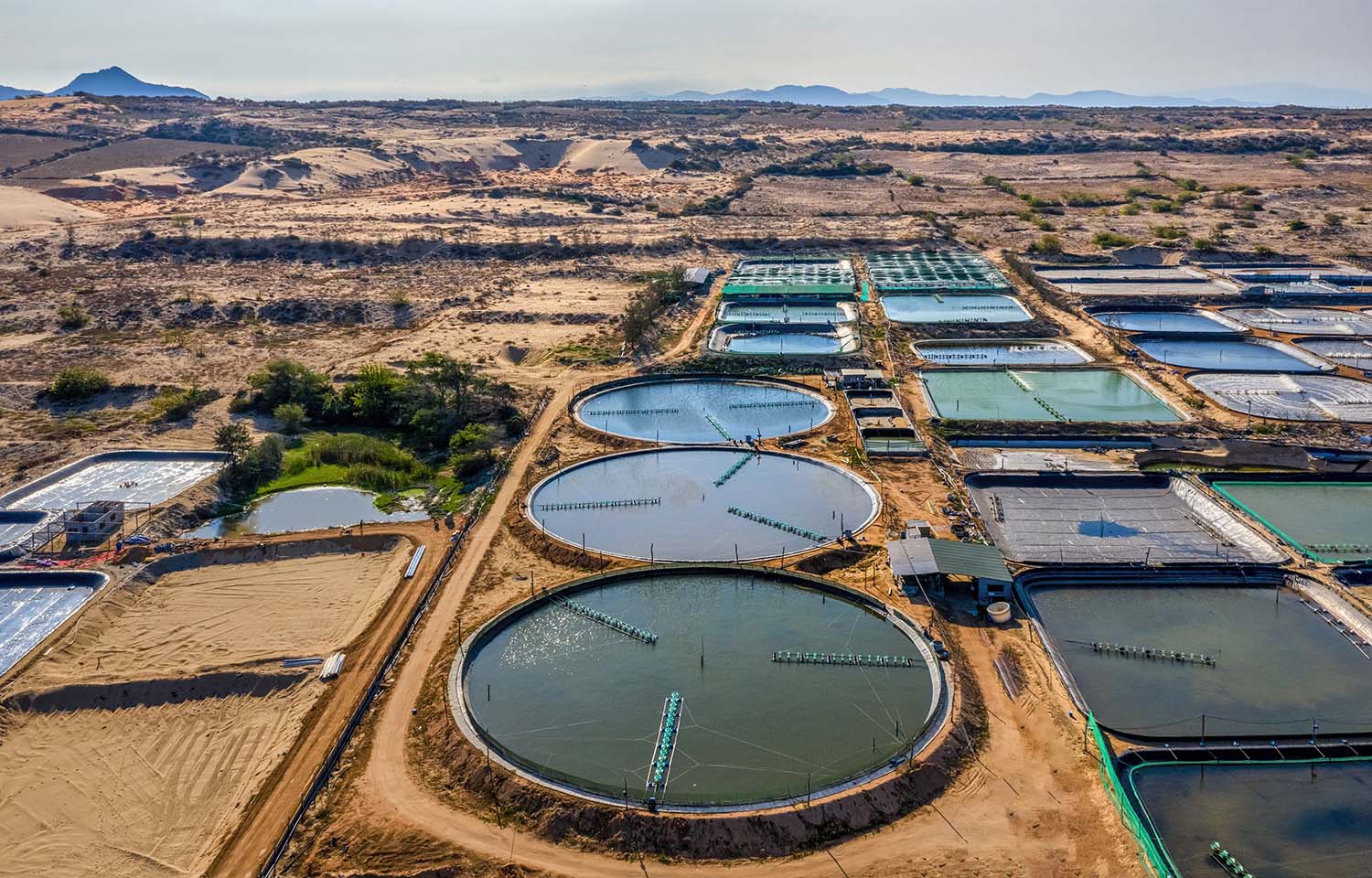
Global seafood production has reached a historical record, and aquaculture production has surpassed wild-catch output for the first time ever, according to a biennial United Nations Food and Agriculture Organization (FAO) report.
The FAO’s 2024 edition of The State of World Fisheries and Aquaculture (SOFIA) report, published 10 June 2024, found global seafood production reached 223.2 million metric tons (MT) in 2022, up 4.4 percent from 2020. That total comprises 185.3 million MT of aquatic animals – 89 percent of which was used for human consumption and the remainder of which was used for fishmeal and fish oil – and 37.8 million MT of algae.
Its total first sale value was estimated at USD 472 billion (EUR 440 billion), with aquaculture production valued at USD 313 billion (EUR 292 billion). Around 230 countries globally are involved in the international trade of seafood products.
In 2022, global aquatic animal aquaculture production reached 130.9 million MT, accounting for 57 percent of aquatic animal production by volume, while wild-catch fisheries accounted for 94.4 million MT. By continent, Asia was responsible for 70 percent of aquatic animal production, Europe contributed 9 percent, Latin America and the Caribbean produced 9 percent, Africa at 7 percent, North America at 3 percent, and Oceania at 1 percent. Globally, 61.8 million people were employed in primary production of seafood in 2022.
“While capture fisheries production has remained largely unchanged for decades, aquaculture has increased by 6.6 percent since 2020, contributing over 57 percent of aquatic animal products used for direct human consumption,” FAO Director-General Qu Dongyu said in a press release.
FAO Fisheries and Aquaculture Division Head Manuel Barange said improving aquaculture production is important for feeding the world’s growing population.
“With 735 million people suffering from hunger, reducing this number quickly is critical. We need to produce more food and improve access to food, and aquaculture offers a way to do this effectively,” he said. “Importantly, the growth of aquaculture is not because capture fisheries are decreasing; capture fisheries production has remained globally stable for 30 years. Instead, aquaculture is growing at 5 percent per year since the turn of the century. This makes aquaculture a great tool for fighting hunger and poverty, all while using natural resources sustainably.”
China led in seafood production at 36 percent of global volume, followed by India at 8 percent, Indonesia at 7 percent, Vietnam at 5 percent, and Peru at 3 percent. Top exporting nations by volume were China, Norway, Vietnam, Ecuador, and Chile, while the top importers by volume were the U.S., China, Japan, Spain, and France. The FAO estimated the value of the international trade of aquatic products at USD 195 billion (EUR 182 billion) in 2022, up 19 percent compared to pre-Covid levels.
“This indicates not only recovery from the pandemic but also substantial growth, particularly benefiting middle- and low-income countries,” Barange said. “In fact, the net economic benefits derived from aquatic foods for low- and middle-income countries surpass those from all other agricultural commodities combined.”
Global capture fisheries accounted for 92.3 million MT of production, including 81 million MT from marine fisheries and 11.3 million MT from inland fisheries. The totals have remained around those levels since the 1980s, according to FAO.
Ten countries – China, Indonesia, India, Vietnam, Bangladesh, the Philippines, Republic of Korea, Norway, Egypt, and Chile – accounted for 89.8 percent of global aquaculture production in 2022.
“Many low-income countries in Africa and Asia are not using their full potential,” Dongyu said. “Targeted policies, technology transfer, capacity building, and responsible investment are crucial to boost sustainable aquaculture where it is most needed, especially in Africa.”
Global seafood production is expected to increase 10 percent by 2032 to reach 205 million MT, with aquaculture expansion and capture fisheries recovery accounting for the growth, according to the report. However, that growth will not be enough to meet rising demand; by 2050, due to global population growth, production would have to grow 22 percent, which would result in an increase of 36 million MT, to meet expected demand.
“FAO welcomes the significant achievements thus far, but further transformative and adaptive actions are needed to strengthen the efficiency, inclusiveness, resilience, and sustainability of aquatic food systems and consolidate their role in addressing food insecurity, poverty alleviation, and sustainable governance,” Dongyu said. “That’s why FAO advocates Blue Transformation to meet the overall requirements of better production, better nutrition, a better environment, and a better life, leaving no one behind.”
Global seafood consumption reached 20.7 kilograms per capita in 2022.
“This constituted about 15 percent of animal protein supply, reaching over 50 percent in several countries in Asia and Africa,” Dongyu said.
The report projects per-capita consumption will increase by 12 percent to 21.3 kilograms by 2032. By 2050, the seafood sector will need to grow by 25 percent globally to keep up with population growth. In Africa, production would need to grow by 75 percent because it is the region with the most significant expected population growth, according to Barange. However, per-capita apparent consumption in Africa is on track to decrease since production is not keeping up with population growth.
“This is especially alarming for sub-Saharan Africa, where many countries are dependent on aquatic foods to meet their nutritional needs, particularly animal proteins,” Barange said.
Seafood accounted for 15 percent of animal proteins and 6 percent of total proteins consumed worldwide in 2022, including serving as 20 percent of the per-capita protein supply from all animal sources to 3.2 billion people.
“This underscores the need for target action and focus,” he said. “While there are some promising successes to scale, there are also considerable challenges to feed an estimated 9.7 billion people by 2050. We need to collaborate, ensuring we have both the technical elements and the political will. We know what is needed, and we are confident that we have the technical knowledge to achieve it, if supported by political will and concerted action.”
While Barange is an advocate for growth of the seafood sector, he said FAO insists it must be done sustainably. The SOFIA report found the proportion of marine stocks fished within biologically sustainable levels declined to 62.3 percent in 2021, down 2.3 percent from 2019, accounting for 76.9 percent of the global catch by volume.
“This underscores the role that effective fisheries management can play in facilitating stock recovery and increased catches, highlighting the urgent need to replicate successful policies to reverse the current declining trend,” Barange said. “We have a significant problem because not only many stocks are not sustainably exploited but also because the trend is gradually worsening over time.”
Barange said sustainability failures usually stem from governance failures, though the causes are complex and multifaceted.
“In some cases, it is due to a lack of political will. In many cases, it is because of inadequate infrastructure. Managing stocks is expensive; it requires ships, institutions, scientific capacity, etc., which some countries lack,” he said.
FAO is a major funder and backer of seafood sustainability initiatives globally, according to Barange.
“We follow a clear strategy. When engaging with countries, we assess the legal framework and policy environment to support industry development,” he said. “Collaborating with the private sector, we seek to attract investment. Capacity-building initiatives ensure the transfer of technical knowledge to the country, while infrastructure development is coordinated with countries and funding agencies, including safety nets for disease control and environmental considerations. This comprehensive approach is a gradual process, rather than an immediate solution, but it yields remarkable successes over time.”
FAO’s Blue Transformation project is focused on improving the sustainability of seafood globally, as a means toward ensuring an ample supply of nutritious food for more of the world’s population. Barange said it has three main goals: the intensification and expansion of sustainable aquaculture, with the hope of improving yields by 45 percent, particularly in countries with net food deficits; improving fisheries management; and developing the value chains of aquatic foods.
"In terms of the successes of Blue Transformation, in aquaculture, for example, we currently provide support to more than 40 countries on how to develop aquaculture properly; supporting their policy development; transferring intelligence and innovation; doing capacity building; and helping them to attract investment into the sector,” he said. “It is not just about what you capture or what you grow; it is what you do with it: reducing losses, adding value to the product, and facilitating access to markets and consumers. All those are part of a package of what we think needs to be done to make sure that the sector contributes more to ending hunger and poverty.”
