

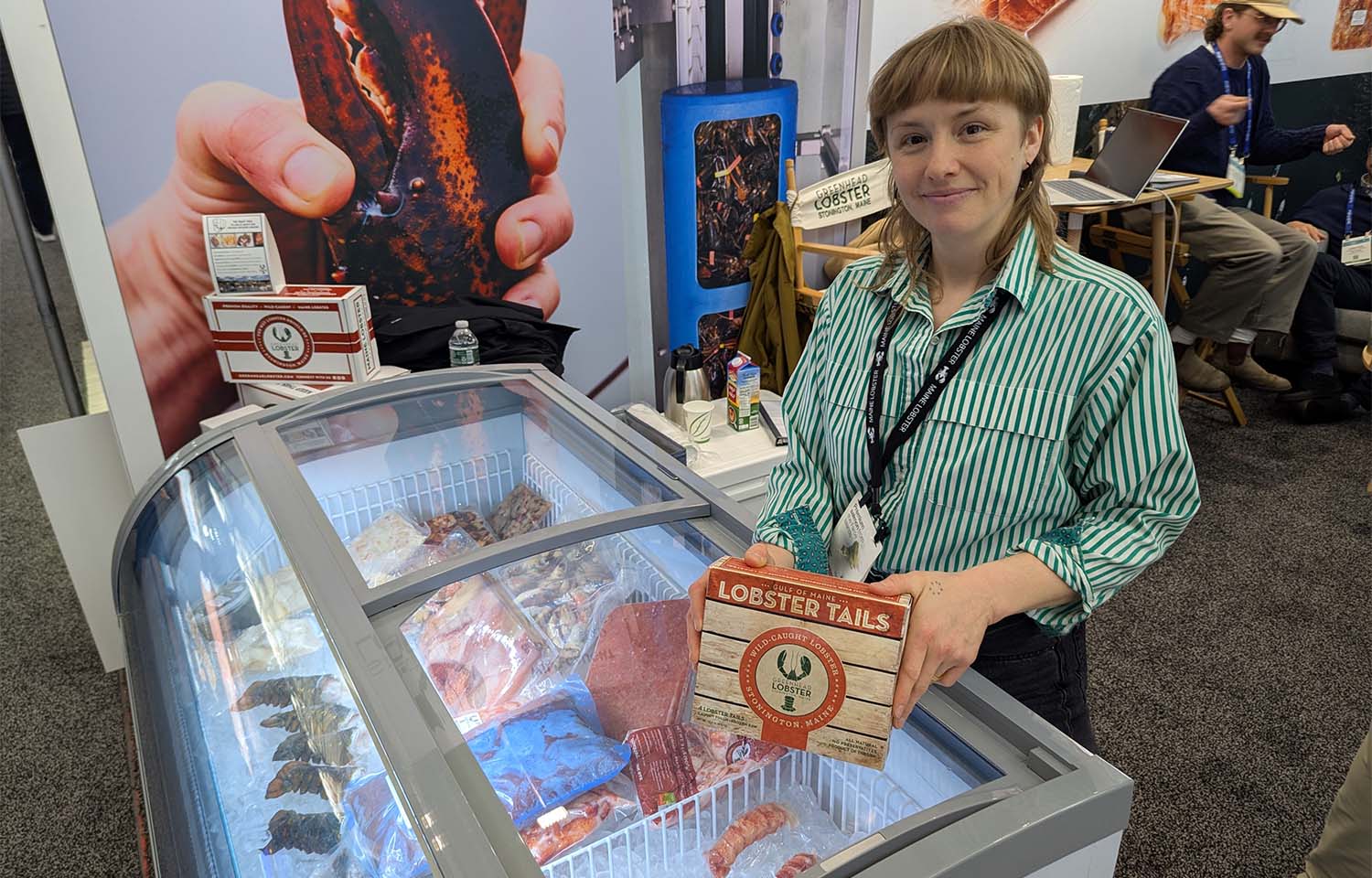
Stonington, Maine, U.S.A.-based Greenhead Lobster is continuing to refine the processing and packaging of its lobster products at its 15,000-square-foot facility.
The processing facility, which it announced in 2018 and completed in 2019, unlocked full traceability for all of its lobster products. Greenhead purchases lobster from local lobstermen in the region, and transforms it into multiple different products using high-pressure processing.
Allison Melvin of Greenhead Lobster told SeafoodSource during Seafood Expo North America – which ran from 15 to 17 March in Boston, Massachusetts, U.S.A. – that since that opening it has continued to refine its products and add more capability to its facility.
“The processed products have been a big focus as we’ve seen our business from majority live lobster sales to majority processed,” she said. “After seven years of processing, we are very excited about our raw shucked frozen products.”
Melvin said the company has been producing and selling a lot of shell-off tails and raw claw and knuckle meat, which has seen a surge in demand from its foodservice customers. The company is using reduced-oxygen packs that preserve the appearance of the lobster meat, and because it is pre-shelled it cuts down on the labor and expertise required by restaurant operators to have high-quality lobster products.
“We really believe that the raw frozen products allow the end-user to have the authentic ‘summer in Maine’ taste and texture, but with the total convenience of not having to handle live lobster, shell waste, etcetera,” Melvin said.
The processing process Greenhead uses doesn’t use any additives or preservatives, which also appeals to customers looking for a higher-end product.
Melvin said the company is predominantly a wholesale business that works with foodservice businesses, and is mainly targeting high-end foodservice and dining establishments.
“We would love to find a restaurant group of steakhouses where we’ll be the surf to the turf,” she said. “We think the raw shucked tail meat is gorgeous.”
Melvin said the domestic market is the main target for the company, considering the difficulty the export market has had with the constantly changing trade environment.
Boyd Dodge of Greenhead Lobster told SeafoodSource the biggest trouble isn’t necessarily the presence of tariffs, it’s the constant change that has been difficult. He said the U.S. lobster export market has actually done well in China due to the tariffs the country had put on Canada, but the company still has to keep abreast of any food and dining trends.
One example he offered was the South Korean market, which boomed for a time and then fizzled almost as quickly.
Melvin said regardless of the trade environment or trends, Greenhead is constantly focused on ensuring it has high-quality lobster products for its clients.
“We are one of the last remaining lobster companies that remains independently owned and operated, family owned and operated, so for us it really is about finding relationships with distributors and customers that care about quality first,” she said. “Our products are never the cheapest, but we do aim the highest possible quality – and that goes for the relationships we’re looking for as well.”
