


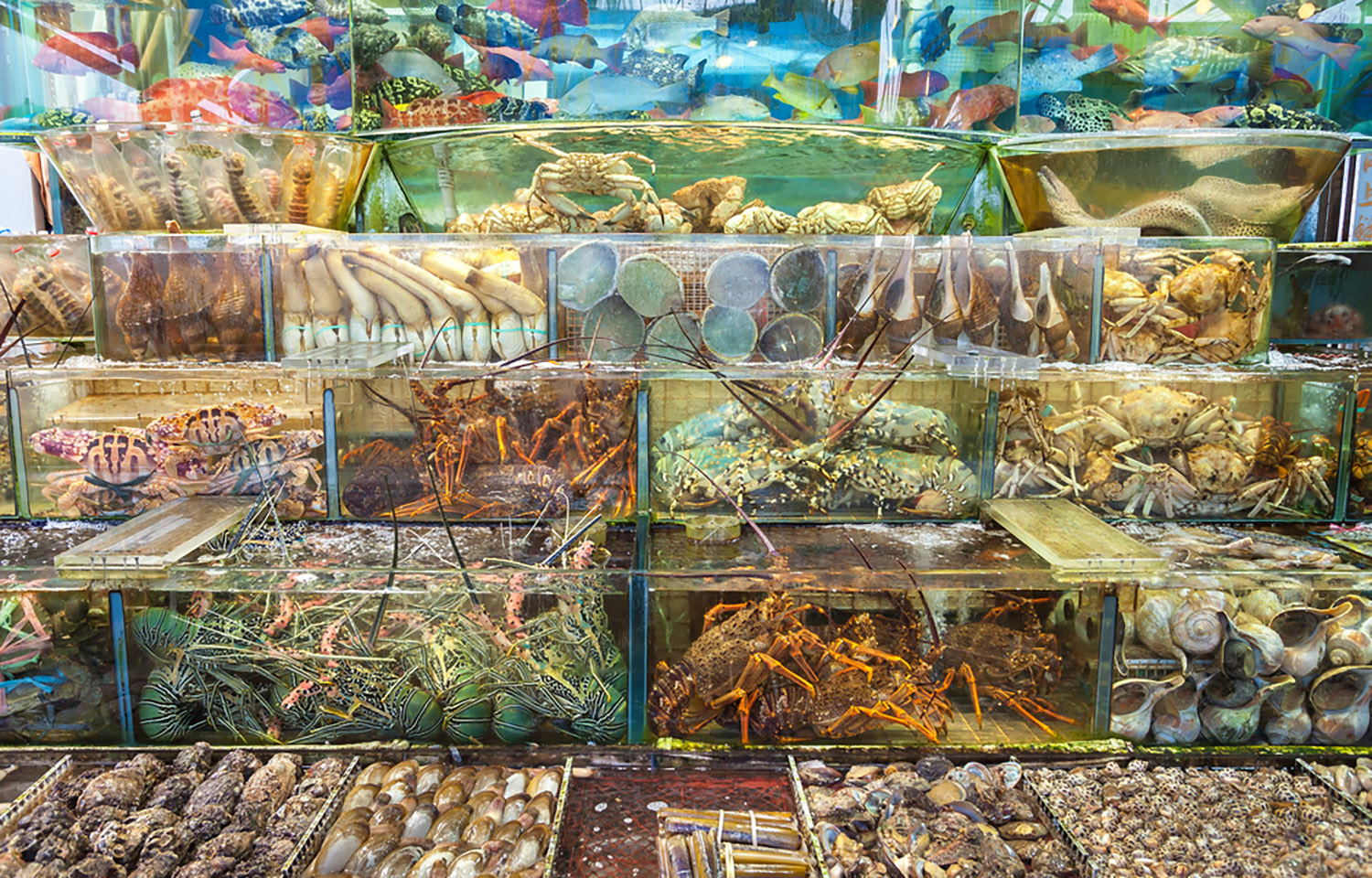
Hong Kong needs to radically improve its traceability infrastructure for seafood imports, according to a new report.
Titled “Hong Kong’s Seafood Trade, Port Measures, and Import Controls – Paddling to Keep Up,” the report outlines that Hong Kong is facilitating massive trade in live reef fish by allowing shipments into and out of the city that have little or no traceability information attached.
Corroborating those findings, a 2024 Marine Policy report calculated that as much as half of the reef fish shipped into Hong Kong is undocumented.
“Endangered species like humphead wrasse are in Hong Kong markets but are missing from trade data due to underreporting from fishing vessel declarations and incomprehensive surveys … leading to over 50 percent import data gaps in half the live reef food fish species,” the Marine Policy report said.
Published by the Hong Kong Sustainable Seafood Coalition (HKSSC), the newer report adds that Hong Kong is not collecting data on vessels, flagging, or the catch area and fishing method related to fish sold in the city.
Exacerbating the issue, some marine products even arrive in Hong Kong despite the fact they should be subject to export bans, and no health certifications are required for live or frozen seafood imports in the city.
“Hong Kong has done little to update its laws and regulations in a rapidly changing world,” the report said, adding that some of the Hong Kong laws concerning imports date back to the 1940s.
Sophie Le Clue, the CEO of environmental services organization ADM Capital Foundation, told SeafoodSource that “it’s difficult to say” if Hong Kong will act on the advice in the report but noted that the city will follow the lead of the Chinese government – for better or for worse.
If China decides to implement stricter measures, Hong Kong is likely to do the same, she said.
“What China does helps,” Le Clue said. “So, for example, if they announce they are going ahead with [the United Nations’] Agreement on Port State Measures, that may help.”
Hong Kong’s inaction on traceability has worsened and enabled a wider obfuscation of trade data on seafood going into mainland China, according to Yvonne Sadovy de Mitcheson, a marine biology and fisheries professor at Hong Kong’s Swire Institute of Marine Science.
“The report does a great job in pulling the stories together and highlighting how big, systemic, and important the lack of trade oversight is,” she said. “This is especially so considering that Hong Kong is such a major seafood hub for the mainland and that China is a net importer of aquatic resources. This latter point is very important because Hong Kong is a major hub for China and potentially a way to obscure volumes of trade, as we see for live seafood.”
Sadovy told SeafoodSource that Hong Kong is a popular transhipment hub for luxury seafood, as these products can easily be moved into mainland China by traders seeking to avoid tariffs.
“The government wants to restrict and control trade as little as possible, so controls are minimal on trade in general in the city,” she said. “This has even been told to me directly in meetings with the government. For seafood, controls are even more lax because fish-carrier vessels are treated like 'fishing vessels' with virtually no controls. The seafood trade – particularly live seafood – can be very profitable. I think now, many of the businesses are being taken up by mainland companies, so links to the mainland may be getting even stronger.”
Hong Kong’s laissez-faire approach to trade controls means the city is dependent on local jobs created from handling international trade.
Efforts to increase awareness among Hong Kong consumers, as well as seafood retailers and restaurants, about the issue have had mixed results.
In 2022, the World Wildlife Fund (WWF) Hong Kong office dropped its annual scorecard that ranked Hong Kong retailers’ efforts to source sustainable seafood and established the Hong Kong Sustainable Seafood Business Membership Programme instead.
HKSSC members have also signed on to a pledge to serve more sustainable and responsibly sourced seafood.
Nevertheless, a survey by chooserighttoday.org – a website funded by the ADM Capital Foundation – found only 7 percent of Hong Kong restaurants can provide seafood that’s verifiably sustainable.
